

Quick Inquiry
| Duration | 10 days |
| Max. elevation | 4950 m |
| Level | Easy |
| Transportation | Private car or, Bus |
| Accomodation |
|
| Starts at | KATHMANDU |
| Ends at | Kathmandu |
| Trip route | Sybrubeshi-Langtang-Kyanjingumba-Sybrubeshi |
| Cost | USD 561 per person |
Just about 6 to 8 hours drive from Kathmandu, you’ll find one of the most beautiful and accessible trekking destinations in Nepal: the Langtang Valley!
Now, if you’re someone who wants a Himalayan adventure without going too extreme, this trek is honestly one of the best choices. It’s beginner-friendly, the altitude isn’t too high, and the risks are much lower compared to Everest or other high-altitude treks. Yet, you still get those close-up mountain views, glaciers, and raw Himalayan landscapes.
And the best part? You don’t even have to spend weeks on the trail. In just around 10 days, you get a complete trekking experience with nature, culture, and adventure all in one.
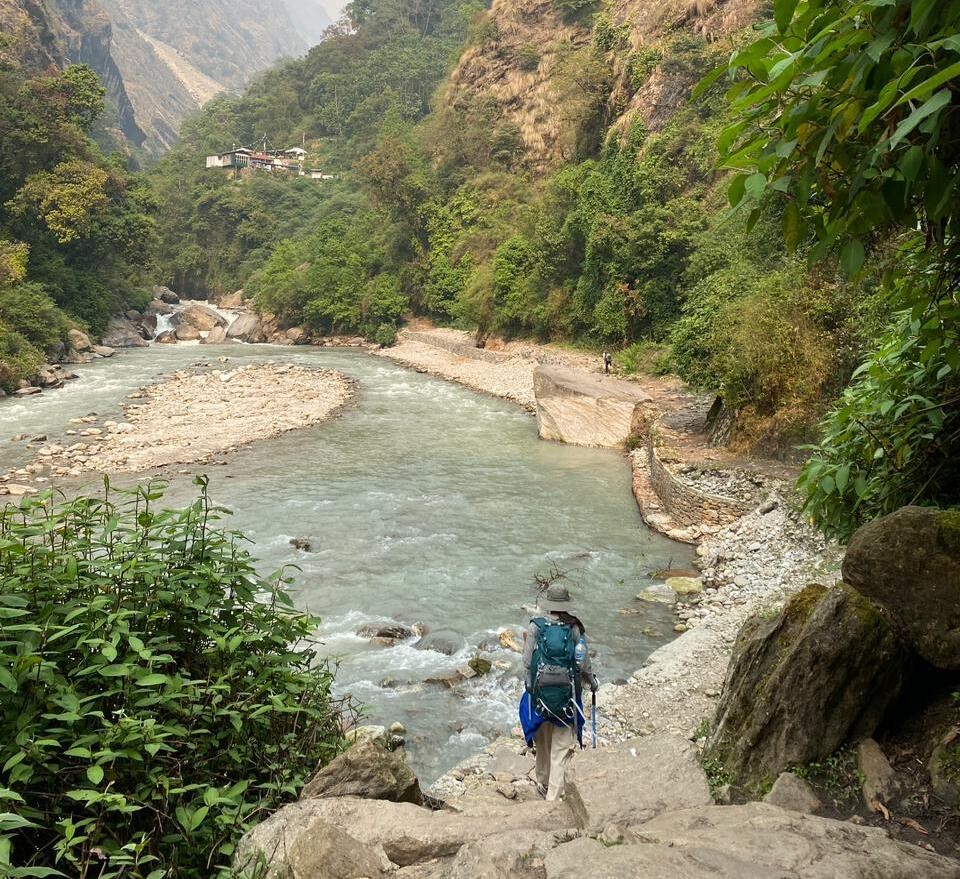
As you move along the Langtang Valley trail, you’ll walk through dense forests filled with bamboo, rhododendron, oak, and pine. You’ll follow the peaceful flow of the Langtang Khola, cross suspension bridges, and slowly make your way into higher alpine regions. But this trek is not just about nature.
You’ll be stepping into the heart of the Tamang region, where you’ll get the glimpses of Tibetan Buddhism. From prayer flags and mani walls to monasteries and traditional homes, everything you see reflects a deep connection to Tibetan Buddhism and Himalayan lifestyle!
And then come the mountains. As you go higher, the valley opens up to stunning views of peaks from the Langtang and Jugal ranges. Massive mountains, glaciers, and wide alpine landscapes surround you from all sides. It’s something you really have to see for yourself.
Your journey begins with a scenic drive from Kathmandu to Syaphru Bensi. From the next day, the real trekking starts as you follow the Langtang Khola through forested trails and small Tamang settlements.
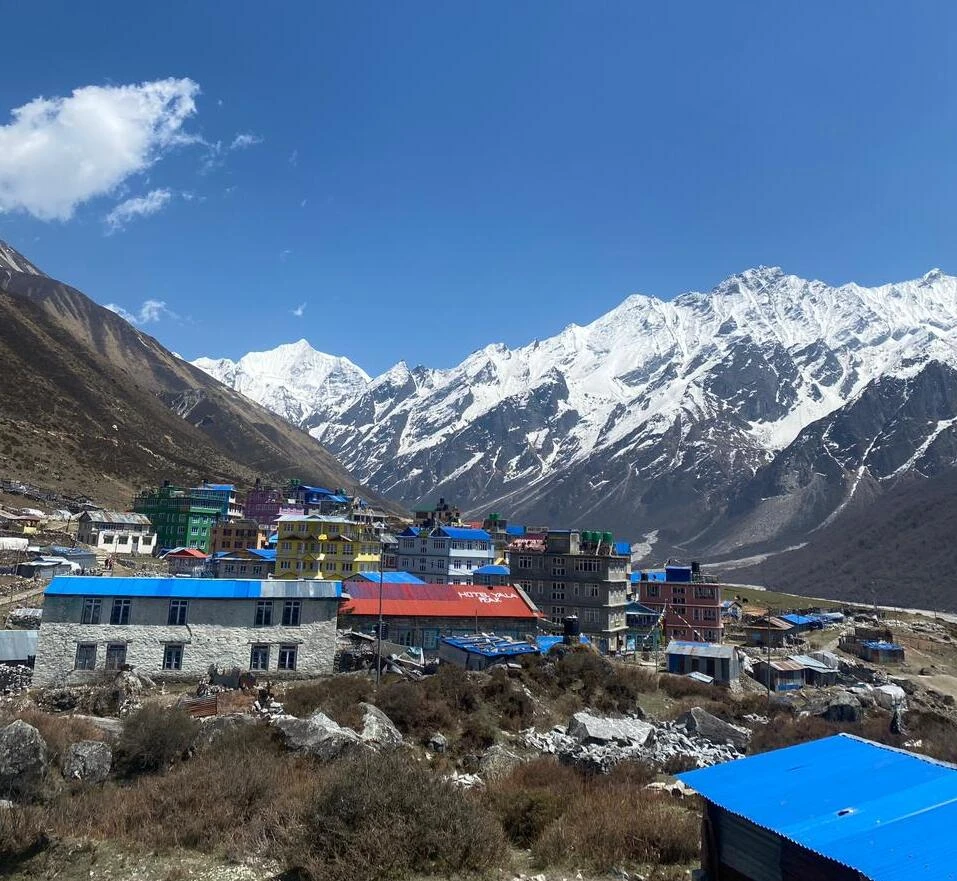
You’ll pass through places like Lama Hotel and Ghoda Tabela before reaching Langtang Village, which is a place with a powerful history. The 2015 Nepal Earthquake caused a massive avalanche here, and as you walk through, you’ll hear real stories from the locals who rebuilt their lives from scratch.
From there, you continue towards Kyanjin Gompa, which is, of course, the highlight of this trek. This is where things get really exciting. You’ll spend two nights here, and this gives you enough time to explore everything around.
You can hike to Kyanjin Ri (both lower and upper viewpoints), push further to Tsergo Ri (aka Tserko Ri) if you’re up for a challenge, or take easier walks to places (like the Langtang Glacial Lake).
There’s also the famous Organic Yak Cheese Production Centre here, where you can actually see how local cheese is made and even taste it on your own.
Doing this trek with Adventure A One Trek (A1 Trek) means you don’t have to worry about anything at all. We’ve designed this itinerary in a way that keeps everything balanced. There’s really no rushing, you get to properly acclimatize, and have enough time to enjoy the places you reach. You’re not just walking from one point to another; you’re experiencing the region properly.
Our professional government-licensed guides are not just there to lead the way. They help you understand the culture, interact with locals, and make sure you feel comfortable throughout the journey. And most importantly, we focus on making your trek safe, smooth, and memorable from start to finish.
So you see, the Langtang Valley Trek is not just about reaching a destination. It’s about walking through changing landscapes, learning a completely different culture, and slowly getting closer to the mountains with every step you take. Now, let’s get into the details of the trail itself:
The Langtang Valley trek starts from Syaphru Bensi, and from here, the trail gradually takes you deeper into the valley.
The main route looks like this:
Syaphru Bensi > Dhomen > Pairo > Bamboo > Rimche > Lama Hotel > Gumnachok > Ghoda Tabela > Thangshyap > Langtang Village > Mundu > Kyanjin Gompa
As you follow this route, you’ll notice how quickly the landscape changes.
In the beginning, it’s all about green forests and rivers. You’ll walk through bamboo groves, rhododendron forests, and shaded trails alongside the Langtang Khola. As you gain altitude, the forests slowly disappear, and the terrain turns into open alpine meadows and rocky landscapes.
The entire region falls inside Langtang National Park, which is home to a wide range of wildlife like red pandas, Himalayan tahr, langurs, and even snow leopards (though very rare to spot).
So, every day on this trail feels different. Well, not just in terms of views, but also in the overall experience!
As you move along the Langtang Valley trail, you’ll come across several important stops. Each one has its own story and importance.
| Source | Destination | Distance | Approx. Time |
| Syaphru Bensi | Dhomen | 4 km | 1.5 hours |
| Dhomen | Pairo | 1 km | 45 minutes |
| Pairo | Bamboo | 2 km | 1 hour |
| Bamboo | Rimche | 3 km | 1.5 hours |
| Rimche | Lama Hotel | 1 km | 30 minutes |
| Lama Hotel | Gumnachok | 2 km | 2 hours |
| Gumnachok | Ghoda Tabela | 3 km | 2 hours |
| Ghoda Tabela | Thangshyap | 2 km | 1 hour |
| Thangshyap | Langtang Village | 4 km | 2.5 hours |
| Langtang Village | Mundu | 1.5 km | 1 hour |
| Mundu | Kyanjin Gompa | 5 km | 3 hours |
| Kyanjin Gompa | Lower Kyanjin Ri | 1.5 km | 2 hours |
| Lower Kyanjin Ri | Upper Kyanjin Ri | 1 km | 1.5 hours |
| Kyanjin Gompa | Tsergo Ri | 4.5 km | 5 to 6 hours |
After reaching Kyanjin Gompa, this is where your exploration really begins. You’ll have multiple options depending on your energy level, weather, and how much adventure you want to take on.
Coming from the glaciers of Langtang Lirung and Kimshung (Tsangbu Ri), this glacial lake serves as a hydro-water source for the local hydroelectricity project in Kyanjin Gompa. But honestly, what makes it special is the view of the two mountains up front.
The water is crystal clear, and on a good day, you’ll see the surrounding mountains perfectly reflecting on the surface. It’s one of those peaceful spots where you’ll just want to sit for a while.
This is also a great acclimatization hike. So if you’re not ready for Kyanjin Ri on the same day, you can come here first and take it easy.
Located just below the main monastery in Kyanjin, this place is something you shouldn’t miss. Here, milk from Himalayan yaks is used to produce different local dairy products. You’ll find hard yak cheese, soft cheese, yak curd, churpi (traditional hard cheese).
The best part? You can taste them as well! The staff here are friendly, and if you’re curious, they’ll even show you how the cheese is made, from milk collection to storage for long-term use: the entire process!
Many trekkers even take some cheese back as a souvenir. And yes, you could do (although can be a little pricey).
This is one of the main highlights of the entire trek. A steady 1.5 km uphill hike from Kyanjin Gompa takes you to Lower Kyanjin Ri, which already offers incredible views of Langtang Lirung and surrounding peaks.
But if you push a bit further (another 1 km), you reach Upper Kyanjin Ri. And this is where it gets unreal. You’ll get a full 360-degree mountain panorama including Langtang Lirung, Kimshung (Tsangbu Ri), Yubra Himal, Yansa Tsenji, Tsergo Ri, Yala Peak, Yala Peak South, Naya Khanga (Ghanja La Chuli), and many more!
It’s a bit of an uphill climb, giving challenge to your lungs, but it's completely worth it!
That tall peak you see from Kyanjin Gompa right next to Ganchenpo? That’s Tsergo Ri (or Chergo Ri or Tserko Ri). It’s the highest and most rewarding hike of all the treks in the Langtang region.
We usually start early in the morning because afternoon winds can get strong. It’s not technical, just a long high-altitude hike. But yes, it’s demanding!
It takes about 6 to 7 hours to reach the top. So, make sure to carry packed lunch (our guides shall help you arrange one fro the lodge you’re staying).
And when taking on the challenge, note that it’s a bit steep at section, so a slow climb is recommended. But once you reach the top, the views are next level!
You get to see peaks even more clearly than from Kyanjin Ri, and if the weather is perfect, you might even catch a glimpse of Shishapangma and Langtang Ri.
Not many trekkers go here, but honestly, it’s a great option. It’s a long hike (around 8 to 10 hours round trip), but the altitude is lower compared to Tsergo Ri, so it’s less risky.
Located about 12 km from Kyanjin Gompa, this place is known for the wide open landscapes, peaceful trails (no crowd at all), and most importantly, the clear views of Langshisa Ri. In fact, you even get to see locals grazing yaks here, which adds to the experience.
And if Tsergo Ri is not possible due to the weather, Langshisa Kharka honestly becomes a perfect alternative.
If you’re willing to extend your trip by 2 to 3 days, you can even go for Yala Peak. This is a trekking peak, meaning that no technical climbing is required and beginner-friendly mountaineering experience is enough!
Seriously speaking, it’s a great option if you want to take your adventure one step further beyond just trekking. And our team at Adventure A One Trek are ready to fulfil it!
The Langtang Valley Trek is a moderate-level adventure, and honestly, it’s one of the best treks in Nepal for beginners who want a real Himalayan experience without going too extreme.
You don’t need any technical climbing skills. The trails are well-defined, and as long as you maintain a steady pace, the journey feels quite manageable.
That said, there are a few sections where the challenge kicks in.
The real difficulty begins with the optional hikes to Tsergo Ri (4,985 m) and Kyanjin Ri (4,700 m). These are steep uphill climbs, and when you add altitude into the mix (especially in snowy/icy conditions) they can feel demanding. But at the same time, these are the very moments that make the trek unforgettable.
Another thing to keep in mind is the landslide-prone sections. Areas like Pairo, Lama Hotel, and Ghoda Tabela can sometimes be risky, especially after heavy rainfall. In such cases, there may be temporary route changes or delays.
But overall? With good physical strength, a bit of mental resilience, and proper guidance, the Langtang Valley Trek is absolutely achievable. It’s not just about difficulty. It’s about pacing yourself and enjoying the journey!
Read More: How Difficult is Langtang Trek.
The beauty of the Langtang Valley Trek is that it’s a year-round destination, but each season gives you a completely different experience.
The best time, without a doubt, is during spring (March to May) and autumn (October to November). These months bring clear skies, stable weather, and the kind of mountain views you probably imagined when planning a trek in Nepal.
But that doesn’t mean other seasons aren’t worth it.
If you prefer quieter trails and lush green landscapes, the monsoon season (June to September) can actually be a great choice. Yes, there’s rainfall, but the forests come alive, and you may even get to experience local festivals along the way.
Then comes winter (December to February), colder, quieter, and a bit more challenging. Heavy snow can block higher sections like Tsergo Ri, but the landscapes? Absolutely stunning.
Here’s the thing: every season has its own charm.
But in recent years, climate change has made the weather less predictable. Even during peak seasons, unexpected rain or snowfall can happen.
So always check the weather window before your trek
Add a few buffer days to your itinerary
And if you’re unsure, just reach out to the Adventure A One team, we’ll help you pick the right time based on real conditions
Because at the end of the day, you don’t want to miss those mountain views just because of poor timing.
One thing that surprises many trekkers is just how well-developed the Langtang region has become, especially after the rebuilding efforts following the 2015 earthquake.
Let’s break it down as you move along the trail:
Syaphru Besi: This is where your journey begins. You’ll find good-quality lodges here, perfect for your first and last nights in the region. Comfortable rooms, decent food, and a nice place to relax before the trek begins.
Lama Hotel: Now things get a bit more remote. Network coverage is limited here, but you still have the option to buy prepaid Wi-Fi (Everest Link). The teahouses are simple but comfortable, with good food menus and even hot showers in some places.=
Langtang Village: This place carries a story. After being devastated by the earthquake, it has now been rebuilt beautifully. In fact, many lodges here are more modern than lower-altitude regions. Rooms are comfortable, dining areas are warm, and food options are surprisingly good.
Kyanjin Gompa: Slightly more remote, but still very well managed. Many lodges offer attached bathrooms, good menus, and comfortable stays, especially considering the altitude. Since you’ll spend two nights here, you’ll really get to experience the place.
Overall, Langtang is now considered one of the best trekking regions in Nepal when it comes to teahouse comfort and services. And after reading this, we’re sure you know why!
Food on the Langtang Valley Trek is simple, but honestly, it’s one of the most satisfying parts of the journey.
You’ll mostly find Nepalese and Tibetan cuisine, which is perfect for high-altitude trekking.
The classic? Dal Bhat Power 24 Hour!
It’s filling, nutritious, and you’ll probably end up eating it more than anything else.
Other common options include chowmein, thukpa (noodle soup: great for cold evenings), Fried rice, amd some Western dishes in certain lodges.
For breakfast, you’ll usually have:
And don’t miss out on the local specialties:
Food isn’t just about eating here in Langtang but a part of the experience that you will live with you forever.
Check out this blog for complete details on food and accommodation.
To enter the Langtang region, you’ll need a couple of permits.
The main one is the Langtang National Park Entry Permit, which costs:
There’s also the TIMS card (Trekkers’ Information Management System), which is optional but sometimes required depending on regulations.
The good part? With Adventure A One, all permit arrangements are handled for you with no hassle, no confusion.
Honestly, preparing for the Langtang Valley Trek isn’t just about packing your bags and showing up. A little effort before the journey can make a huge difference in how much you enjoy it.
It’s not the hardest trek out there, but being prepared (both physically and mentally) will make the experience smoother, safer, and far more rewarding. This is what we often tell our guests and now that you’re reading it, be sure to keep in mind:
Well, you don’t need to be super fit or a professional trekker for Langtang Valley Trek. But at the same time, you shouldn’t take it too lightly either.
The days involve 5 to 7 hours of walking, sometimes on uphill and uneven terrain. So your body needs to be ready for that kind of consistency.
And the best way to prepare? Keeping it simple, really.
Get started with regular walking or light hiking a few weeks before your trip. Add some uphill climbs or even stair training if you can. Cardio exercises like jogging or cycling also help build stamina.
If possible, try walking with a backpack (not too heavy, just enough to get used to carrying weight). Remember that you’re not training for speed here. You’re training for endurance and comfort on long days that comes latter on the 10-day adventure.
This part is often overlooked, but it matters just as much as the physical preparation is reqreuid for the 10-day Langtang Valley Trek.
Well, trekking in the Himalayas isn’t always predictable. Weather can change, plans might shift, and some days can feel longer than expected. You might have limited internet, simple rooms, and fewer comforts than you’re used to.
But that’s also where the beauty lies. If you go in with the mindset of embracing the experience instead of expecting perfection, everything becomes easier!
Just remember this tip from our Adventure A One Trek’s content team: stay flexible, be patient, and trust the journey. Because honestly, some of the best moments in Langtang National Park comes from the unexpected ones.
Even though the Langtang Valley Trek isn’t considered extremely high-altitude, you’re still going close to 5,000 meters (Tsergo Ri). And that means altitude sickness can still be a concern!
Altitude sickness (AMS) happens when your body doesn’t adjust well to reduced oxygen levels. In more serious cases, it can develop into HAPE (High Altitude Pulmonary Edema) or HACE (High Altitude Cerebral Edema), which are dangerous if ignored.
The early signs are usually simple: Headache, Nausea, Dizziness, Loss of appetite, Trouble sleeping, etc.
The good news? It’s very preventable if you’re careful and follow your guide’s instructions.
Always take your time while ascending and don’t forget to drink plenty of water (put some ORS or electrolytes too).
Moreover, you need to eat well and most importantly, avoid alcohol during the trek! Listen to your body at all times. If something feels off, don’t ignore it. Inform your guide immediately.
With proper pacing and awareness, altitude issues are rare on this Langtang Valley trek, but it’s always better to stay cautious. And since our itinerary already features an altitude-friendly hike, we’re sure this won’t be a much trouble.
You’ll often hear that Langtang is one of the more “affordable” treks in Nepal, and that’s absolutely true. But when it comes to choosing how you do it, the experience can vary a lot.
Yes, you can go independently. But that also means managing permits, navigation, accommodation, and dealing with any unexpected situation on your own. With the USD 561 package from Adventure A One, everything is already taken care of!
As mentioned in the ‘INCLUDES’ section, you get all necessary permits arranged, a professional government-licensed guide, an organised itinerary with proper acclimatisation, support throughout the journey, and this one’s not mentioned: peace of mind. Yes!
You don’t have to worry about logistics as you get to fully enjoy the mountains, the culture, and the experience. When you look at it that way, it’s not just about the cost, we’re selling this Langtang Valley Trek package focused on value!
And honestly, for what’s included, this is one of the best deals you can find for the Langtang Valley Trek. You can scour through the Nepali market and Adventure A One is really A ONE!
So if you’re already thinking about doing this trek, this is your sign. Reach out, talk to our expert, and get it booked. The Langtang and Jugal mountains are waiting for you!
As you move through the Langtang Valley, you’ll notice something different about the people here. You’ll meet the Tamang community in Langtang region, who are not exactly the same as the hill Tamang you might have seen elsewhere in Nepal.
Actually, these are people with strong Tibetan roots. Historically, many of them migrated from Tibet and settled here. But today, they hold Nepali citizenship. Still, their culture, language, and lifestyle reflect Tibetan influence.
As you move higher along the Langtang Valley trail, you’ll start noticing more and more signs of Tibetan Buddhism. You get to see mani walls, prayer flags, chortens, and monasteries all along (especially from the section after Thangshyap).
Whether it be in their homes, teahouses, or in monasteries, the daily rituals all give the glimpses of the Nyingma lineage of Tibetan Buddhism. So, you see, you’re not just trekking in Langtang! You’re actually stepping into a living culture.
The Tibetan Buddhist religion is deeply connected to their everyday life. You’ll in fact pass locals spinning prayer wheels or walking around stupas. And that’s all part of their daily routine. So, be sure to respect that!
Well, if you’re lucky with timing, you might even get to witness some local festivals when doing this 10-day Langtang Valley Trek with Adventure A One Treks. Some of the main ones are as follows:
What’s fascinating is that all people in the Langtang region celebrate each of these festivals together. So, if you’re someone who wants to be a part of one of the festivals, we highly recommend checking the calendar and booking this trek then.
Note: If you’re considering alternatives to the Langtang Valley Trek in Nepal, there are several equally stunning options. The Annapurna Base Camp Trek offers diverse scenery, from lush forests to high alpine landscapes with close-up mountain views. The Manaslu Circuit Trek is a quieter, more remote route circling Mount Manaslu, ideal for those seeking fewer crowds and cultural immersion. For a shorter and easier option, the Ghorepani Poon Hill Trek provides breathtaking sunrise views over the Annapurna and Dhaulagiri ranges. Meanwhile, the Everest Base Camp Trek is a classic adventure with iconic Himalayan scenery and Sherpa culture, though it’s more challenging and busy.
But why do this trek with us? It’s possible to trek independently too, right?
Well, at Adventure A One Trek (A1 Trek), we focus on one simple thing: making your journey smooth, safe, and actually enjoyable. We don’t rush the itinerary, and that’s the #1 reason you should pick us.
Everything is planned with proper pacing so your body can adjust to the altitude while you still get enough time to explore places like Kyanjin Gompa properly.
Secondly, our guides are experienced and know this Langtang region very well. They won’t just lead the trail, they’ll help you understand the culture, talk to locals, and make the whole journey feel more personal. That’s what travel is, right?
Next thing is of course safety, which we don’t compromise. From proper acclimatization to real-time decisions based on weather and your condition, we make sure you’re always in good hands!
You’ll arrive in the capital city, fill up the on-arrival visa form, and our representative will catch up with you at the airport.
We’ll pick you up in a private vehicle and drive you to the hotel we’ve booked for you in Thamel. We’ll do a short meet with the team and then let you relax and prepare for the trek.
You may buy or rent any missing items or just take proper rest before tomorrow’s big day, which is the start of the 10-day Langtang Valley Trek.
Morning is at your own pace, but be ready at the time we provide, as our private jeep will be ready to pick your team up. The drive goes from Tokha towards Bidur, Nuwakot.
It connects to the Trishuli Highway and then to the Pasang Lhamu Highway to reach Dhunche. Here, we stop for bag checking at the army checkpoint.
Please note that you’re not allowed to carry professional cameras and drones without permits (you have to take permits on your own, which isn’t included in the package, but we can guide you on how it’s done).
Once the checking is done and you get the Langtang National Park entry permit, we carry on and reach Syaphru Bensi after a 5 to 6-hour drive covering around 130 km.
Lunch will be on the way or after reaching Syaphru Bensi (it will be your choice, which is why booking with Adventure A One Trek is a perk). Today, you can explore the region or go for short hikes to nearby monasteries. Rest well as the trek begins tomorrow.
You’ll start early in the morning and go slow. Walking beside the Langtang Khola and passing multiple hydropower sections, you cross Tiwari and Doman before reaching Bamboo for lunch.
By now, you should already be on the forested route with gradual uphill sections. And in fact, you’ll even encounter langurs and possibly red pandas (fingers crossed!).
Crossing multiple suspension bridges and passing through landslide areas (depending on the season), you’ll pass Rimche before continuing onward to Lama Hotel.
Once you reach, rest your bags, freshen up, and relax. Dinner will be served early (which is generally the routine of the treks), and once that’s done, sit around the dining area to stay warm.
Kindly sleep early as tomorrow’s stretch will feel like a true Himalayan trekking experience.
You’ll wake up early with your first clear views of the surrounding peaks getting closer (particularly the Langtang Lirung). After breakfast, you’ll begin today’s trek through dense rhododendron and oak forests before slowly transitioning into an open alpine valley.
Walking alongside the Langtang Khola, you’ll pass small settlements like Gumnachok (Riverside) and Chhunama before reaching Ghoda Tabela. This is a key checkpoint, so permits will be checked here again.
You can also take a proper lunch break at this point. Dal Bhat power, 24-hour time, basically!
From here onwards, the landscape completely changes. The dense forest fades, and wide open meadows begin. You’ll pass through settlements like Thangshyap, Chyamki, and Langtang Gumba, with multiple chortens and mani walls along the way.
As you approach Langtang Village, you’ll witness the massive avalanche debris field from the 2015 earthquake. It’s a powerful reminder of the past, but also of how the region has rebuilt, thanks to the strength of the Tibetan Tamang people living here.
Once you reach the village, you can explore the surroundings, interact with locals, and observe the Tibetan-influenced Tamang culture. Dinner will be served at the teahouse (just like the day before), and you’ll rest early at a higher altitude.
After breakfast in Langtang Village, you’ll begin a shorter but scenic trek towards Kyanjin Gompa. The trail passes through Mundu and Sindhum, with constant views of the Langtang range.
The walk is gradual and peaceful, with chortens, mani walls, and yak pastures along the way. You might also get a chance to try Sea Buckthorn juice, which is quite popular in this region.
After around 4 to 5 hours, you’ll reach Kyanjin Gompa. After lunch and some rest, you’ll prepare for a hike to Kyanjin Ri. Starting from Lower Kyanjin Ri and pushing towards the main viewpoint, this hike takes around 3 to 4 hours round-trip.
The panoramic views from the top include Langtang Lirung, Yubra, Kanja La, Naya Khanga, and more. If the weather allows, catching the sunset here is a different experience altogether. You’ll descend before it gets too late and return to the lodge for dinner and rest.
But in case the weather window isn’t right, we can adjust this day for Kyanjin Gompa exploration and choose to hike up to Langtang Glacial Lake, which is just about a 30-minute hike from the main village.
Today will be the most challenging yet rewarding day of the 10-day Langtang Valley Trek. You’ll start early morning after breakfast, and lunch will be packed for you (our guide will help you with that).
The hike to Tsergo Ri is steep and demanding (comes with gradual elevation gain so perfect). But reaching the highest point at 4,985 (almost 5,000m!) of the trek is worth every step. In fact, the trail is less crowded compared to Kyanjin Ri as very few take on this challenge, making it more peaceful.
From the top, you’ll witness a full 360-degree view of the Langtang and Jugal Himalayan ranges. Make sure to spend some time at the summit before heading back down carefully. Descent can be even more tough, especially if the trail is snowy or icy. Be sure to wear crampons and utilize your trekking poles!
If you’re not comfortable going that high, you can skip Tsergo Ri and instead explore Kyanjin Gompa the whole day. In fact, there’s a longer yet low-altitude friendly hike to Langshisa Kharka to keep as option too. Don’t forget to visit the Yak Cheese Factory, or hike to Langtang Glacial Lake (in case you missed the day earlier).
After a full-day hike and enjoying wonderful views of Langtang plus Jugal mountains, you’ll return to the same lodge and rest for the night. Play cards, share your stories with others, and even give some tips to those who are planning for tomorrow’s hike.
After breakfast, you’ll begin your descent back on the same route. Walking downhill with mountain views behind you feels completely different from the ascent.
You’ll start from Kyanjin Gompa and pass the villages of Langtang and Ghoda Tabela before stopping for lunch here. The long descent can be tiring on the knees, so it’s recommended to go slow (utilize your trekking poles as much as possible).
As you move lower, the landscape shifts back from alpine terrain to green forests, and it feels much lighter and easy to breathe. You’ll reach Lama Hotel by evening and relax for the night. We’re sure you’ll have a wonderful sleep at this low altitude.
Today is your final trekking day. After breakfast, you’ll continue descending through the same trail, crossing suspension bridges and passing Rimche, Bamboo, Pairo, and followed by Dhomen.
The trail is mostly downhill, but the long hours can still feel tiring. You’ll reach Syaphru Bensi by midday or early afternoon.
Once you arrive, you can relax, take a proper shower, and celebrate completing the trek. Overnight stay will be at the local hotel in Syaphry Bensi. And this is the perfect time to reflect back on your wonderful 10-day Langtang Valley Trek.
After local breakfast in Syaphu Bensi and getting some Chinese items from the market, you’ll hop on to the private jeep arranged by our Adventure A One Trek team. The drive back to Kathmandu follows the same route via Dhunche in Trishuli Highway.
On the way, you’ll again pass through checkpoint, where you have to show that you didn’t bring any Langtang National Park items. We can make a stop on the way for lunch, somewhere in Nuwakot.
Today’s drive takes around 5 to 6 hours depending on road and traffic conditions (usually, it’s peaceful as this way is less used).
Once you’re back in Kathmandu, you’ll check into your hotel and freshen up. In the evening, we’ll even host a special farewell dinner with a cultural program to celebrate your journey. It would be one where we’ll listen to your Langtang tales and enjoy your final moments in Nepal together.
Have your final breakfast in Kathmandu. Based on your flight time, our representative will transfer you to the airport (that’s around 3 to 4 hours before departure).
No matter what, Adventure A One Trek’s door is always open for you (remember that!). Whether you're returning for another trek or exploring a new destination, we’ll be here to plan it with you. Bon voyage!