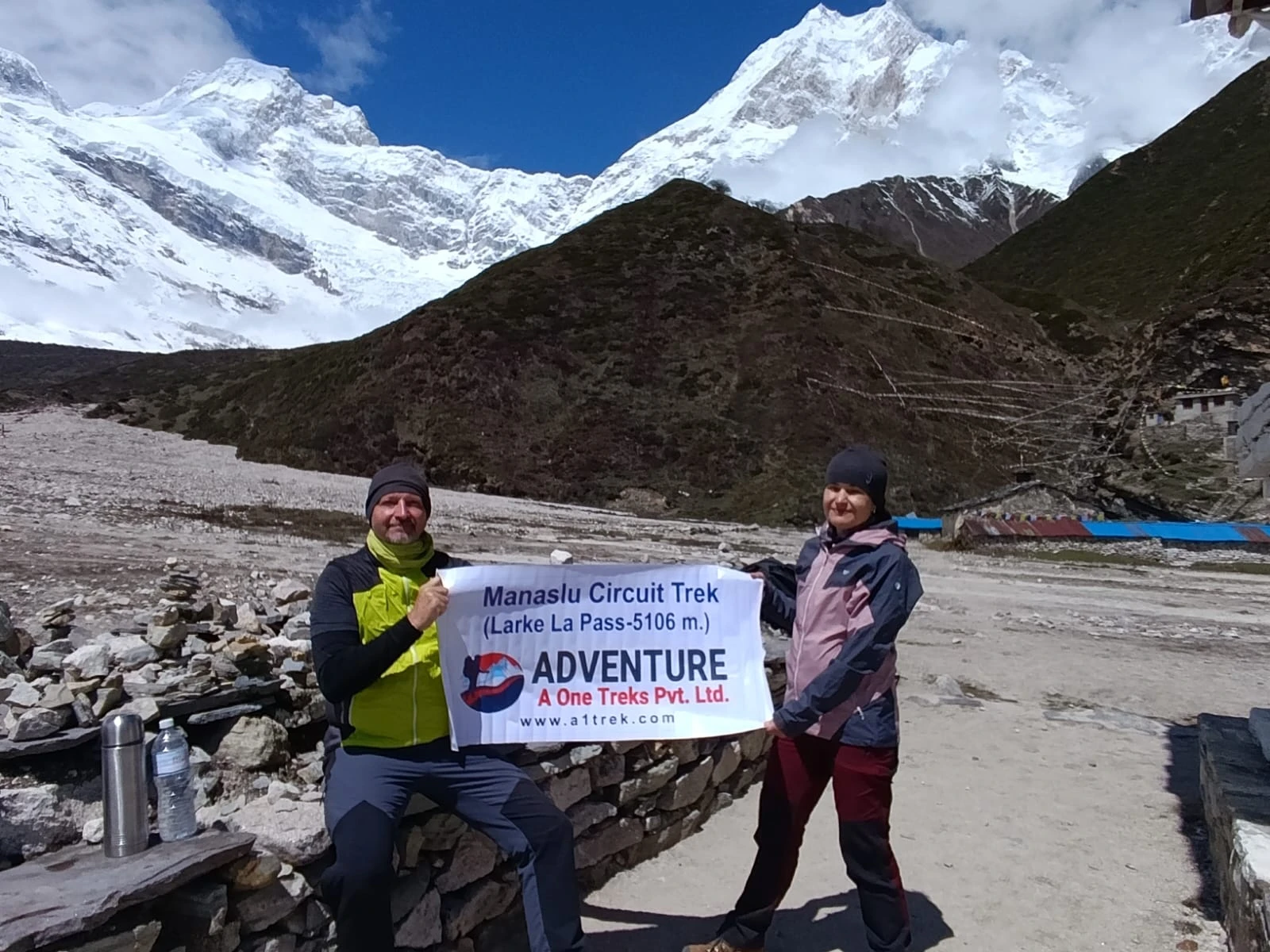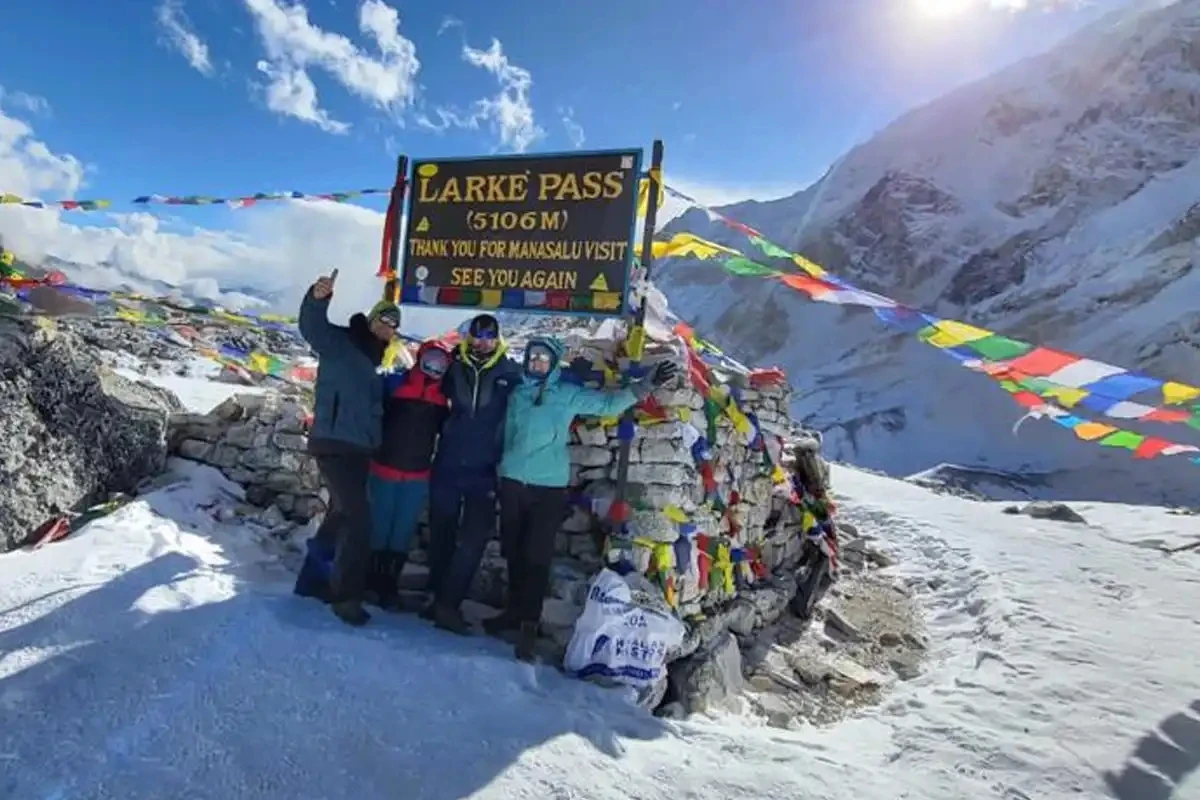
Ground Transportation as Per our plan
The Manaslu Circuit Trek is one of Nepal's most rewarding Himalayan adventures, offering an unforgettable journey around Mount Manaslu (8,163 m), the world's eighth-highest mountain. Unlike the busier Everest and Annapurna regions, the Manaslu Circuit takes you through remote mountain villages, ancient Tibetan Buddhist monasteries, dense forests, glacial rivers, and the breathtaking Larkya La Pass (5,106 m)—one of Nepal's most spectacular high mountain passes.
Our 14-day Manaslu Circuit Trek Package is carefully designed to provide the perfect balance of adventure, acclimatization, and cultural immersion. The itinerary follows a gradual ascent to help reduce the risk of altitude sickness while allowing plenty of time to experience the authentic traditions of the Nubri and Tsum communities. Along the way, you'll stay in traditional Himalayan tea houses, enjoy warm local hospitality, and witness panoramic views of Manaslu, Himalchuli, Ngadi Chuli, Ganesh Himal, Cheo Himal, and the Annapurna Range.
As a locally owned trekking company, A1 Treks believes that the Manaslu region is best explored with experienced guides who know its trails, culture, and changing mountain conditions. From securing all required permits and arranging licensed guides to providing 24/7 support throughout your journey, we take care of every detail so you can focus on enjoying the trek with confidence.
Whether you're an experienced trekker seeking a quieter alternative to Everest Base Camp or an adventurous beginner with good fitness and determination, the Manaslu Circuit Trek offers an exceptional Himalayan experience filled with dramatic landscapes, rich Tibetan culture, and unforgettable mountain scenery. Join A1 Treks and discover why the Manaslu Circuit is widely regarded as one of Nepal's finest trekking adventures.
The Manaslu Circuit Trek is one of Nepal's most spectacular long-distance trekking adventures, circling the mighty Mount Manaslu (8,163 m)—the eighth-highest mountain in the world. Located in the remote Gorkha District of north-central Nepal, this trek combines breathtaking Himalayan scenery, ancient Tibetan Buddhist culture, rich biodiversity, and thrilling high-altitude adventure into one unforgettable journey.
Unlike the more commercial Everest Base Camp or Annapurna Circuit treks, the Manaslu Circuit remains relatively untouched. As a restricted trekking region, it offers visitors an authentic glimpse into traditional mountain life while protecting the fragile environment and cultural heritage of the local communities.
Over approximately 14 to 18 days, trekkers journey from lush subtropical forests at around 700 meters to the dramatic Larkya La Pass (5,106 m) before descending into the Annapurna region. Along the way, you'll experience dramatic river gorges, roaring waterfalls, alpine meadows, glaciers, snow-covered peaks, centuries-old monasteries, and welcoming villages that preserve a distinctly Tibetan way of life.
For travelers seeking a less crowded, culturally rich, and physically rewarding Himalayan adventure, the Manaslu Circuit Trek is widely regarded as one of Nepal's finest trekking experiences.
History of the Manaslu Circuit Trek
The Manaslu region has been inhabited for centuries by ethnic communities with strong cultural and trading ties to Tibet. Long before trekkers discovered the area, these ancient mountain trails served as trade routes connecting Nepal and Tibet through high Himalayan passes.
Salt, wool, medicinal herbs, grains, and livestock were transported along these rugged paths by traders and yak caravans. Many of today's trekking trails follow the same historic routes that local people have used for generations.
The region remained largely isolated from international tourism until the early 1990s.
Mount Manaslu itself was first climbed in 1956 by a Japanese expedition led by Toshio Imanishi and Gyalzen Norbu Sherpa. Since then, Japan has maintained a special historical connection with the mountain, and Manaslu is sometimes referred to as the "Japanese Mountain."
Recognizing the ecological and cultural significance of the region, the Nepalese government designated the Manaslu area as a restricted trekking zone. Special permits were introduced to regulate visitor numbers, protect local traditions, and minimize environmental impacts.
Today, the Manaslu Circuit has become one of Nepal's premier trekking routes while still retaining the sense of exploration that characterized Himalayan trekking decades ago.
Trekking Route Overview
The classic Manaslu Circuit Trek begins with a scenic drive from Kathmandu to Machha Khola (or occasionally Soti Khola, depending on road conditions).
From there, trekkers gradually ascend through diverse landscapes and traditional mountain villages before crossing Larkya La Pass and descending into the Annapurna Conservation Area.
A typical route includes:
The route forms a complete circuit around Mount Manaslu before connecting with part of the Annapurna trekking region.
This combination of landscapes makes every trekking day feel unique.
Elevation Profile
One of the strengths of the Manaslu Circuit is its gradual altitude gain, allowing trekkers to acclimatize naturally.
Approximate elevations include:
| Location | Elevation |
|---|---|
| Kathmandu | 1,400 m |
| Machha Khola | 900 m |
| Jagat | 1,340 m |
| Deng | 1,860 m |
| Namrung | 2,630 m |
| Lho | 3,180 m |
| Samagaun | 3,530 m |
| Samdo | 3,875 m |
| Dharamsala | 4,460 m |
| Larkya La Pass | 5,106 m |
| Bimthang | 3,590 m |
The itinerary includes important acclimatization opportunities, particularly around Samagaun, where trekkers often take day hikes to Birendra Lake or Manaslu Base Camp before continuing higher.
Geography of the Manaslu Region
The Manaslu region lies within the Mansiri Himal range in north-central Nepal, bordering Tibet.
Its geography is remarkably diverse.
The trek begins in deep river valleys carved by the Budhi Gandaki River before climbing through steep cliffs, dense forests, alpine meadows, glacial moraines, and eventually reaching the high Himalayan landscape surrounding Larkya La.
The terrain constantly changes as elevation increases.
You'll encounter:
This extraordinary geographical diversity is one reason why the Manaslu Circuit is considered among Nepal's most scenic treks.
Rich Tibetan Buddhist Culture
One of the defining features of the Manaslu Circuit is its deeply rooted Himalayan culture.
Lower villages are predominantly inhabited by Gurung communities, while higher settlements are home to Nubri and Tibetan-origin people whose traditions closely resemble those found across the Tibetan Plateau.
Throughout the trek you'll encounter:
The village of Samagaun is considered one of the cultural highlights of the trek.
Here, locals continue practicing traditional farming, yak herding, and Buddhist rituals that have remained largely unchanged for centuries.
Many monasteries date back hundreds of years and continue to serve as important spiritual centers for local communities.
Visitors are encouraged to respect local customs by walking clockwise around mani walls and chortens and asking permission before photographing people or religious ceremonies.
Manaslu Conservation Area
The entire trekking route passes through the Manaslu Conservation Area, established in 1998 to preserve the region's unique biodiversity and cultural heritage.
Covering approximately 1,663 square kilometers, the conservation area protects diverse ecosystems ranging from subtropical forests to alpine habitats.
The protected area also helps:
Tourism revenue generated through permits contributes directly to conservation efforts and community development projects.
Biodiversity of the Region
The Manaslu region is one of Nepal's richest biodiversity hotspots.
Because the trek spans several climate zones, wildlife changes dramatically with elevation.
Flora includes:
Wildlife species include:
Among the most elusive residents is the Snow Leopard, although sightings are exceptionally rare due to its secretive nature.
Bird enthusiasts can observe:
Spring and autumn are particularly rewarding seasons for birdwatching and wildlife observation.
The Budhi Gandaki River Valley
The Budhi Gandaki River is the lifeline of the Manaslu Circuit.
Originating from glaciers beneath Mount Manaslu, the river accompanies trekkers for much of the journey.
Its powerful waters have carved one of Nepal's deepest Himalayan valleys, creating dramatic landscapes filled with:
The sound of rushing water remains a constant companion during the lower sections of the trek.
Crossing the many suspension bridges above the Budhi Gandaki is one of the memorable experiences of the journey.
Incredible Mountain Views
The Manaslu Circuit offers panoramic mountain scenery from beginning to end.
Unlike some treks where spectacular views are concentrated near the destination, Manaslu rewards trekkers almost every day.
Major peaks visible during the trek include:
One of the finest viewpoints is above Lho Village, where sunrise illuminates the towering face of Mount Manaslu.
The crossing of Larkya La Pass provides a breathtaking 360-degree panorama of snow-covered peaks and glaciers, making it one of the most rewarding viewpoints in the Nepal Himalayas.
Traditional Himalayan Villages
The villages along the Manaslu Circuit are among its greatest attractions.
Unlike more commercial trekking regions, many settlements remain largely unchanged despite the growth of tourism.
Each village has its own unique character.
Jagat
A picturesque stone village that marks the official entrance to the restricted Manaslu region.
Deng
Known for its peaceful atmosphere and gradual transition toward Tibetan culture.
Namrung
Offers spectacular mountain views and beautiful traditional architecture.
Lho
Home to the famous Ribung Monastery and one of the best sunrise views of Mount Manaslu.
Samagaun
The cultural heart of the trek, featuring monasteries, yak pastures, and nearby Birendra Lake.
Samdo
One of Nepal's highest permanent villages, located close to the Tibetan border.
Bimthang
A stunning alpine valley surrounded by glaciers, forests, and towering peaks after crossing Larkya La Pass.
Each overnight stop provides opportunities to interact with local families, enjoy traditional hospitality, and experience everyday Himalayan life.
Trail Conditions
The Manaslu Circuit offers a varied and adventurous trekking experience.
Trail conditions change significantly as you gain elevation.
Lower Section
Expect:
Middle Section
Trails become:
Higher Section
Near Larkya La Pass, the trail includes:
While no technical climbing is required, trekkers should have good physical fitness and appropriate trekking equipment. Proper acclimatization, sturdy footwear, and the guidance of an experienced licensed guide are essential for a safe and enjoyable journey.
An Unforgettable Himalayan Journey
The Manaslu Circuit Trek is far more than a mountain walk—it is an immersive journey through Nepal's natural and cultural heritage. From the lush Budhi Gandaki Valley to the windswept heights of Larkya La Pass, every stage reveals a new landscape, a different community, and another unforgettable view.
Its blend of rich history, Tibetan Buddhist traditions, protected wilderness, diverse ecosystems, dramatic geography, and world-class mountain scenery creates an experience that few trekking routes can match. For those seeking an authentic Himalayan adventure away from the crowds, the Manaslu Circuit stands as one of Nepal's most complete and rewarding trekking destinations.
The Manaslu Circuit Trek is one of Nepal's most rewarding trekking adventures. While Everest Base Camp and the Annapurna Circuit attract thousands of trekkers every year, Manaslu remains a quieter, more authentic Himalayan experience. It combines towering snow-capped peaks, centuries-old Buddhist culture, dramatic river valleys, dense forests, remote villages, and one of Nepal's highest trekking passes into a single journey.
If you're looking for a trek that offers genuine adventure rather than crowded trails, the Manaslu Circuit stands in a class of its own. Every day presents something different—from crossing long suspension bridges above roaring rivers to walking through ancient monasteries, alpine meadows, yak pastures, and glacial landscapes before reaching the spectacular Larkya La Pass (5,106 m).
Here's why thousands of experienced trekkers consider the Manaslu Circuit one of Nepal's finest trekking destinations.
1. A Truly Off-the-Beaten-Path Himalayan Adventure
Unlike Nepal's commercial trekking routes, the Manaslu Circuit still feels like a genuine expedition. Although visitor numbers have steadily increased, the trail remains remarkably peaceful.
Many trekking days allow you to walk for hours through forests, mountain valleys, and traditional villages while encountering only a handful of other trekking groups. The quiet environment allows visitors to appreciate the sounds of flowing rivers, fluttering prayer flags, and distant yak bells instead of crowds.
This sense of isolation is becoming increasingly rare in Nepal. For travelers seeking a true wilderness experience without sacrificing safety or infrastructure, Manaslu offers the perfect balance.
2. Spectacular Mountain Scenery Throughout the Trek
One of the biggest reasons trekkers choose Manaslu is the constantly changing scenery.
Rather than offering one famous viewpoint, the trek delivers incredible mountain panoramas almost every day.
You'll witness:
Each section of the trail reveals different mountain landscapes—from deep river gorges and waterfalls to snow-covered peaks rising dramatically above alpine valleys.
Few treks in Nepal provide such geographical diversity within two weeks.
3. Experience Authentic Himalayan Culture
The Manaslu region is home to communities whose traditions have remained largely unchanged for centuries.
As you gain altitude, you'll notice the gradual transition between Hindu settlements in the lower valleys and Tibetan Buddhist villages higher in the mountains.
You'll pass through villages such as:
These settlements feature:
Because tourism remains relatively limited, cultural interactions often feel genuine rather than commercialized.
Many families continue practicing lifestyles passed down through generations.
4. A Restricted Region with Preserved Authenticity
The Manaslu Circuit lies inside Nepal's restricted trekking region.
This status has helped protect both the environment and local culture.
Unlike heavily commercialized trekking routes, you'll find:
Trekkers must obtain special permits and travel with a licensed guide, which naturally limits visitor numbers and helps maintain the region's pristine character.
5. Incredible Landscape Diversity
Very few Himalayan treks change as dramatically as Manaslu.
Within two weeks you'll travel through multiple ecosystems.
Subtropical Valleys
The trek begins in warm, green valleys featuring:
Dense Himalayan Forests
As you climb higher, forests become dominated by:
Spring transforms these forests into colorful displays of blooming rhododendrons.
Alpine Meadows
Beyond Samagaun, the scenery changes again into:
High Himalayan Landscape
Approaching Larkya La Pass, you'll encounter:
Few treks provide such dramatic environmental variation.
6. One of Nepal's Most Rewarding High Passes
Crossing Larkya La Pass (5,106 m) is the highlight of the trek.
Unlike some high passes that involve extremely steep ascents, Larkya La offers a gradual climb with breathtaking rewards.
On summit day you'll enjoy panoramic views of:
Reaching the colorful prayer flags at the top after days of gradual ascent creates one of Nepal's most memorable trekking achievements.
7. Rich Wildlife and Biodiversity
The Manaslu Conservation Area protects more than 1,600 square kilometers of forests, alpine ecosystems, and mountain habitats.
Wildlife found here includes:
Birdwatchers and nature photographers especially appreciate the ecological diversity of the region.
Spring and autumn offer the best wildlife viewing opportunities.
8. Perfect for Adventure Seekers
The Manaslu Circuit isn't simply a scenic walk.
It offers real adventure.
Throughout the trek you'll experience:
Yet despite its adventurous character, the trail remains achievable for trekkers with good fitness and proper acclimatization.
It strikes an excellent balance between challenge and accessibility.
9. A Photographer's Paradise
Every section of the Manaslu Circuit provides exceptional photography opportunities.
Popular photography subjects include:
Mountain Landscapes
Culture
Nature
Night Photography
The remote location means almost no light pollution, making the region ideal for:
Every day offers fresh compositions, ensuring photographers return with an impressive collection of images.
10. Less Crowded Means a Better Trekking Experience
One of Manaslu's greatest strengths is simply the lack of crowds.
Compared with Nepal's busiest trekking routes, you'll enjoy:
Many trekkers consider this solitude the single biggest advantage of choosing Manaslu over Everest or Annapurna.
11. Excellent Acclimatization Profile
The itinerary naturally allows gradual altitude gain.
Most standard itineraries include acclimatization days in Samagaun, where trekkers can explore nearby attractions such as:
These side trips not only improve acclimatization but also add even more scenic highlights to the overall experience.
12. A Sense of Achievement Few Treks Can Match
Completing the Manaslu Circuit brings a unique feeling of accomplishment.
The combination of remote wilderness, cultural immersion, challenging terrain, and crossing Larkya La Pass creates an experience that feels like a true Himalayan expedition rather than a standard trekking holiday.
Many trekkers who have completed Everest Base Camp, Annapurna Circuit, and Langtang often describe Manaslu as their favorite because it retains the adventurous spirit that first made Nepal famous among mountain travelers.
One of the most common questions travelers ask before booking is, "How much does the Manaslu Circuit Trek cost?" The answer depends on several factors, including the trekking season, group size, itinerary length, accommodation preferences, and the services included in your package.
Because the Manaslu Circuit is a restricted trekking region, every trekker must travel with a licensed guide and obtain special permits. This makes it slightly more expensive than unrestricted treks such as Annapurna Base Camp or Langtang, but the added cost supports conservation efforts, local communities, and ensures a safer trekking experience.
On average, a fully organized 14–16 day Manaslu Circuit Trek costs between USD 1,100 and USD 2,000+ per person, depending on the level of service and group size.
While a well-organized package covers most major expenses, it's important to understand which costs are included, what you'll need to budget separately, and how much extra spending money to bring.
What Is Included in the Trek Cost?
At A1 Trek, our Manaslu Circuit Trek package is designed to cover all the essential logistics, allowing you to focus on enjoying the adventure.
Typical inclusions are:
1. Airport Transfers
Your journey begins with hassle-free transportation.
Included:
2. Accommodation in Kathmandu
Most packages include hotel accommodation before and after the trek.
Usually includes:
Luxury upgrades are available upon request.
3. Ground Transportation
Transportation between Kathmandu and the trailhead is included.
This generally covers:
Depending on road conditions, travel may involve:
4. Licensed Government Guide
The Manaslu region legally requires all trekkers to hire a licensed guide.
Your guide provides:
5. Porter Services
Most trekking packages include porter support.
Typically:
Having a porter makes the trek significantly more enjoyable, especially at higher elevations.
6. Trekking Permits
Permit fees are one of the largest mandatory expenses.
A standard Manaslu trek requires:
Manaslu Restricted Area Permit (MRAP)
Cost varies depending on the season.
Manaslu Conservation Area Permit (MCAP)
Required for all trekkers.
Annapurna Conservation Area Permit (ACAP)
Required after crossing Larkya La Pass and entering the Annapurna region.
Your trekking company arranges all permit paperwork.
7. Tea House Accommodation During the Trek
Accommodation throughout the trek is usually included.
Tea houses generally provide:
Luxury accommodation is not available in the Manaslu region.
8. Meals During the Trek
Many packages include:
Typical menu:
Meals become more expensive at higher elevations due to transportation costs.
9. Government Taxes and Service Charges
A reputable trekking company includes:
Always confirm these are included before booking.
10. Trek Completion Certificate
Many operators, including A1 Trek, provide a trekking completion certificate as a souvenir of your Himalayan adventure.
What's Not Included?
Even comprehensive trekking packages typically exclude certain personal expenses.
These commonly include:
Extra Expenses During the Trek
Although your package covers the major costs, you'll still need cash for daily personal expenses.
Most tea houses only accept Nepalese Rupees (NPR), and there are no ATMs after leaving Kathmandu.
A daily budget of USD 15–30 is generally sufficient for personal expenses.
Food and Drinks
Meals included in your package usually cover breakfast, lunch, and dinner, but drinks and snacks are often extra.
Typical prices (higher at higher elevations):
| Item | Approx. Cost (NPR) |
|---|---|
| Tea | 200–500 |
| Coffee | 300–600 |
| Soft Drinks | 250–500 |
| Hot Lemon | 300–500 |
| Hot Chocolate | 400–700 |
| Energy Drink | 500–900 |
| Chocolate Bar | 300–700 |
| Biscuits | 250–500 |
As supplies are carried by porters, mules, or helicopters, prices increase with altitude.
Drinking Water Costs
Avoid buying bottled water throughout the trek.
Instead, bring:
Tea houses also sell:
Typical prices:
Using refillable bottles is both economical and environmentally responsible.
Charging Electronic Devices
Electricity is available in most tea houses but is rarely free.
Typical charging costs:
| Device | Approx. Cost (NPR) |
|---|---|
| Phone | 300–600 |
| Camera Battery | 500–800 |
| Power Bank | 500–800 |
At higher elevations, charging is often powered by solar energy, making it more expensive.
Money-saving tip
Bring:
These can significantly reduce your charging expenses.
WiFi and Mobile Network Charges
Internet access is available in many villages but becomes slower and less reliable with altitude.
WiFi charges generally range between:
Mobile coverage:
Many trekkers choose to disconnect and enjoy the experience without constant internet access.
Hot Shower Costs
Most tea houses provide hot showers for an additional fee.
Approximate prices:
Water is typically heated using gas or solar systems, so availability depends on weather conditions.
Snacks and Personal Purchases
Bringing snacks from Kathmandu is much cheaper than buying them on the trail.
Common purchases include:
Prices may double or triple above 3,500 meters.
Trekking Gear Rental
If you don't own all the necessary equipment, Kathmandu has many reputable rental shops.
Typical rental prices per day:
| Equipment | Approx. Cost (NPR) |
|---|---|
| Down Jacket | 200–400 |
| Sleeping Bag (-20°C) | 200–500 |
| Trekking Poles | 100–250 |
| Crampons (seasonal) | 200–400 |
| Duffel Bag | Often included or 100–200 |
Renting is an affordable option for travelers who trek occasionally.
Travel Insurance
Travel insurance is mandatory for the Manaslu Circuit Trek.
Your policy should cover:
Standard travel insurance often excludes high-altitude trekking, so always verify the policy details before purchasing.
Emergency Evacuation Costs
Although emergencies are uncommon, helicopter evacuation in the Himalayas can be extremely expensive.
Without insurance, evacuation costs may range from:
This is why comprehensive travel insurance with helicopter rescue coverage is essential before starting the trek.
Your guide and A1 Trek will coordinate evacuation if required, but insurance is responsible for covering eligible costs.
Guide and Porter Tips
Tipping is not compulsory in Nepal, but it is a long-standing and appreciated tradition within the trekking industry.
The amount depends on:
Many trekkers budget approximately:
If you receive exceptional service, a larger tip is always appreciated.
Suggested Personal Spending Budget
In addition to your package price, a practical estimate for personal expenses is:
| Expense | Estimated Budget |
|---|---|
| Drinks & Snacks | USD 80–150 |
| WiFi | USD 20–40 |
| Charging Devices | USD 20–40 |
| Hot Showers | USD 30–60 |
| Souvenirs | USD 20–100+ |
| Tips | USD 100–200 (depending on group size and generosity) |
| Miscellaneous | USD 30–50 |
Recommended total personal budget: USD 300–500 in Nepalese Rupees. Travelers who use fewer paid services can spend less, while those purchasing souvenirs, extra drinks, or premium services should budget more.
Is the Manaslu Circuit Trek Worth the Cost?
While the Manaslu Circuit Trek is more expensive than some other trekking routes in Nepal, the value it offers is exceptional. The cost includes access to a protected restricted area, experienced licensed guides, carefully managed logistics, and a journey through one of the Himalayas' most pristine landscapes.
With fewer crowds, authentic cultural experiences, stunning mountain scenery, and the unforgettable challenge of crossing Larkya La Pass, the Manaslu Circuit delivers an adventure that many seasoned trekkers consider well worth the investment.
At A1 Trek, we believe in transparent pricing, no hidden costs, and exceptional service. From permits and transportation to expert guiding and personalized support, our goal is to ensure you receive outstanding value and a safe, memorable trekking experience from start to finish.
The Manaslu Circuit Trek is widely regarded as one of Nepal's most rewarding long-distance trekking adventures, but it is also one of the more demanding. While it doesn't require technical climbing skills or mountaineering experience, the combination of high altitude, long trekking days, rugged terrain, and remote mountain conditions makes it a moderately difficult to challenging trek.
Many people assume that only expert trekkers can complete the Manaslu Circuit. In reality, thousands of first-time Himalayan trekkers successfully finish the route every year. The key is understanding what makes the trek challenging and preparing accordingly.
If you maintain good physical fitness, follow a proper acclimatization schedule, and trek with an experienced guide, the Manaslu Circuit is achievable for most healthy and determined individuals.
This guide explains every aspect of the trek's difficulty so you can decide whether it's the right adventure for you.
Yes—but with preparation.
Beginners can successfully complete the trek if they:
Many first-time Himalayan trekkers complete the Manaslu Circuit each season without prior high-altitude experience.
This trek is suitable for:
Age alone is not a limiting factor. Well-prepared teenagers and older adults have successfully completed the trek, provided they are medically fit and follow an appropriate itinerary.
The Manaslu Circuit may not be suitable for people who:
If you have a pre-existing medical condition, consult your doctor before booking and inform your trekking company in advance.
Tips to Make the Trek Easier
Simple habits can make a significant difference:
Choosing the right season is one of the most important decisions when planning the Manaslu Circuit Trek. Weather conditions, trail safety, mountain visibility, temperature, accommodation availability, and overall trekking experience can vary significantly throughout the year.
The Manaslu Circuit can be trekked in all four seasons, but each offers a different experience. Spring and autumn are considered the best times due to stable weather and spectacular mountain views, while summer and winter appeal to trekkers looking for solitude and unique landscapes.
Because the route crosses Larkya La Pass (5,106 m), seasonal weather has a greater impact than on lower-altitude treks. Snowfall, heavy rain, or poor visibility can influence trail conditions and occasionally delay travel.
This guide compares each season in detail to help you choose the best time based on your preferences, fitness level, and travel goals.
At a Glance: Best Seasons for the Manaslu Circuit Trek
| Season | Months | Weather | Temperature | Mountain Views | Crowds | Recommended For |
|---|---|---|---|---|---|---|
| Spring | March–May | Stable and mild | Moderate | Excellent | Moderate | Nature lovers, photographers, first-time trekkers |
| Summer (Monsoon) | June–August | Warm and rainy | Warm lower valleys, cool higher elevations | Limited | Very Low | Experienced trekkers seeking solitude |
| Autumn | September–November | Dry and stable | Comfortable | Outstanding | High | Most trekkers, clear views, festivals |
| Winter | December–February | Cold and dry | Very cold at high altitude | Excellent | Very Low | Experienced trekkers who enjoy snow |
Spring (March to May)
Spring is one of the finest seasons for the Manaslu Circuit Trek. As winter snow begins to melt, forests burst into bloom, temperatures become comfortable, and mountain views are consistently spectacular.
This is a season of renewal in the Himalayas, with rhododendron forests painting the hillsides in vibrant shades of red, pink, and white. Wildlife also becomes more active, making spring an excellent time for birdwatching and nature photography.
Weather
Spring weather is generally stable, with sunny mornings and mild afternoons. While occasional clouds may develop later in the day, prolonged bad weather is uncommon.
Snow usually remains around Larkya La Pass in early March but gradually melts as the season progresses, making April and early May ideal for crossing.
Temperature
Approximate temperatures:
| Location | Day | Night |
|---|---|---|
| Lower Valleys | 20–28°C | 10–15°C |
| Samagaun | 8–15°C | -2 to 5°C |
| Larkya La Pass | -6 to 5°C | Much colder before sunrise |
Layered clothing is essential because temperatures vary significantly between lower valleys and high elevations.
Visibility
Spring offers excellent mountain visibility, particularly during the mornings. Peaks such as Mount Manaslu, Himalchuli, Ganesh Himal, and Annapurna II are often crystal clear after overnight snowfall.
Trail Conditions
Trails are generally dry and in excellent condition. Some snow patches may remain near the pass in March, but these rarely create major difficulties when trekking with an experienced guide.
Wildlife and Nature
Spring is the best season for:
Festivals
Depending on the calendar, trekkers may experience local Buddhist ceremonies and Nepali festivals in villages along the route.
Advantages
Disadvantages
Summer / Monsoon (June to August)
Summer brings Nepal's monsoon season. Although many trekkers avoid this period, it offers a completely different Himalayan experience.
The lower valleys become lush and vibrant, rivers flow at full strength, and the trails are remarkably quiet.
However, heavy rainfall can create challenging trekking conditions.
Weather
Expect:
Rainfall is heaviest in lower elevations, while upper alpine regions receive less precipitation.
Temperature
Approximate temperatures:
| Location | Day | Night |
|---|---|---|
| Lower Valleys | 24–30°C | 18–22°C |
| Samagaun | 12–18°C | 5–10°C |
| Larkya La Pass | 0–8°C | Below freezing |
Visibility
Mountain views are unpredictable.
Early mornings sometimes provide clear panoramas before clouds build throughout the day.
Trail Conditions
Monsoon creates:
Flexibility is important, as weather may occasionally delay travel.
Nature
Summer transforms the region into a lush green paradise.
Waterfalls become more dramatic, forests are vibrant, and agricultural terraces are full of life.
Advantages
Disadvantages
Summer is generally recommended only for experienced trekkers comfortable with variable mountain conditions.
Autumn (September to November)
Autumn is widely regarded as the best overall season for the Manaslu Circuit Trek.
After the monsoon ends, dust and humidity disappear, leaving exceptionally clear skies and some of the year's most breathtaking mountain views.
The combination of stable weather, comfortable temperatures, and vibrant cultural festivals makes autumn the busiest trekking season in Nepal.
Weather
Expect:
October often offers the most reliable conditions for crossing Larkya La Pass.
Temperature
Approximate temperatures:
| Location | Day | Night |
|---|---|---|
| Lower Valleys | 18–26°C | 10–15°C |
| Samagaun | 8–14°C | -3 to 4°C |
| Larkya La Pass | -8 to 5°C | Very cold before sunrise |
Visibility
Autumn provides the clearest mountain views of the year.
Snow-capped peaks appear especially sharp after the monsoon has washed dust from the atmosphere.
Photographers often consider October the finest month for Himalayan landscapes.
Trail Conditions
Trails are generally:
These ideal conditions make autumn suitable for trekkers of all experience levels.
Cultural Experience
Autumn coincides with Nepal's major festivals, including:
Visitors may witness village celebrations, traditional music, dances, and family gatherings, adding a unique cultural dimension to the trek.
Advantages
Disadvantages
Winter (December to February)
Winter transforms the Manaslu Circuit into a peaceful alpine wilderness.
Snow blankets the mountains, skies remain remarkably clear, and trekking numbers drop significantly.
For experienced trekkers seeking solitude, winter can be an unforgettable season.
Weather
Winter is generally dry but cold.
Conditions include:
Heavy snowfall may temporarily close the pass during severe weather.
Temperature
Approximate temperatures:
| Location | Day | Night |
|---|---|---|
| Lower Valleys | 10–18°C | 2–8°C |
| Samagaun | 0–8°C | -10 to -5°C |
| Larkya La Pass | -15 to -5°C | Much colder before sunrise |
Visibility
Winter offers some of the clearest skies of the year.
The crisp, dry air creates exceptional mountain photography conditions.
Trail Conditions
Expect:
Additional winter equipment may be necessary depending on recent snowfall.
Advantages
Disadvantages
Winter is best suited to experienced trekkers with proper cold-weather gear and flexible travel plans.
Seasonal Comparison
| Factor | Spring | Summer | Autumn | Winter |
|---|---|---|---|---|
| Weather | Stable | Wet | Excellent | Cold & Dry |
| Temperature | Mild | Warm | Comfortable | Cold |
| Mountain Views | Excellent | Variable | Outstanding | Excellent |
| Trail Conditions | Good | Muddy | Excellent | Snowy |
| Wildlife | Excellent | Good | Good | Limited |
| Flowers | Outstanding | Green Forests | Autumn Colors | Minimal |
| Photography | Excellent | Atmospheric | Outstanding | Excellent |
| Crowds | Moderate | Very Low | High | Very Low |
| Accommodation Availability | Good | Excellent | Limited without booking | Good |
| Difficulty | Moderate | Challenging | Moderate | Challenging |
Which Season Is Best for You?
Choose Spring (March–May) if you want blooming rhododendrons, comfortable temperatures, active wildlife, and a colorful Himalayan landscape. It is an excellent choice for first-time trekkers and photographers.
Choose Summer (June–August) if you prioritize solitude, lush green scenery, and don't mind rain, muddy trails, or occasional weather-related delays. This season is better suited to experienced trekkers.
Choose Autumn (September–November) if you want the most reliable weather, crystal-clear mountain views, and ideal trekking conditions. It is the best all-around season for most travelers and the most popular time to visit.
Choose Winter (December–February) if you enjoy snowy landscapes, quiet trails, and dramatic mountain scenery. Be prepared for freezing temperatures, possible snowfall at Larkya La Pass, and more demanding conditions.
Our Recommendation
At A1 Trek, we recommend late March to early May and late September to mid-November as the ideal windows for the Manaslu Circuit Trek. These seasons offer the best combination of stable weather, comfortable temperatures, excellent visibility, and safe trail conditions.
For most trekkers, October stands out as the premier month, delivering crystal-clear Himalayan panoramas, dry trails, and comfortable daytime temperatures. April is another favorite, thanks to blooming rhododendron forests, vibrant alpine landscapes, and consistently good weather.
No matter when you choose to trek, our experienced local guides monitor weather conditions closely, adapt the itinerary when necessary, and ensure you enjoy a safe, memorable, and rewarding journey through one of Nepal's most spectacular trekking regions.
The Manaslu Circuit Trek is a restricted trekking route, meaning all trekkers must obtain special permits before entering the region. These regulations help protect the area's unique culture, fragile environment, and local communities while ensuring visitor safety.
1. Manaslu Restricted Area Permit (RAP)
The Restricted Area Permit (RAP) is mandatory for all foreign trekkers entering the Manaslu region. The permit fee varies by season and the number of days spent in the restricted area.
Purpose:
2. Manaslu Conservation Area Permit (MCAP)
The MCAP is required to enter the Manaslu Conservation Area, which covers more than 1,600 square kilometers of forests, alpine meadows, glaciers, and wildlife habitats.
Purpose:
3. Annapurna Conservation Area Permit (ACAP)
After crossing Larkya La Pass (5,106 m), the trail enters the Annapurna Conservation Area, making an ACAP permit mandatory.
Purpose:
4. TIMS Card (Not Required)
Previously, trekkers also needed a Trekkers' Information Management System (TIMS) card. However, TIMS is no longer required for the Manaslu Circuit Trek because the Restricted Area Permit already provides visitor registration and tracking.
Why Is a Guide Mandatory?
The Nepal Government requires all Manaslu trekkers to be accompanied by a government-licensed trekking guide. This regulation exists because the region is remote, crosses high-altitude terrain, and has limited rescue infrastructure.
A licensed guide helps ensure:
Why Are Two Trekkers Required?
The Manaslu Circuit is subject to a minimum two-trekker rule for the Restricted Area Permit. This policy helps improve safety in remote areas and discourages unauthorized solo trekking.
If you're traveling alone, don't worry—A1 Trek can arrange a permit-sharing partner or organize a small group departure, allowing solo travelers to complete the trek legally without needing to find another trekker themselves.
Need a complete permit guide? Read our in-depth article on Manaslu Circuit Trek Permits, where we explain permit costs, required documents, application procedures, seasonal fees, and the latest government regulations in detail.
Accommodation on the Manaslu Circuit Trek is primarily in traditional tea houses run by local families. While facilities are more basic than on popular routes like Everest or Annapurna, they are clean, comfortable, and offer a warm Himalayan welcome.
Tea Houses
Tea houses provide simple lodging, home-cooked meals, and communal dining areas where trekkers can relax after a day's hike. Standards generally improve in the lower villages and become more basic at higher elevations.
Rooms
Most rooms are twin-sharing with:
Private rooms may be available in lower villages but are limited during peak seasons.
Toilets
Most tea houses have shared toilets. Western-style toilets are common in lower elevations, while squat toilets are more common in remote villages. Carrying your own toilet paper and hand sanitizer is recommended.
Hot Showers
Hot showers are available in many tea houses for an additional fee. Water is usually heated by gas or solar energy, and availability may be limited at higher elevations.
Electricity & Charging
Electricity is available in most villages, but charging phones, cameras, and power banks usually costs extra. Bringing a high-capacity power bank is highly recommended.
WiFi & Mobile Network
Many tea houses offer paid WiFi, although speeds can be slow and connections unreliable at higher elevations. Mobile coverage is available in some areas but becomes limited as you ascend.
Food
Tea houses serve a surprisingly varied menu, including:
Meals become more expensive with altitude due to transportation costs.
Blankets
Most tea houses provide blankets, but temperatures can fall well below freezing near Larkya La Pass. A four-season sleeping bag is strongly recommended for extra warmth and comfort.
Want a complete guide? Read our detailed article on Accommodation on the Manaslu Circuit Trek, covering tea house quality, room standards, food menus, pricing, WiFi, electricity, hot showers, and what to expect at each village along the route.
Food is an essential part of a successful trek, providing the energy needed for long days on the trail. Tea houses along the Manaslu Circuit serve fresh, hearty meals with a mix of Nepali, Tibetan, and basic Western dishes.
Breakfast
Common breakfast options include:
Lunch
Lunch is usually served at tea houses along the trail and may include:
Dinner
Dinner is the main meal of the day, with Dal Bhat being the most popular choice because of its unlimited refills at many tea houses.
Snacks
Carry energy-rich snacks such as:
Buying snacks in Kathmandu is much cheaper than purchasing them on the trail.
Drinking Water
Avoid single-use plastic bottles. Instead, refill a reusable bottle with boiled or filtered water and use purification tablets or a portable filter when needed.
Vegetarian & Vegan Options
Vegetarian meals are widely available throughout the trek. Vegan options are also possible but become more limited at higher elevations, so informing your guide in advance is recommended.
Food Safety
To reduce the risk of stomach problems:
Learn more: Read our complete guide to Food on the Manaslu Circuit Trek, including menus, prices, dietary options, hydration tips, and food safety recommendations.
Reaching the trailhead is part of the adventure. Most Manaslu Circuit itineraries begin with an overland journey from Kathmandu to Machha Khola, passing through scenic hills, rivers, and rural villages.
Kathmandu to Machha Khola
The drive takes approximately 8–10 hours, depending on traffic, weather, and road conditions.
Soti Khola vs. Machha Khola
Many older itineraries started trekking from Soti Khola, but ongoing road improvements now allow most vehicles to reach Machha Khola, shortening the trek by one day.
Private Jeep
A private 4WD jeep is the most comfortable and reliable option.
Benefits include:
Public Bus
Budget travelers can use local buses, but they are generally:
Road Conditions
Roads to the Manaslu region are partly paved but include long sections of rough, unpaved mountain roads. During the monsoon season, landslides and muddy conditions may cause delays.
Need more details? Read our complete guide on Transportation for the Manaslu Circuit Trek, covering routes, travel times, jeep vs. bus comparisons, road conditions, and travel tips.
Packing the right gear is essential for a safe and comfortable trek. The Manaslu Circuit passes through multiple climate zones, so your equipment should be suitable for warm valleys as well as freezing temperatures at Larkya La Pass (5,106 m).
Documents
Clothing
Footwear
Equipment
Medicine
Electronics
Toiletries
Optional Items
Download our complete packing checklist: Visit our detailed Manaslu Circuit Trek Packing List guide for a printable checklist, seasonal gear recommendations, rental advice, and packing tips from our experienced trekking guides.
Weather plays a major role in your Manaslu Circuit Trek experience. Since the trail climbs from around 900 meters to Larkya La Pass (5,106 m), you'll encounter everything from warm subtropical valleys to freezing alpine conditions. Understanding the monthly weather helps you choose the best time for your adventure.
Note: Temperatures below are approximate for higher trekking elevations (Samagaun to Larkya La) and may vary depending on weather conditions.
| Month | Day Temp | Night Temp | Weather | Visibility | Crowds | Recommendation |
|---|---|---|---|---|---|---|
| January | -5°C to 5°C | -15°C to -8°C | Cold, snowy | Excellent | Very Low | Experienced trekkers only |
| February | -3°C to 7°C | -12°C to -6°C | Cold, dry | Excellent | Very Low | Good for winter trekking |
| March | 2°C to 10°C | -8°C to -2°C | Stable, warming | Excellent | Moderate | Excellent |
| April | 5°C to 15°C | -3°C to 3°C | Mild, clear | Outstanding | High | One of the best months |
| May | 8°C to 18°C | 0°C to 5°C | Warm, occasional clouds | Very Good | Moderate | Excellent |
| June | 10°C to 20°C | 5°C to 8°C | Beginning of monsoon | Fair | Low | Not recommended |
| July | 12°C to 22°C | 8°C to 10°C | Heavy rainfall | Poor | Very Low | Avoid if possible |
| August | 12°C to 20°C | 7°C to 10°C | Rainy, humid | Poor | Very Low | Avoid if possible |
| September | 8°C to 18°C | 2°C to 6°C | Monsoon ends | Very Good | Moderate | Excellent |
| October | 5°C to 15°C | -2°C to 3°C | Dry, stable | Outstanding | High | Best overall month |
| November | 2°C to 12°C | -5°C to 0°C | Cool, clear | Excellent | Moderate | Excellent |
| December | -2°C to 8°C | -10°C to -5°C | Cold, dry | Excellent | Low | Good for experienced trekkers |
January
January is the coldest month on the Manaslu Circuit. Heavy snowfall around Larkya La Pass can make crossings difficult or temporarily impossible. The trails are extremely quiet, and snow-covered landscapes create stunning scenery for experienced winter trekkers.
February
February remains cold but offers slightly warmer temperatures than January. Clear skies and excellent mountain visibility make it a rewarding month for those prepared for freezing conditions.
March
Spring begins in March, bringing warmer temperatures and longer days. Snow gradually melts, making trail conditions more favorable while maintaining excellent mountain views.
April
April is considered one of the best months for the Manaslu Circuit Trek. Rhododendron forests bloom, weather is stable, and temperatures are ideal for trekking. Advance booking is recommended due to increased demand.
May
May offers pleasant weather and lush landscapes before the monsoon arrives. Afternoon clouds become more common toward the end of the month, but mountain views remain excellent during the mornings.
June
June marks the start of Nepal's monsoon season. Rainfall increases, especially in the lower valleys, making trails muddy and landslide-prone. Trekking is still possible but requires flexibility.
July
July is the wettest month of the year. Heavy rain, leeches, and poor visibility make this one of the least favorable times for the Manaslu Circuit Trek.
August
Monsoon conditions continue through August. While the forests are lush and the trails are quiet, frequent rain and cloud cover limit mountain views and make trekking more challenging.
September
As the monsoon retreats, September brings greener landscapes, improving weather, and clearer skies. Late September is an excellent time to begin trekking before the peak autumn season.
October
October is widely regarded as the best month to trek the Manaslu Circuit. Dry weather, comfortable temperatures, crystal-clear mountain views, and stable trail conditions create ideal trekking conditions.
November
November continues the excellent autumn weather with clear skies and fewer trekkers than October. Nights become colder, but daytime conditions remain comfortable.
December
Winter begins in December, bringing cold temperatures and occasional snowfall. Early December often provides good trekking conditions, while later in the month snow may affect the high pass.
Best Months to Trek
⭐⭐⭐⭐⭐ Excellent
⭐⭐⭐⭐ Very Good
⭐⭐⭐ Good
⭐⭐ Challenging
⭐ Not Recommended
Want a detailed seasonal analysis? Read our complete Manaslu Circuit Trek Weather Guide, where we cover monthly weather patterns, historical temperatures, rainfall, snowfall, trekking conditions, and expert advice to help you choose the perfect time for your Himalayan adventure.
One of the biggest highlights of the Manaslu Circuit Trek is the ever-changing panorama of the Nepal Himalayas. From lush river valleys to the summit of Larkya La Pass (5,106 m), the trail offers uninterrupted views of some of the country's most beautiful mountains. Unlike many treks where the scenery is concentrated at a single viewpoint, the Manaslu Circuit rewards trekkers with spectacular vistas throughout the journey.
Mount Manaslu (8,163 m)
The star of the trek is Mount Manaslu, the world's eighth-highest mountain. Its name comes from the Sanskrit word Manasa, meaning "Mountain of the Spirit." The best views are from Lho Village, Samagaun, and the ascent toward Manaslu Base Camp, where the mountain's massive glaciers and steep faces dominate the skyline.
Himalchuli (7,893 m)
Located south of Manaslu, Himalchuli is Nepal's second-highest peak outside the eight-thousanders. Its elegant snow-covered ridges are visible from several villages, especially around Namrung and Lho, adding to the dramatic Himalayan panorama.
Ngadi Chuli (7,871 m)
Also known as Peak 29, Ngadi Chuli stands just west of Manaslu. Though often overshadowed by its famous neighbor, its sharp summit and glacier-covered slopes create an impressive backdrop, particularly around Samagaun.
Ganesh Himal (7,422 m)
The Ganesh Himal range dominates the southern skyline during the early days of the trek. Named after the Hindu deity Lord Ganesh because of its elephant-like profile, this mountain range offers spectacular sunrise and sunset views from the lower valleys.
Cheo Himal (6,820 m)
Visible during the higher sections of the trek, Cheo Himal rises dramatically near Larkya La Pass. Its rugged ice-covered slopes and striking ridgelines make it a favorite subject for landscape photographers.
Kang Guru (6,981 m)
After crossing Larkya La Pass, Kang Guru becomes one of the most prominent peaks. Towering above the descent toward Bimthang, it creates one of the trek's most iconic mountain landscapes.
Annapurna II (7,937 m)
As the trail enters the Annapurna region after Larkya La, the magnificent Annapurna II comes into view. Its towering snow-covered pyramid marks the successful completion of the circuit and provides a spectacular finale to the trek.
Best Viewpoints Along the Trail
Some of the finest mountain panoramas can be enjoyed from:
Explore more: Read our complete guide to the Mountain Views on the Manaslu Circuit Trek, featuring detailed information about each peak, the best viewpoints, photography tips, and the ideal seasons for crystal-clear Himalayan panoramas.
The Manaslu Circuit Trek is more than a mountain adventure—it's a journey through one of Nepal's most culturally preserved Himalayan regions. Due to its proximity to Tibet and its status as a restricted area, the Manaslu region has retained traditions, architecture, and lifestyles that have remained largely unchanged for centuries.
As you trek through remote villages, you'll experience a unique blend of Tibetan Buddhism, traditional mountain life, and warm local hospitality.
Nubri People
The upper Manaslu region is home to the Nubri people, an ethnic community of Tibetan origin. Living in villages such as Lho, Samagaun, and Samdo, they continue to practice traditional farming, yak herding, and Buddhist customs passed down through generations.
Their stone-built homes, traditional clothing, and close-knit communities offer trekkers an authentic glimpse into life in the high Himalayas.
Tsum Valley Influence
The nearby Tsum Valley, often called the "Hidden Valley of Happiness," shares strong cultural and religious ties with the Manaslu region. Many families have relatives in both valleys, and the influence of Tsum culture can be seen in local customs, architecture, and spiritual traditions.
Trekkers combining the Manaslu Circuit with the Tsum Valley Trek gain an even deeper understanding of this unique Himalayan heritage.
Tibetan Buddhism
Buddhism is deeply woven into daily life along the Manaslu Circuit. The region follows Tibetan Buddhism, and many villages revolve around monasteries that serve as spiritual and community centers.
Visitors will see monks, prayer ceremonies, spinning prayer wheels, and colorful religious symbols throughout the trek.
Ancient Monasteries
Several centuries-old monasteries (gompas) are located along the trail. One of the most famous is Ribung Monastery in Lho Village, offering panoramic views of Mount Manaslu and insight into local Buddhist traditions.
These monasteries remain active places of worship and play an important role in preserving the region's spiritual heritage.
Prayer Flags, Mani Walls & Chortens
The trail is lined with:
According to local tradition, trekkers should always pass clockwise around mani walls and chortens as a sign of respect.
Festivals
Local communities celebrate several important Buddhist festivals throughout the year. Depending on your trekking dates, you may witness:
These events provide a memorable opportunity to experience Himalayan culture beyond the trekking trail.
Language
The primary language in the upper Manaslu region is Nubri, a Tibetan-related language. Nepali is widely spoken, and many guides and tea house owners also communicate in basic English, making it easy for international visitors to interact with local communities.
Learning simple Nepali greetings such as "Namaste" is always appreciated.
Local Food
Meals along the Manaslu Circuit reflect both Nepali and Tibetan culinary traditions. Popular dishes include:
These hearty meals provide the energy needed for high-altitude trekking while offering a taste of the region's unique cultural heritage.
Discover more: Read our complete guide to the Culture and People of the Manaslu Region, where we explore local traditions, monasteries, festivals, architecture, customs, and the fascinating Tibetan heritage that makes the Manaslu Circuit one of Nepal's richest cultural trekking experiences.
The Manaslu Circuit Trek passes through the Manaslu Conservation Area, a protected region covering approximately 1,663 square kilometers. Stretching from subtropical forests to alpine meadows and glaciers, it is one of Nepal's richest biodiversity hotspots.
Wildlife
The conservation area is home to a wide variety of Himalayan wildlife, including:
The elusive Snow Leopard also inhabits the higher elevations, although sightings are extremely rare.
Birds
Birdwatchers can spot more than 100 bird species, including:
Spring and autumn are the best seasons for birdwatching.
Forests & Vegetation
As the trail gains altitude, the landscape changes dramatically:
During spring, blooming rhododendrons transform the hillsides into vibrant displays of red, pink, and white.
Medicinal Plants
The Manaslu region is known for its valuable Himalayan medicinal herbs, including species traditionally used in Ayurvedic and Tibetan medicine. Many local communities continue to harvest these plants sustainably under conservation regulations.
Manaslu Conservation Area
Established in 1998, the Manaslu Conservation Area protects the region's wildlife, forests, rivers, and cultural heritage while supporting sustainable tourism and local livelihoods.
Read more: Explore our complete guide to the Flora and Fauna of the Manaslu Circuit Trek, featuring wildlife, bird species, alpine ecosystems, medicinal plants, and conservation efforts.
The Manaslu Circuit is one of Nepal's most photogenic trekking routes, offering dramatic mountain scenery, authentic Himalayan villages, Buddhist culture, and diverse landscapes from start to finish.
Best Photography Viewpoints
Don't miss these iconic locations:
Sunrise Photography
The best sunrise images are captured from:
Early morning offers the clearest skies and soft golden light on the surrounding peaks.
Sunset Photography
Sunset is particularly beautiful around:
Golden hour creates dramatic lighting across snow-covered mountains.
Drone Regulations
Drone flights in the Manaslu region are strictly regulated. Flying a drone without the required permissions from the relevant Nepalese authorities is prohibited and may result in fines or confiscation.
Always obtain the necessary permits before bringing or operating a drone in restricted trekking areas.
Learn more: Read our Manaslu Circuit Photography Guide for camera gear recommendations, photography tips, seasonal advice, drone regulations, and the best viewpoints along the trail.
The Manaslu Circuit is one of Nepal's most pristine trekking destinations. Responsible travel helps preserve its natural beauty, cultural heritage, and local communities for future generations.
Follow Leave No Trace Principles
Help protect the mountains by:
Reduce Plastic Waste
Minimize your environmental impact by:
Support the Local Economy
Your choices directly benefit mountain communities.
Whenever possible:
Respect Local Culture
The Manaslu region has deep Tibetan Buddhist traditions.
Remember to:
Responsible trekking ensures your visit has a positive impact on both the environment and the people who call the Himalayas home.
Read our full guide: Discover more about Responsible Trekking in the Manaslu Region, including sustainable travel practices, environmental conservation, cultural etiquette, and how you can help protect one of Nepal's most remarkable trekking destinations.
The Manaslu Circuit Trek is a safe and rewarding adventure when undertaken with proper planning, an experienced guide, and the right equipment. Because the route passes through remote villages and crosses Larkya La Pass (5,106 m), understanding basic mountain safety is essential for every trekker.
Emergency Preparedness
The Manaslu region has limited medical facilities, especially at higher elevations. Always trek with a government-licensed guide who can coordinate emergency assistance if needed.
Before your trek:
Travel Insurance
Comprehensive travel insurance is mandatory for the Manaslu Circuit Trek.
Your policy should include:
Always carry both digital and printed copies of your insurance policy.
Weather Awareness
Mountain weather can change rapidly. Sunny mornings may quickly become cloudy, windy, or snowy, especially near Larkya La Pass.
To stay safe:
River Crossings
The trail crosses numerous rivers via suspension bridges, some of which are among the longest in Nepal.
For safe crossings:
Landslide-Prone Areas
Certain sections of the trail, particularly during the monsoon season (June–August), may be affected by landslides or rockfalls.
Safety tips include:
Additional Safety Tips
Learn more: Read our comprehensive Manaslu Circuit Trek Safety Guide, covering altitude sickness, emergency procedures, rescue operations, travel insurance, weather hazards, and expert advice to help you enjoy a safe and memorable Himalayan adventure.
Choosing the right trek in Nepal can be challenging, as each offers a unique Himalayan experience. The Manaslu Circuit Trek, Everest Base Camp Trek, and Annapurna Circuit Trek are three of Nepal's most iconic routes, but they differ significantly in terms of scenery, culture, crowds, permits, and overall adventure.
If you're looking for a quieter and more authentic Himalayan journey, Manaslu stands out. Everest is ideal for those dreaming of standing beneath the world's highest mountain, while Annapurna offers incredible landscape diversity and easier accessibility.
Quick Comparison
| Feature | Manaslu Circuit | Everest Base Camp | Annapurna Circuit |
|---|---|---|---|
| Maximum Elevation | 5,106 m (Larkya La Pass) | 5,364 m (Everest Base Camp) / 5,545 m (Kala Patthar) | 5,416 m (Thorong La Pass) |
| Difficulty | Moderate to Challenging | Moderate to Challenging | Moderate |
| Duration | 14–16 Days | 12–14 Days | 12–18 Days |
| Crowds | Low | Very High | Moderate |
| Scenery | Remote valleys, glaciers, high passes | Everest, Khumbu glaciers, Sherpa villages | Diverse landscapes, valleys, deserts, mountains |
| Culture | Tibetan Buddhist, Nubri communities | Sherpa culture | Gurung, Thakali, Tibetan influences |
| Trail Condition | Remote and less developed | Well-established | Well-developed with road access in parts |
| Accommodation | Basic tea houses | Comfortable tea houses | Comfortable tea houses |
| Permit Requirements | RAP + MCAP + ACAP | Sagarmatha National Park + Khumbu Permit | ACAP (TIMS may apply depending on regulations) |
| Guide Requirement | Mandatory | Strongly recommended | Recommended |
| Minimum Group Size | Two trekkers required for permits | Solo trekking regulations depend on current government rules | Solo trekking regulations depend on current government rules |
| Best For | Adventure seekers and experienced trekkers | First-time Everest dreamers | Trekkers seeking variety and flexibility |
[trip:manaslu-circuit-trek]
The Manaslu Circuit is ideal for travelers seeking a remote, less crowded, and culturally immersive Himalayan experience. It combines dramatic mountain scenery, authentic Tibetan-influenced villages, and the challenge of crossing Larkya La Pass, all while avoiding the heavy traffic found on Nepal's more popular trekking routes.
[trip:everest-base-camp-trek]
The Everest Base Camp Trek is perfect for those who want to experience the legendary Khumbu region and stand at the foot of Mount Everest. It offers world-famous mountain views, excellent trekking infrastructure, and rich Sherpa culture, but it is also Nepal's busiest trekking route during peak seasons.
[trip:annapurna-circuit-trek]
The Annapurna Circuit is renowned for its incredible diversity. Trekkers pass through lush forests, traditional villages, deep river gorges, and high-altitude deserts before crossing Thorong La Pass. While road construction has changed parts of the route, it remains one of Nepal's classic long-distance treks.
Which Trek Should You Choose?
For trekkers seeking the perfect balance of adventure, culture, wilderness, and breathtaking mountain scenery, the Manaslu Circuit Trek remains one of Nepal's most rewarding and underrated Himalayan journeys.
Want a detailed comparison? Read our complete guide on Manaslu Circuit Trek vs Everest Base Camp vs Annapurna Circuit, where we compare routes, costs, difficulty, scenery, permits, accommodation, and help you choose the trek that best matches your experience and travel goals
Want More Answers?
For a complete list of frequently asked questions, including topics such as trekking costs, weather, permits, packing, altitude sickness, accommodation, photography, transportation, and safety, explore our dedicated Manaslu Circuit Trek FAQ Guide. It provides detailed answers to help you prepare confidently for your Himalayan adventure.
The Manaslu Circuit Trek is more than just a hike—it's a journey through one of the last truly unspoiled regions of the Himalayas. From crossing the spectacular Larkya La Pass (5,106 m) to exploring centuries-old Tibetan Buddhist villages and standing beneath the majestic Mount Manaslu (8,163 m), every day offers unforgettable experiences that few trekking destinations can match.
Whether you're seeking breathtaking mountain scenery, authentic Himalayan culture, or a quieter alternative to the crowded Everest and Annapurna trails, the Manaslu Circuit delivers an adventure you'll remember for a lifetime.
At A1 Trek, we're committed to making that adventure safe, seamless, and unforgettable. Our experienced government-licensed guides, carefully planned itineraries, transparent pricing, and personalized service ensure you can focus on enjoying the journey while we take care of every detail.
Why Choose A1 Trek?
Whether you're planning your first Himalayan trek or returning to discover another side of Nepal, our team is here to help you every step of the way.
Start Planning Your Adventure Today
Have questions about permits, trekking seasons, costs, fitness, or itinerary options? Our local trekking experts are happy to provide honest advice and help you choose the perfect trip.
Contact A1 Trek today to receive a personalized itinerary, a transparent quotation, and expert guidance from a team that knows the Manaslu region inside and out.
Your Himalayan adventure begins here. Let's make the Manaslu Circuit Trek the journey of a lifetime.
Upon your arrival at Kathmandu International Airport, a representative from Adventure A One will pick you up. You’ll be driven to your hotel where you can wash off the travel dust. Later, you'll meet your guide for a briefing. If you have time, take a walk through Thamel to grab any last-minute gear.


Today is about the soul of Nepal. You'll explore the Pashupatinath Temple, the holiest Hindu site in the country. You'll also visit the massive white dome of Boudhanath Stupa and the ancient Swayambhunath (Monkey Temple). The afternoon is for checking your trekking boots and packing your bag.
The road trip is an adventure in itself. You'll drive along the Prithvi Highway, watching the Trishuli River flow below. After Arughat, the road turns into a dirt track, bumping along the riverbank until you reach Machha Khola, where you’ll spend your first night in a mountain tea house.
Your boots finally hit the trail today! You’ll follow the Budhi Gandaki River upstream. A major highlight is Tatopani, where natural hot water gushes from the rocks. You’ll cross several suspension bridges before a final climb brings you to the stone-paved village of Jagat.
The trail gets narrower and more dramatic today. You’ll walk through the village of Philim and see beautiful waterfalls cascading down the canyon walls. As you reach Deng, you enter the Buddhist region. You’ll see "Mani walls"—stones carved with the mantra "Om Mani Padme Hum"—which you should always pass on the right side.
As you climb higher, the air begins to cool. You’ll walk through lush rhododendron and pine forests. After crossing the river several times, you'll reach Namrung. This village is the gateway to the upper Nupri region and offers incredible views of the Siringi Himal.
This is a short but breathtaking day. You’ll pass through the villages of Sho and Lhi. In Lho, you’ll visit the famous Ribung Gompa, a monastery that sits on a hill with a view of Mount Manaslu that looks like a postcard.
The walk to Sama Gaon is gentle and scenic. You are now in the high alpine zone. Sama Gaon is the heart of the region, where the local people still wear traditional Tibetan-style clothing. You’ll have a clear view of the Manaslu glacier and the mountain’s twin peaks towering above the village.
This is the "Big Day." You wake up at 3:00 AM in Dharamshala. The climb is slow and rhythmic. Reaching the Larkya La Pass is the peak of your journey. You’ll see a sea of peaks including Himlung Himal and Annapurna II. The long descent takes you down to Bhimtang, a beautiful meadow surrounded by glaciers.
After a final breakfast in the mountains, you’ll take a Jeep to Besisahar and then a bus or private car back to Kathmandu. As you watch the mountains disappear in the rearview mirror, you'll realize you've just completed one of the greatest walks on Earth.
Carry a small 15–20L daypack for your daily essentials, while your main luggage is carried by a porter (if included).
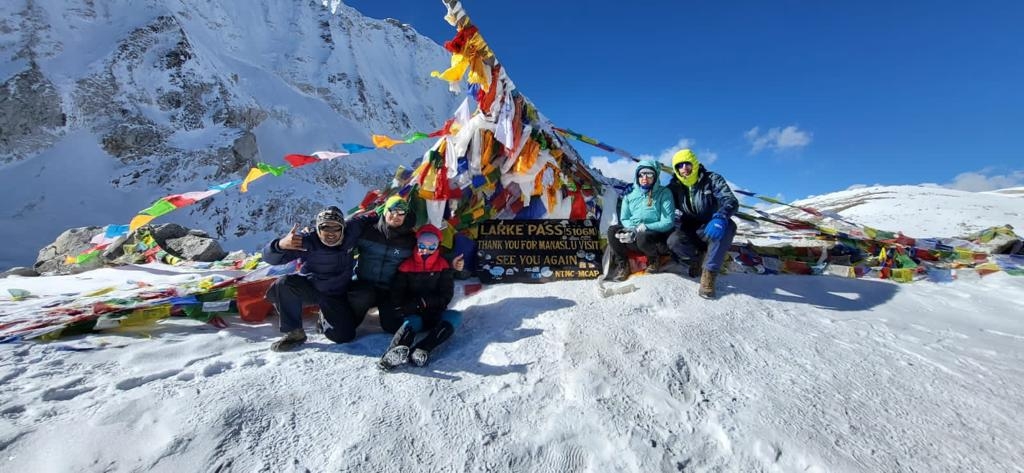
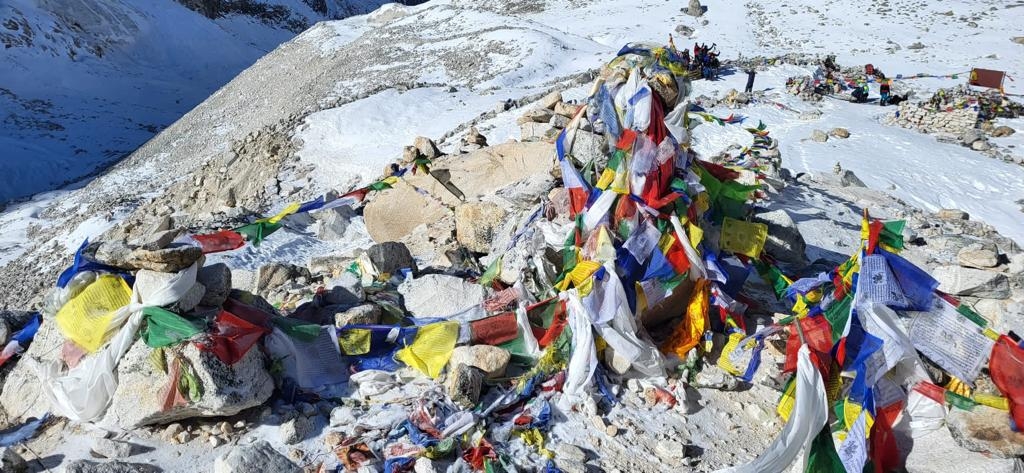
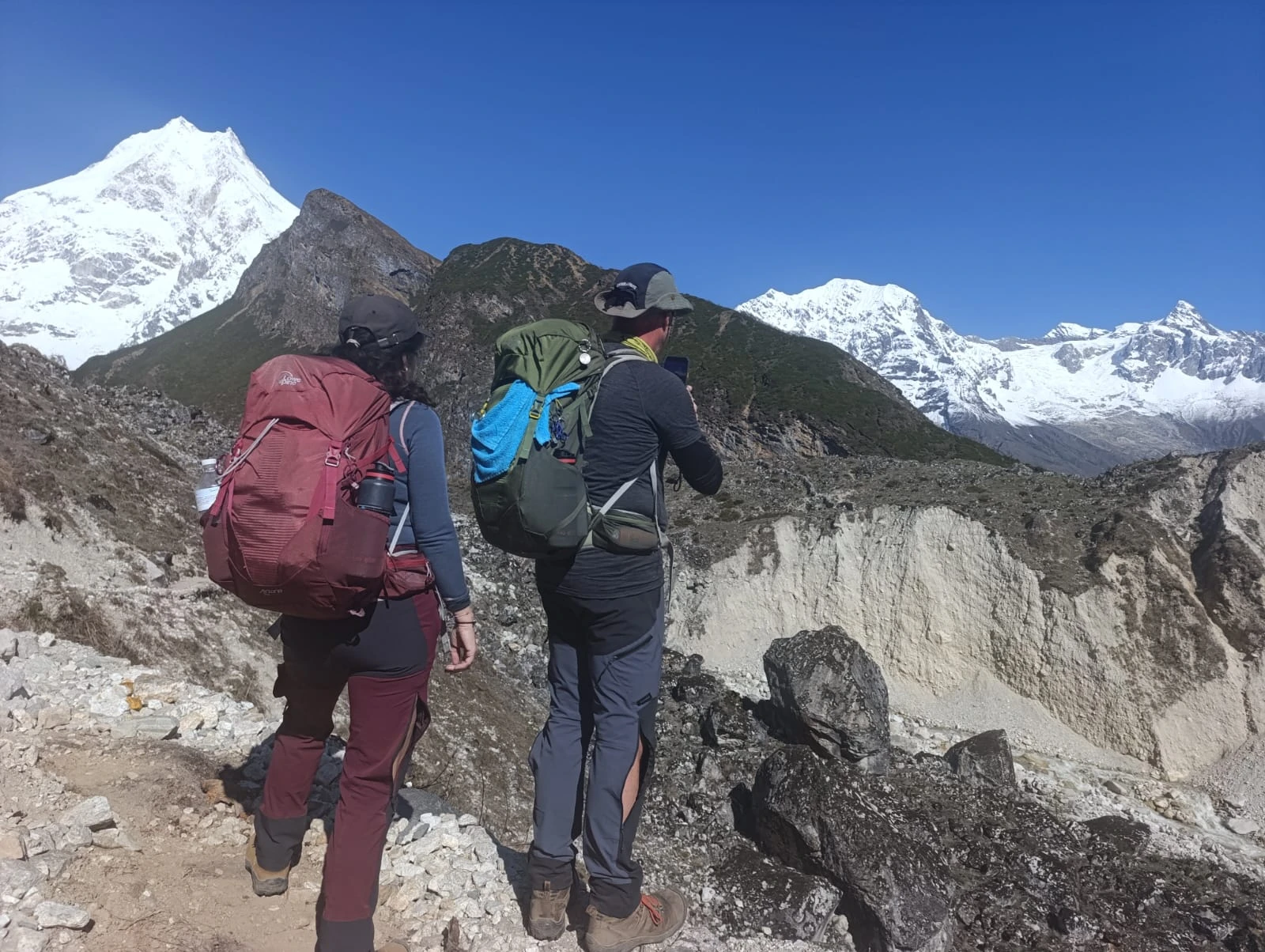
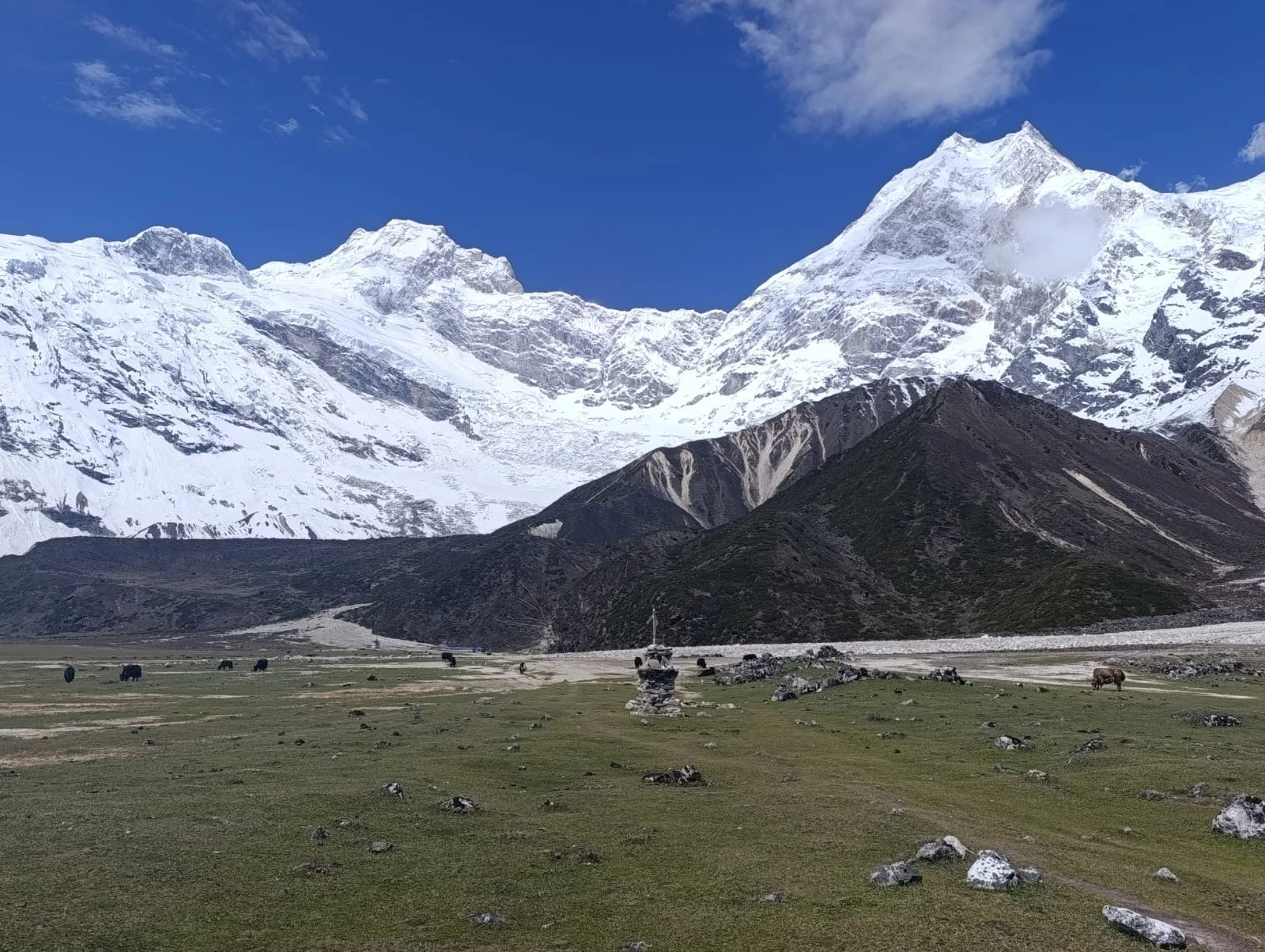
These services and items are covered in your trekking package:
Arrival & Kathmandu Stay:
Transportation:
Trekking Staff:
Permits & Paperwork:
Manaslu Restricted Area Permit.
Meals & Lodging:
Equipment & Support:
You will need to pay separately for the following:
Travel Essentials:
City Expenses:
Extra Staff Services:
Personal Trail Expenses:
Trip Name Manaslu Circuit Trek Destination Manaslu Region, Nepal Duration 14–16 Days Trip Type Tea House Trek Maximum Elevation 5,106 m (Larkya La Pass) Difficulty Moderate to Challenging Accommodation Tea Houses Meals Breakfast, Lunch & Dinner during the trek Transportation Private Jeep / Public Vehicle (as per itinerary) Best Seasons Spring (March–May) & Autumn (September–November) Group Size Minimum 2 People (Permit Requirement) Guide Government-Licensed Trekking Guide (Mandatory) Porter Available (Recommended) Permits Required Restricted Area Permit (RAP), MCAP & ACAP Starting Point Kathmandu / Machha Khola Ending Point Dharapani / Kathmandu Highest Pass Larkya La Pass (5,106 m) Average Walking Time 5–8 Hours per Day Daily Walking Distance 10–18 km WiFi & Charging Available in most tea houses (additional charge may apply) Mobile Network Limited; available in selected villages Hot Showers Available at many tea houses (additional charge) Drinking Water Boiled, filtered, or purified water available Travel Insurance Mandatory (including high-altitude trekking and helicopter evacuation) Customization Fully customizable itinerary and private departures available
I recently completed the Manaslu Circuit Trek and I have to say it was one of the most amazing experiences of my life! The scenery was absolutely breathtaking and the trek itself was challenging but extremely rewarding. From the stunning views of snow-capped peaks to the friendly people and vibrant culture along the way, this trek has it all. The guides and porters were knowledgeable and extremely helpful, and made sure we were safe and comfortable throughout the trek. I would highly recommend this trek to anyone looking for an unforgettable adventure.

Adventure A One Treks provided a wonderful experience on Manaslu Circuit Trek. Their professionalism and expertise in the field was remarkable. Every single detail of the trek was well planned and catered. It was an amazing experience to see the stunningly beautiful mountain peaks in Manaslu range and get to witness the local life in remote village areas. The guides were knowledgeable and always had answers to all our queries. They went to extraordinary lengths to make us feel comfortable. Moreover, I must appreciate the delicious regional food served during our trek. The hospitality and support of the Adventure A One Treks team made the journey truly memorable. I'm highly recommending their services to those looking for an unforgettable adventure.

Actually, I was so impressed with the First Nepali people with their Greeting and Namaste!! as I and my girlfriend make plans to Visit the Manaslu circuit trek on 14th March 2023. Adventure A One Trek Owner come to see us in An airport and he welcomes us in a very impressive way that I never felt anywhere in the world. After meeting Dhruba Bhatta we drive to Hotel, he explained every detail of the distance where we are going to stay, and doing the trip. The team of Adventure a One all are very fantastic and helpful. The next day we left for Manaslu Circuit trekking. our Guide Raju was so great and much knowledgeable. he makes your trip very comfortable and enjoyable. we would like to suggest that all people, please feel very comfortable with this team for booking your Nepal Trekking. I like to thank all team but specially Dhruba, Raju, and Dev (our Porter) who make our trip complete. Thank you
The Manaslu Trek with Adventure A One Treks was an incredible adventure. The guides were experienced, friendly, and very professional. The remote trails, beautiful villages, and stunning mountain views made this trek truly special. Everything was well organized, safe, and enjoyable. Highly recommended for an authentic trekking experience in Nepal!
The Manaslu Circuit Trek with Adventure A One Treks was a truly unforgettable Himalayan adventure. The trek offered stunning mountain scenery, peaceful villages, and rich Tibetan-influenced culture along the trail. Crossing the beautiful Larke Pass was the highlight of the journey, with breathtaking panoramic views of snow-covered peaks. The entire trek was well organized, and the guides were professional, friendly, and very supportive.
I had a fantastic experience on the Manaslu Circuit Trek with Adventure A One Treks. The route was less crowded and filled with incredible landscapes, forests, rivers, and mountain views. The combination of natural beauty and authentic local culture made the trek very special. Everything was managed smoothly from start to finish, and I highly recommend this trek for anyone looking for an adventurous and peaceful trekking experience in Nepal.
Packing wisely is essential for a safe and comfortable Manaslu Circuit Trek. The trail passes through multiple climate zones—from warm river valleys to the freezing temperatures of Larkya La Pass (5,106 m)—so dressing in layers is the best way to stay comfortable throughout your journey.
A layering system allows you to easily adapt to changing temperatures and weather conditions.
Recommended: Merino wool for warmth, odor resistance, and comfort.
These layers help retain body heat during cold mornings and evenings.
A high-quality waterproof shell is essential, particularly during spring snow or autumn winds.
A warm down jacket is indispensable for high-altitude villages and early morning departures.
Tip: Avoid cotton clothing, as it retains moisture and dries slowly.
Snow glare at higher elevations can be intense, making quality sunglasses essential.
Layering gloves provides flexibility as temperatures change.
Never wear brand-new boots on the trail.
Ideal for relaxing in tea houses after a long trekking day.
Tip: Trekking poles significantly reduce knee strain, especially on the long descent from Larkya La Pass.
The sun is extremely strong at high altitude—even on cloudy days.
Avoid buying bottled water throughout the trek to reduce plastic waste.
Electricity is available in most tea houses, but charging usually costs extra.
Keep important documents in a waterproof pouch.
Bringing snacks from Kathmandu saves money and provides quick energy on long trekking days.
Recommended snacks include:
Yes, absolutely. The Manaslu region is restricted, so you must trek with a licensed guide and in a group of at least two trekkers. Solo trekking is not allowed.
You'll need three main permits:
Mostly in simple teahouses (local lodges) with twin rooms and basic amenities. Food is hearty Nepali staples like dal bhat, momos, noodles, and soups—plenty of vegetarian options. No camping required unless you choose it.
Packages range from USD 1,000–2,000 per person, covering guide, permits, teahouses, meals on trek, and transport. Budget more for tips, insurance, and extras in Kathmandu.
Yes, essential! Get comprehensive coverage that includes high-altitude trekking (up to 6,000m) and helicopter evacuation.
Typically 14–18 days on the trail, depending on your itinerary, pace, and any side trips (like Tsum Valley). Add travel days to/from Kathmandu for a full trip of around 3 weeks.
Autumn (September–November) for clear views and stable weather, or spring (March–May) for blooming flowers and milder temps. Avoid monsoon (June–August) due to rain and landslides, and winter for heavy snow on the pass.
It's moderate to challenging. Expect long days (6–8 hours), steep climbs, rough terrain, and high altitude. Good fitness and some prior trekking experience are recommended, but fit beginners can manage with proper preparation.
Larkya La Pass at 5,106 meters — the toughest but most rewarding day with epic panoramic views.
Follow a good itinerary with built-in acclimatization days (usually in Samagaon), stay hydrated, ascend slowly, eat well, and consider Diamox (consult a doctor first). Listen to your body—if symptoms like headache or nausea appear, tell your guide immediately and descend if needed.
Days are pleasant (10–20°C lower down, cooler higher up), but nights drop below freezing above 3,000m. Expect cold at the pass—pack warm layers!
It can happen above 3,000 meters due to the rapid gain to over 5,000m, but with proper acclimatization and pacing, most trekkers avoid serious issues.
Yes, it's fully open with no major restrictions or issues reported. Trails are well-maintained, and it's gaining popularity but still quieter than Everest or Annapurna.
Yes, if you're in good physical shape and prepare well (cardio, hiking training). It's more challenging than easier treks like Ghorepani, but rewarding for motivated first-timers.
It's more remote and authentic, with fewer crowds, stunning untouched scenery, rich Tibetan-influenced culture, and that raw Himalayan feel—perfect if you want adventure without the tourist bustle.
| No of people | Price per person |
|---|---|
| 1 - 1 | $1,400 |
| 2 - 4 | $1,240 |
| 5 - 9 | $1,180 |
| 10 - 20 | $1,050 |
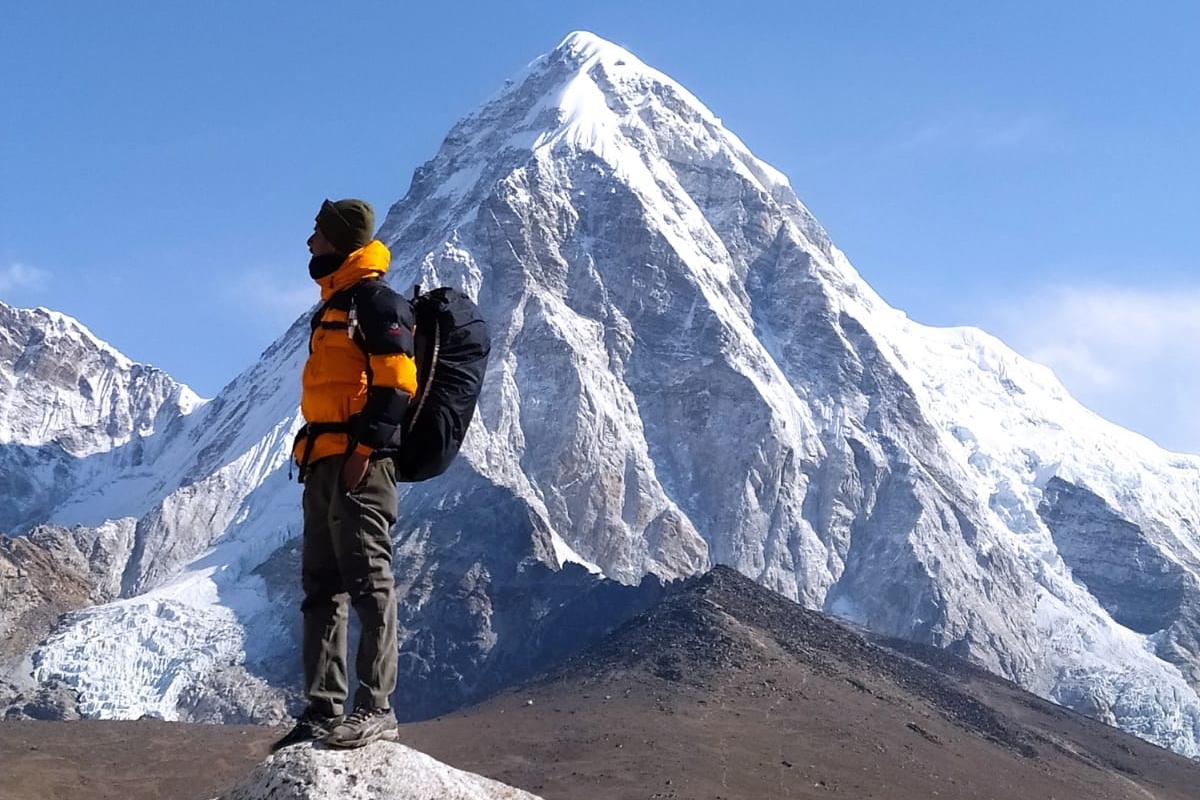
| No of people | Price per person |
|---|---|
| 1 - 1 | $1,852 |
| 2 - 4 | $1,699 |
| 5 - 9 | $1,545 |
| 10 - 20 | $1,455 |

| No of people | Price per person |
|---|---|
| 1 - 1 | $1,085 |
| 2 - 4 | $990 |
| 5 - 10 | $910 |
| 11 - 20 | $850 |