
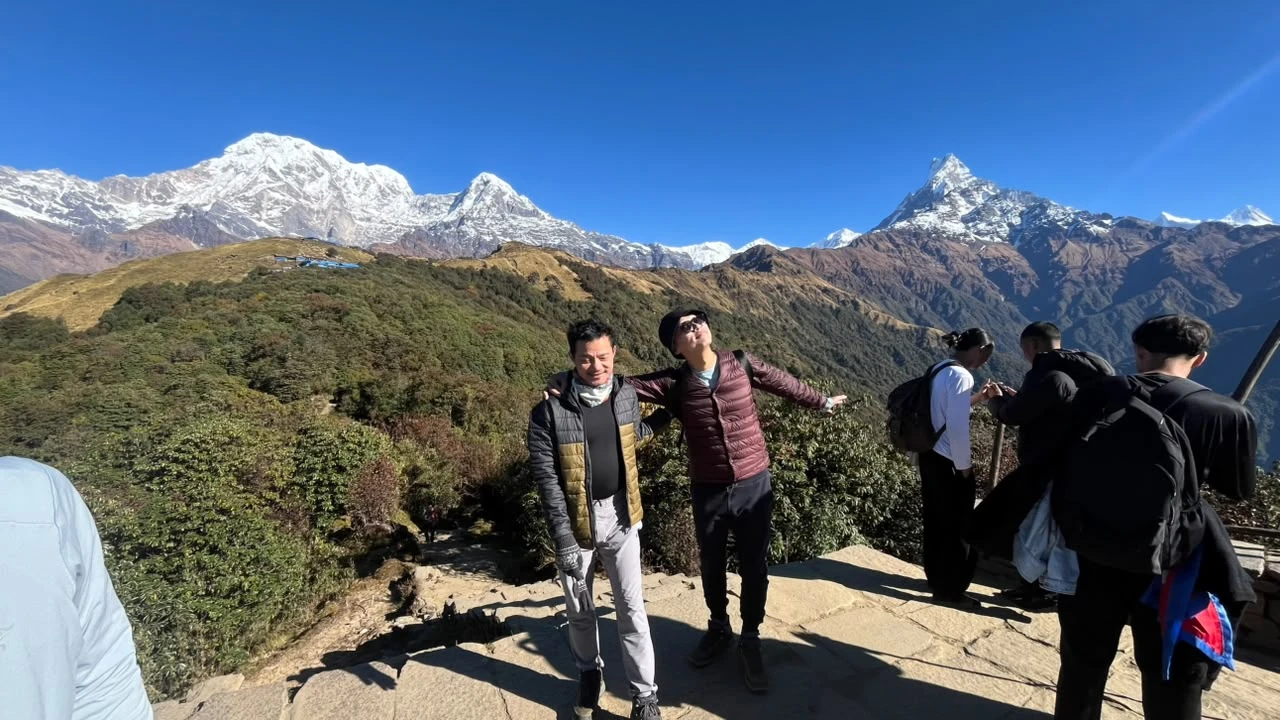
Choosing the best time for Mardi Himal Trek is one of the most important parts of planning this Himalayan journey. Although the route is accessible in different seasons, the experience changes considerably throughout the year. Flowering forests, clear mountain ridges, snow-covered trails, and rain-soaked landscapes each create a different trekking environment.
Mardi Himal lies in the Annapurna region of Nepal, northeast of Pokhara. The trail passes through traditional hillside settlements, dense forests, open grazing areas, and narrow mountain ridges before reaching the upper viewpoints near Mardi Himal Base Camp at approximately 4,500 meters. Along the way, trekkers can enjoy views of Machhapuchhre (Fishtail), Annapurna South, Hiunchuli, and Mardi Himal.
Most itineraries take between 5 and 7 days, making this route a suitable option for travelers who want to experience the Himalayan landscape without committing to a long expedition. However, the relatively short duration does not mean that weather conditions can be ignored. The upper sections are exposed to changing mountain weather, and temperatures can drop quickly after sunset.
For most trekkers, March, April, October, and November offer favorable conditions. Spring brings flowering rhododendron forests, while autumn generally provides dry trails and excellent mountain visibility. Winter is suitable for those prepared for snow and cold temperatures, whereas the summer monsoon brings rain, slippery paths, and unpredictable visibility.
This guide examines the best trekking months, seasonal differences, monthly weather patterns, temperature considerations, trail conditions, and equipment requirements to help you choose a suitable departure date.
The two main trekking seasons are spring and autumn. Your preferred landscape and weather conditions will determine which one is more suitable.
| Trekking Season | Months | Main Attraction | General Conditions |
| Spring | March–May | Rhododendron forests | Mild days and cold nights |
| Summer/Monsoon | June–August | Green forests and waterfalls | Wet trails and frequent clouds |
| Autumn | September–November | Clear Himalayan panoramas | Dry weather and favorable visibility |
| Winter | December–February | Quiet trails and possible snowfall | Cold temperatures and snow at altitude |
Before selecting a month, it is useful to understand how elevation affects the weather. The Mardi Himal trail begins in the lower hills around Pokhara and gradually climbs towards the alpine environment of the upper ridge. As the altitude increases, temperatures generally decrease, and weather conditions become more unpredictable.
A sunny morning in Pokhara does not necessarily mean that the upper trekking sections will have the same conditions. Clouds, wind, and snowfall can develop around the higher camps even when the lower valleys remain relatively warm.
The difference becomes particularly noticeable between Forest Camp, Low Camp, High Camp, and the upper viewpoints.
The elevation difference is one reason why proper clothing is necessary throughout the year. Even during the warmest trekking months, trekkers should carry an insulated jacket for the higher sections.
Spring is an excellent time to explore the Mardi Himal region. Winter gradually gives way to warmer weather, forests become greener, and rhododendron flowers appear along different sections of the trail.
The changing vegetation is one of the main attractions during this period. The lower and middle forest sections become particularly interesting for nature enthusiasts, while the upper ridges provide views of the surrounding Himalayan peaks.
Spring also offers a useful balance between daytime temperatures and walking conditions. However, temperatures remain low at higher elevations, and occasional afternoon showers may occur, particularly towards May.
March marks the transition from winter to spring. Temperatures gradually increase, although early mornings and nights can still feel cold around the higher camps.
The lower sections of the route generally become more comfortable for walking. Snow left over from winter may remain in some elevated areas, depending on previous snowfall and current weather.
Rhododendron flowering begins at different elevations as the month progresses. Trekkers may notice early blossoms along forest sections, although the main flowering period often comes later.
Advantages of trekking in March:
March is a good option for trekkers who prefer a quieter trail and do not mind cooler temperatures. Before departure, check whether snow remains around the upper sections.
April is among the most popular months for the Mardi Himal Trek. The forests become colorful as rhododendron flowers bloom, and the weather is generally suitable for several hours of walking each day.
The flowering period varies according to altitude and local weather. Different sections of the route may display flowers at different times, creating changing scenery as trekkers gain elevation.
Mornings are often favorable for mountain photography. During the afternoon, clouds may develop, particularly around the higher ridges.
April is also a busy trekking period, so accommodation at popular overnight stops may experience greater demand.
Why choose April?
For travelers interested in both forest scenery and Himalayan views, April is a strong choice.
May is the final month of spring and brings warmer conditions to the lower Annapurna hills. Walking can feel hot during the daytime at lower elevations, while higher camps remain considerably colder.
The weather gradually becomes more humid as the monsoon approaches. Afternoon clouds and occasional rain showers become increasingly common, especially towards the end of the month.
Early May generally offers more predictable conditions than late May. Trekkers planning a departure during this month should begin walking early and carry suitable rain protection.
Advantages of trekking in May:
The main consideration is the approaching rainy season. Flexible itineraries are useful because weather conditions can change during the final weeks of May.
Autumn is widely considered one of the most favorable seasons for trekking in Nepal. The monsoon gradually retreats, rainfall decreases, and the atmosphere often becomes clearer.
For Mardi Himal trekkers, this period offers a good combination of dry trails, manageable daytime temperatures, and mountain visibility. The ridge sections become particularly attractive when the surrounding peaks are visible against clear skies.
The landscape also retains some of its green appearance following the summer rainfall. As the season progresses, temperatures gradually decrease, especially during November.
September is the first month of autumn, but the transition from the rainy season is not always immediate.
Early September can still experience rainfall, cloudy mornings, and wet trails. Conditions generally improve as the month progresses.
The vegetation remains green following the monsoon, and waterfalls may still carry substantial water. The main advantage of late September is the gradual improvement in mountain visibility and trail conditions.
What makes September suitable?
If you are planning a September trek, the latter part of the month is generally preferable to the beginning.
October is an excellent choice for trekkers who prioritize stable weather and clear mountain scenery.
By this time, the main monsoon period has generally ended. The trails are often drier, the air is clearer, and the surrounding Himalayan peaks become easier to see during favorable weather.
The route offers opportunities to view Machhapuchhre, Annapurna South, Hiunchuli, and Mardi Himal from different viewpoints. Clear mornings are especially suitable for photography.
Daytime temperatures are generally comfortable in the lower and middle sections, although higher camps remain cold at night.
October is also one of Nepal's busiest trekking months. Accommodation can be in high demand, particularly during popular festival and holiday periods.
Reasons to choose October:
For first-time trekkers and travelers with limited flexibility, October is one of the strongest choices.
November continues the favorable autumn trekking conditions. The weather is generally dry, and mountain visibility can remain excellent.
The main difference compared with October is the gradual decrease in temperature. Early November is usually more comfortable than the later part of the month, especially around the upper camps.
The forests and surrounding hills also begin to reflect the seasonal transition towards winter. Trekkers should prepare for colder evenings and mornings.
Advantages of trekking in November:
November is particularly suitable for trekkers who want clear mountain views and do not mind colder nights.
Winter changes the character of the Mardi Himal Trek. Visitor numbers generally decrease, and the upper sections may receive snowfall.
The lower parts of the route can remain accessible, but the conditions become more demanding as trekkers gain elevation. Snow and ice can cover exposed sections of the ridge, making walking difficult.
Cold temperatures are the main concern during overnight stays. A suitable sleeping bag, insulated clothing, and waterproof footwear become increasingly important.
Winter can provide clear mountain views when the weather is stable. However, trekkers should not assume that every day will have favorable visibility.
December brings colder mornings and nights, particularly at higher elevations. The first half of the month may provide suitable trekking windows, but conditions become colder as winter progresses.
Snowfall is possible around the upper camps. Accommodation availability should be confirmed before departure because some teahouses may operate on reduced schedules.
Trekkers should carry sufficient warm clothing and avoid walking late in the afternoon when temperatures begin to drop.
January generally brings some of the coldest conditions on the Mardi Himal route.
The higher sections may experience snowfall, and icy surfaces can make narrow trails more difficult to navigate. Overnight temperatures can fall well below freezing.
Although clear weather can produce excellent mountain visibility, heavy snowfall or strong winds may temporarily affect access to the upper viewpoints.
January is best suited to experienced trekkers who are prepared for cold-weather conditions and can adjust their plans according to local advice.
February marks the gradual transition towards spring. Temperatures begin to improve, particularly during the daytime, although higher camps remain cold.
Snow may continue to cover parts of the upper trail, and melting snow can create slippery conditions.
Towards the end of the month, trekking conditions may become more favorable as winter gradually weakens.
February is a possible option for those who prefer quieter trails and are prepared to check snow conditions before departure.
The monsoon is generally the least suitable period for the Mardi Himal Trek. Rainfall affects both the lower forest sections and higher mountain trails, creating additional challenges for trekkers.
Unlike the dry spring and autumn months, the monsoon can bring prolonged rain, thick clouds, high humidity, and muddy walking surfaces.
The route passes through forested hillsides where water runoff can make narrow paths slippery. Heavy rainfall may also trigger landslides and falling rocks in vulnerable areas.
June marks the beginning of the main monsoon period. Rainfall becomes more frequent, and the weather becomes increasingly humid.
The forest sections can become muddy, while stream crossings may become more difficult after heavy rain.
Mountain views are less predictable because clouds frequently develop around the higher elevations.
July is generally one of the wettest months in Nepal. Continuous rainfall can affect walking schedules and make some sections of the Mardi Himal route difficult to navigate.
The combination of mud, leeches, water crossings, and possible landslides requires extra caution.
Visibility is often limited, making it difficult to enjoy the mountain scenery that attracts most visitors to this trek.
July is generally not recommended for travelers seeking a comfortable Himalayan trekking experience.
August remains part of the monsoon season, although rainfall may begin to decrease towards the end of the month.
The hillsides become densely green, and waterfalls are more active. However, the trail can remain wet and slippery.
Late August may offer improving conditions in some years, but it is important to check local weather reports rather than assume that the rainy season has ended.
The following overview helps compare the twelve months based on general seasonal patterns.
| Month | Temperature Trend | Rain/Snow Possibility | Trail Conditions |
| January | Very cold at altitude | Snow possible | Icy and snowy upper sections |
| February | Cold, gradually warming | Snow possible | Some slippery areas |
| March | Mild lower elevations, cold above | Occasional snow or rain | Improving conditions |
| April | Generally comfortable | Occasional showers | Mostly accessible |
| May | Warmer and more humid | Increasing rain | Generally accessible |
| June | Warm and humid | Frequent rain | Wet and muddy |
| July | Humid and rainy | Heavy rainfall | Difficult and slippery |
| August | Humid, gradually improving late | Frequent rain | Muddy, with possible disruptions |
| September | Gradually cooler | Decreasing rainfall | Improving conditions |
| October | Mild days and cold nights | Generally lower rainfall | Mostly dry |
| November | Cooler, especially at altitude | Occasional snowfall possible above | Generally favorable |
| December | Cold, especially at night | Snow possible | Upper sections may be affected |
Actual temperatures vary with altitude, wind, cloud cover, and daily weather. This comparison should be used for general planning rather than as a precise forecast.
The Mardi Himal route does not have identical conditions from beginning to end. Each section responds differently to seasonal weather.
The lower and middle sections pass through dense forests. During spring, rhododendron flowers make these areas particularly attractive.
In monsoon, rainfall makes the forest floor wet and increases leech activity. During winter, temperatures are cooler, but the lower forest trail may remain accessible when the upper ridge receives snow.
As the trail moves above the forest, the landscape becomes more exposed. Wind and cloud cover can affect the walking experience.
Autumn generally offers favorable visibility along the ridges. During winter, snow and ice may make these sections more difficult. In monsoon, fog can reduce visibility and make navigation less straightforward.
The higher sections require the greatest attention to weather conditions. Temperatures are colder, and sudden changes in wind or visibility can affect the planned itinerary.
Spring and autumn generally provide the most favorable conditions for visiting the upper viewpoints. Winter may require additional equipment, while monsoon conditions can make access more difficult.
Trekkers should follow local guidance and avoid proceeding when the upper trail becomes unsafe.
The right equipment makes a significant difference to comfort and safety. Since the route reaches approximately 4,500 meters, packing only for the warm weather in Pokhara is not sufficient.
Spring Packing List
Spring conditions generally require a combination of lightweight walking clothes and warm layers.
A waterproof jacket is useful even during spring because occasional showers can occur.
Autumn Packing List
Autumn is generally dry, but mornings and nights can be cold.
A sleeping bag provides additional comfort when teahouse blankets are not sufficient for colder nights.
Winter Packing List
Winter requires additional insulation and equipment for potentially snowy conditions.
A sleeping bag rated around -10°C to -20°C may be appropriate depending on expected temperatures and accommodation conditions. Select equipment based on the forecast rather than relying only on the calendar month.
Monsoon Packing List
Rain protection is particularly important during the summer months.
Keep electronics, important documents, and spare clothing in waterproof bags inside your backpack.
The Mardi Himal Trek is achievable for beginners with reasonable fitness and preparation. However, the difficulty changes according to the season.
Spring and autumn are generally the most suitable periods for first-time trekkers because trail conditions are usually more manageable and weather is relatively favorable.
Winter introduces additional challenges, including snow, ice, and cold temperatures. Beginners should consider traveling with an experienced guide and avoiding the upper route when conditions are unsafe.
Monsoon is less suitable for beginners because wet trails, leeches, landslide risks, and reduced visibility can make the journey more complicated.
Regardless of the season, trekkers should maintain a comfortable walking pace, stay hydrated, and allow enough time for the ascent. Reaching higher elevations too quickly can increase the risk of altitude-related illness.
1. What is the best time for Mardi Himal Trek in Nepal?
Spring (March to May) and autumn (September to November) are the best seasons for most trekkers. These periods generally offer better trail conditions, comfortable daytime temperatures, and good opportunities for mountain views.
2. Which month is best for Mardi Himal Trek?
October is an excellent overall choice because of its generally dry weather and clear mountain visibility. April is another excellent month for travelers interested in rhododendron flowers and spring scenery.
3. Is March suitable for Mardi Himal Trek?
Yes. March marks the beginning of spring, and conditions gradually improve after winter. Some higher sections may still have snow, but lower trails generally become more comfortable.
4. Can I trek Mardi Himal in April?
Yes. April is one of the most favorable months. Rhododendron forests are generally in bloom, and daytime temperatures are suitable for walking. Early starts are useful for enjoying clear morning views.
5. Is November too cold for Mardi Himal Trek?
No. November is generally a suitable trekking month, particularly during its first half. Temperatures become colder towards the end of the month, so warm clothing is important.
6. Can I do Mardi Himal Trek in December?
Yes, but winter conditions require additional preparation. Snowfall may affect the upper sections, and some teahouses may operate on limited schedules. Check current trail conditions before departure.
7. Does Mardi Himal receive snowfall?
Yes. Snowfall is possible at higher elevations, particularly during winter. The amount and duration of snow cover vary depending on the weather each year.
8. Is Mardi Himal Trek difficult during monsoon?
The trek becomes more difficult during monsoon because of rain, muddy trails, slippery sections, leeches, and possible landslides. Mountain visibility can also be limited.
9. How many days should I plan for Mardi Himal Trek?
A typical Mardi Himal itinerary takes around 5 to 7 days. The exact duration depends on your starting point, walking pace, overnight stops, and return arrangements.
10. Is a guide necessary for Mardi Himal Trek?
Traveling with an experienced local guide is useful for route guidance, accommodation coordination, and understanding changing weather conditions. Always check the latest trekking and permit requirements before departure.
11. What should I wear during the Mardi Himal Trek?
Wear moisture-wicking base layers, trekking trousers, comfortable boots, and insulating layers. A waterproof jacket, warm gloves, and a down jacket are useful because temperatures change with elevation and time of day.
12. Can I see Machhapuchhre from Mardi Himal?
Yes. Machhapuchhre (Fishtail) is one of the prominent mountains visible from different sections of the Mardi Himal route, particularly from the higher ridges and viewpoints when weather conditions are clear.
13. Is October crowded on the Mardi Himal route?
October is a popular trekking month, so you may encounter more trekkers around common overnight stops. Booking accommodation and arranging guides in advance is advisable during busy periods.
14. Can I trek Mardi Himal without snow?
Spring and autumn generally provide a lower chance of encountering extensive snow along the regular route than winter. However, snowfall at higher elevations can occur outside winter, depending on weather conditions.
15. Which season is best for photography on Mardi Himal?
Autumn is an excellent choice for mountain photography because of its generally clear atmosphere. Spring is particularly suitable for capturing rhododendron forests alongside Himalayan scenery.
The best time for Mardi Himal Trek depends on the scenery, weather, and trail conditions you want to experience. Spring and autumn remain the most reliable choices for most travelers, but each season offers a different atmosphere.
April is a strong option for rhododendron flowers and comfortable daytime walking. October is particularly suitable for clear mountain views and generally dry trails. November offers similar autumn scenery with colder temperatures, while March provides an opportunity to experience the beginning of spring.
Winter can appeal to experienced trekkers who enjoy quieter trails and are equipped for snow and freezing conditions. Monsoon is generally less suitable because rainfall can affect trail safety, transportation, and mountain visibility.
For a first Mardi Himal adventure, consider planning your trek in April or October. Check the latest weather information, prepare suitable equipment, and allow enough flexibility for changing mountain conditions.
Ready to explore the Mardi Himal region? Contact Adventure A One Trek to plan your trekking itinerary, discuss guide and accommodation arrangements, and select a departure date that suits your schedule.