Peak Climbing in Nepal
Nepal Peak Climb is a paradise for peak climbing with numerous trekking peaks ranging from 5 thousand to 7 thousand Meters. That offers a mix of adventure and mountaineering as well as expeditions. If you are interested in the adventure of Nepal for low mountain climbing. This will be well worth it before an expedition to
Mount Everest, Mount Lhotse, Makalu, Cho-Oyu, and other peaks.
Peak Climbing in Nepal
Nepal, home to eight of the world’s fourteen highest peaks. Nepal has a rich history of mountaineering and peak climbing. From early expeditions to modern commercial climbing. Nepal Mountain has drawn adventurers for over a century.
Early Exploration in Nepal
Before the 20th century, Nepal’s mountains were largely unexplored by foreigners. The Himalayas were known as sacred by locals. Some peak access was restricted. British surveyors from India mapped peaks from afar but did not climb them.
First attempts and early expeditions (1900s- 1950s)
1899: British explorer Douglas Freshfield was the first explorer to visit Kanchenjunga and then the Eastern Himalayas.
1921, 1922, 1924: The British made multiple attempts to climb Mount Everest, 8,848 meters from the Tibetan side, but all attempts failed.
1949: Nepal opened its borders to foreigners, allowing climbers to access the peaks in Nepal.
1950: French Climbers Maurice Herzog and Louis Lachenal became the First to Summit Annapurna I, 8,091 meters.
1953: Sir Edmund Hillary (New Zealand) and Tenzing Norgay Sherpa (Nepal) made a history by becoming the first to Summit Mount Everest, 8,848 Meters.
The Golden Age of Mountaineering in Nepal, 1950s-1970s
1955: Mount Makalu was First Climbed by a French expedition group led by Lionel Terray and Jean Couzy.
1956: Swiss Climbers reached the Top of Mount Manaslu, 8,163 meters, led by Artur Hajzer and Gyalzen Norbu.
1960s to 1970s: Many peaks were opened for climbing, and Nepal became a global hub for mountaineering.
1975: Junko Tabei (Japanese) became the First woman to summit Mount Everest.
During this period, Nepal started issuing peak climbing permits, and climbing culture flourished.
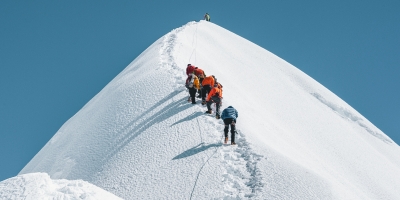
In the 1980s to 1990s, commercial climbing started in Nepal. The Trekking and Climbing industries expanded. More trekking peaks below 7 thousand meters were officially opened for Climbing. The most popular Climbing peaks are Island peak (6,189 meters), Lhotse East (6,119 meters), Mera peak (6,461 meters), and Pisang peak (6,091 meters)
Here are some of the most popular climbing peak names and short descriptions.
Location: Everest Region
Difficulty: Moderate to challenging
Best Season: Spring (March to June) and Autumn (September to November)
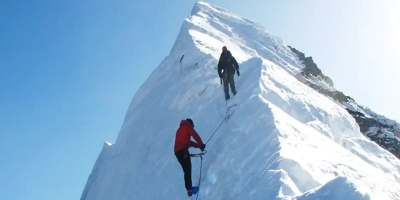
Island Peak climbing is the most famous trekking peak in the Everest Region. Island Peak offers a great introduction to Himalayan Mountaineering. The Summit provides a stunning view of Mount Lhotse, Nuptse, Amadablam, Khangtega, and
Mount Makalu. The climb includes a steep Headwall before reaching the Summit.
Location: Everest Region
Difficulty: Moderate
Best Season: Spring and Autumn
Mera Peak is the highest trekking peak in Nepal and offers panoramic views of five peaks above 8 thousand meters. Those are Mount Everest,
Mount Lhotse, Mount Makalu, Mount Cho-Oyu, and
Mount Kanchenjunga. It is a nontechnical climb, but the altitude makes it challenging.
Location: Everest Region
Difficulty: Challenging
Best Season: Spring and Autumn
A more Technical Climb Compared to Island Peak. Lobuche East Peak requires experience in ice Climbing and the Use of Fixed ropes. The summit provides breathtaking views of Everest, Lhotse, and Pumori.
Location: Annapurna Region
Difficulty: Moderate to Challenging.
Best Season: Spring and Autumn
Pisang Peak is One of the best and most stunning peaks in the Annapurna Region. This peak is situated in the
Annapurna Circuit Trek Route, which is a perfect choice for trekkers wanting to step into Mountaineering. This climb involves a steep ridge and snow slopes, requiring basic technical skills.
Location: Annapurna Region
Difficulty: Challenging
Best Season: Spring and Autumn
Chulu East Climb is more technical and much more Difficult. But people choose this peak to climb for more adventures and to take a challenging risk. Chulu East demands prior mountaineering experience. It offers stunning views of Annapurna II, Annapurna III, Annapurna IV, Tilicho Peak,
Manaslu, and Dhaulagiri.
Tent Peak (Tharpu Chuli)- 5,695 meters/ 18,679 feet.
Location: Annapurna Region
Difficulty: Moderate
Best Season: Spring, March to May, and Autumn, September to November
Tent Peak is located in the Annapurna Region near
Annapurna Base Camp. Tent Peak is a popular choice for those who want to add mountaineering to their trek. The climb is relatively straightforward but requires the use of ropes and crampons.
It needs a trekking experience guide to achieve the destination.
Location: Langtang Region
Difficulty: Easy to Moderate
Best Season: Spring and autumn
Yala Peak seems to be a well-known peak in the Langtang region. One of the easiest trekking peaks near Kyanjing Gompa of Langtang Valley. Yala Peak is perfect for Beginners. This peak offers breathtaking views of Shishapangma, 8,027 meters high in Tibet. From there, you can see the Langtang valley and the Tibetan plateau.
Dhampus Peak -6,012 meters/19,719 feet
Location: Dhaulagiri Region
Difficulty: Moderate
Best Season: Spring and Autumn
Dhampus Peak is a non-technical peak with mesmerizing views of the Dhaulagiri and Annapurna Ranges. This peak climbing time is also not long. You can just book the trip with Adventure A One Trekking company in Nepal and get the best price as well as the best service.