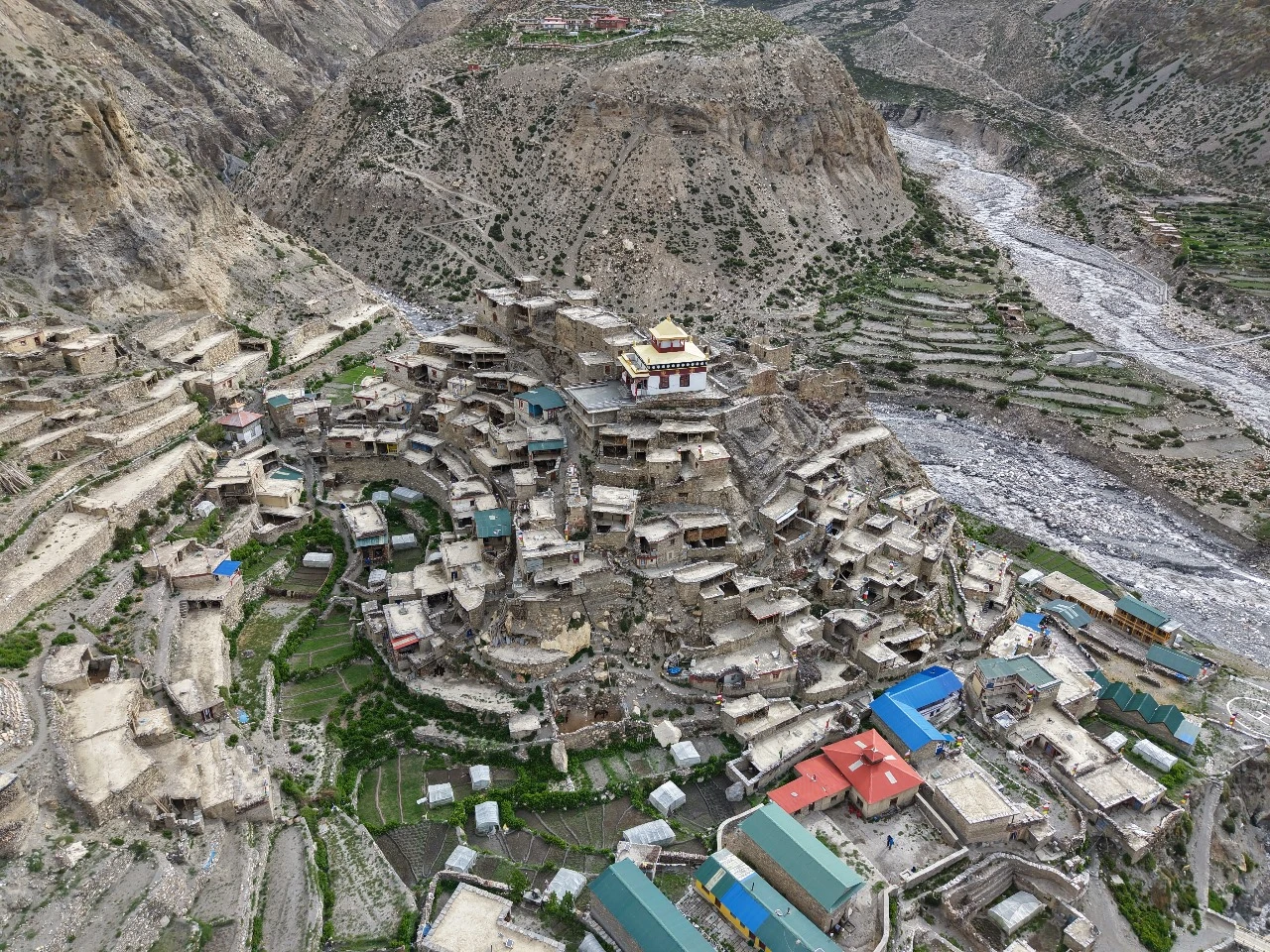
There are valleys in Nepal that most trekkers walk right past. It’s not because they aren't worth it, but because they simply don't know what lies beyond the junction. The Nar Phu Valley is exactly that kind of place!
Branching off from the popular Annapurna Circuit at Koto, this remote hidden valley takes you into a world that feels like it has existed outside of time itself. Ancient stone houses, centuries-old monasteries, ruined Khampa forts, and a way of life that’s rooted deeply in Tibetan Buddhist traditions. Well, all of this awaits just a short trail away from one of Nepal's most-trodden routes!
Narphu Valley has been open to trekkers only since 2003 and it remains one of the least visited destinations in the entire Annapurna region. This is partly because the valley is a restricted area that requires special permits (only possible via a registered trekking agency like Adventure A One Treks), and entry demands a licensed guide and a minimum group size.
But what’s fun here is that fewer trekkers mean more genuine interactions, undisturbed landscapes, and an authenticity that becomes harder to find on Nepal's other popular routes. So, you won't be weaving around tourist crowds here, instead you'll be sharing the trail with yaks and the occasional fellow adventurers.
This 10-day Nar Phu Valley Trek with Adventure A One Trek is thoughtfully structured to balance distance, altitude, culture, and safety. We start from Dharapani, where the Annapurna Conservation Area begins, and you follow the Nar Khola, passing forests, waterfalls, and the through the Tibetan-influenced settlements.
The medieval-like villages of Phu and Nar are the major highlights of this adventure. But the most demanding part? Well, it is crossing the Kang La Pass at 5,320 m (17,454 ft), which rewards you with one of the most dramatic mountain panoramas in the Annapurna region.
Then. you descend to Ngawal and complete this off-the-beaten route. There’s also a built-in acclimatization day at Phu, during which you’ll hike to Himlung Base Camp with your A1 guide. However, this is just an option and available for those who want to push further and prepare better for the pass ahead.
At Adventure A One Trek (A1 Treks), we specialize in remote, culturally rich, and genuinely rewarding treks just like Nar Phu Valley does. Our team has walked the Nar Phu trail in every season and knows this valley the way a local does.
We are a team that cares deeply about both your safety and your experience, and that combination is what makes A1 Treks the right partner for a trek like Nar Phu Valley!
Before moving forward, know that the Nar Phu Valley is not for general travellers. This is for someone who truly loves the mountain vibes and is searching for a Himalayan adventure that challenges your body, enriches your mind, and takes you somewhere genuinely off the beaten track!
Are you one of those adventurers? Well, you've just found this Nar Phu Valley package from Adventure A One Treks. All you have to do is now his that ‘Book Now’ button and we’ll be at your service!
The Nar Phu Valley Trek route is one of those journeys where every single day looks different from the last. You begin at the edge of the familiar Dharapani (a well-known stop on the Annapurna Circuit), and gradually peel away from the main trail into a landscape that grows increasingly remote, rugged, and rewarding.
The entry point into the restricted area is Koto, where the Nar Khola gorge opens up and the trail begins its long winding journey northward toward the Trans-Himalayan terrain.
What makes the route particularly interesting is its geography. In the lower sections, you're walking through dense pine and rhododendron forests with waterfalls greeting you at regular intervals.
As you gain altitude and approach Meta, the vegetation thins, and the dramatic dry plateau of the Tibetan borderlands begins to emerge. By the time you reach Phu and Nar, the landscape has transformed entirely.
The transition from lush subtropical forest to stark alpine desert, all within a few days of walking, is one of the most striking characteristics of the Nar Phu trail.
The route also splits at a key junction between Phu and Nar, meaning you'll follow the trail to Phu first, then retrace part of it before diverting toward Nar Phedi and climbing up to Nar Village.
The final stretch is the crossing of Kang La Pass into Ngawal, where the Annapurna Circuit trail rejoins you and where a very different, more populated version of Himalayan trekking waits on the other side.
Between Dharapani and Ngawal, the trail connects a series of villages, river crossings, and high-altitude settlements. Each of the following places contributes to something unique to the overall experience of the Nar Phu Valley Trek:
| Source | Destination | Distance | Approx. Time |
| Dharapani | Bagarchhap | 3 km | 1 hour |
| Bagarchhap | Timang | 4.5 km | 2 hours |
| Timang | Koto | 6.5 km | 3 hours |
| Koto | Meta | 16 km | 7 to 8 hours |
| Meta | Chyako | 7.5 km | 3 to 4 hours |
| Chyako | Kyang | 2.5 km | 1.5 to 2 hours |
| Kyang | Phu Gaon | 8 km | 5 to 6 hours |
| Phu | Himlung Base Camp | 8 km (16 km two-way) | 6 hours |
| Phu | Chyako | 11 km | 5 to 6 hours |
| Chyako | Nar Phedi or Satek Gumba | 6 km | 3 to 4 hours |
| Nar Phedi | Nar (Naar) Village | 4.5 km | 4 hours |
| Nar | Kang La Pass | 9 km | 7 to 8 hours |
| Kang La Pass | Ngwal | 6 km | 3 to 4 hours |
| Total (Nar Phu Valley with Himlung Base Camp) | 100 km (approx.) | ||
This trek is culturally, naturally, and even adventure-wise, one of the most underrated adventures. The trekking region falls within the Manang region, famous for being a trekking hub, and Nar Phu surely doesn’t disappoint.
Here are the major attractions of Nar Phu Valley that this 10-day package shall take you to:
Well, no single attraction defines the Nar Phu Valley Trek quite like Tashi Lhakhang Monastery in Phu Gaon. Why? Because it’s believed to be the last monastery constructed by Karmapa Rinpoche and is listed among the 108 most important Buddhist monasteries in the world!
This is an ancient gompa and even the spiritual heart of the entire Nar Phu valley. Its origins trace back centuries, and the monastery's architecture (stone walls, intricate murals, and spinning prayer wheels) tells that story vividly.
Even today, monks maintain their daily rituals here, and the sound of chanting in the early morning hours is one of those experiences that stays with you long after you've left the mountains.
The hike to Tashi Lhakhang from Phu village is short (roughly 3 to 4 km), making it a perfect acclimatization activity on the rest day. More than its spiritual significance, this monastery offers some of the best vantage point views of the valley below too!
Tashi Lhakhang Monastery also givs you the best views of Himlung Himal and Kanguru that forms the perfect backdrop for your photos/videos. And if you're trekking the Nar Phu Valley and skipping this, you're missing the point entirely (which we won’t let that happen at Adventure A One Treks)!
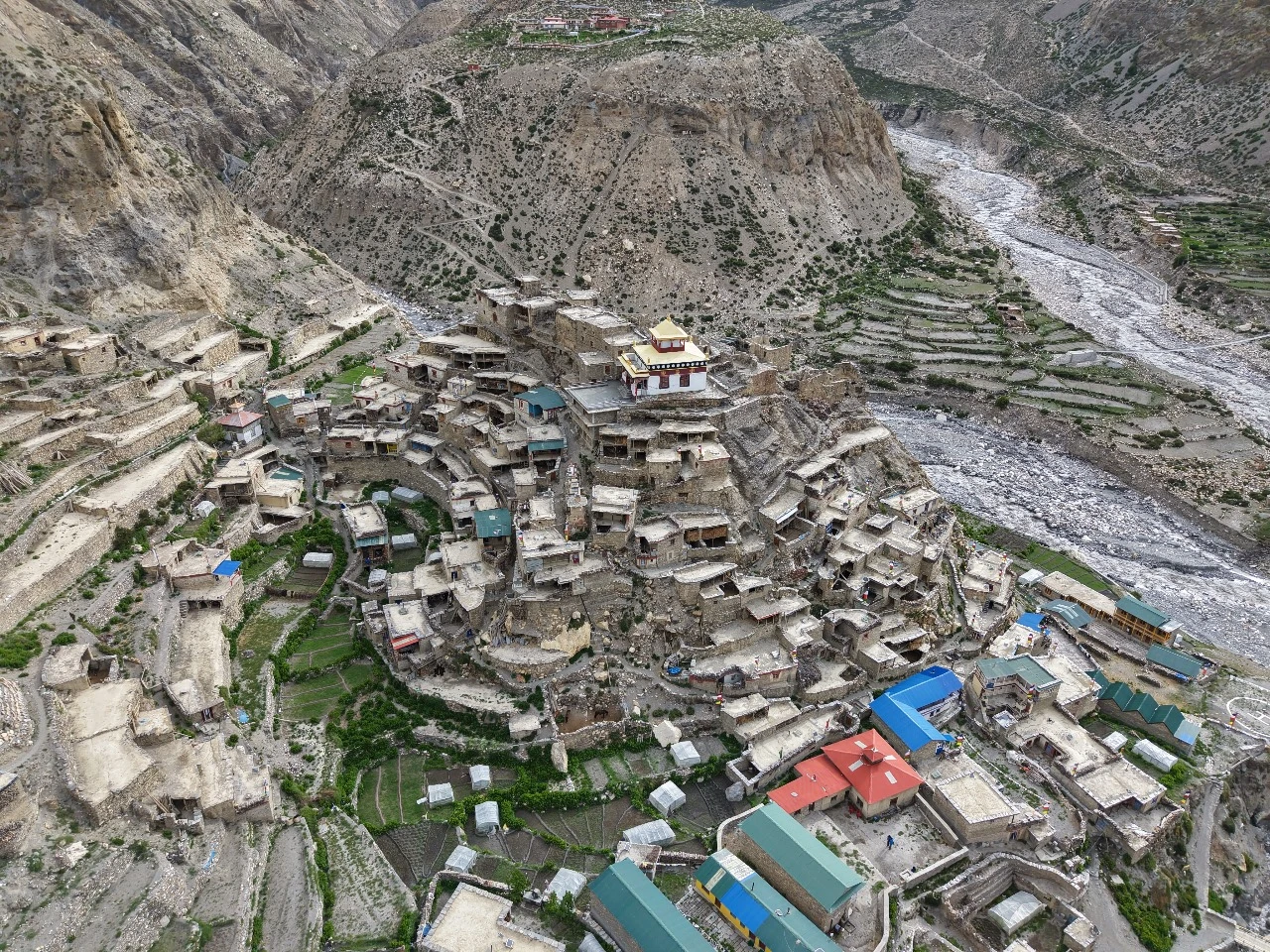
As we’ve been mentioning from the very beginning, Phu Gaon is one of the most extraordinary villages, not just in the Anapurna region, but in the whole of Nepal. It sits at 4,250 m (13,944 ft) on a rocky hillside above the hidden valley, and its visual quality matches the medieval fortress.
Those tightly clustered stone houses, narrow winding alleys, and a skyline of chortens and prayer flags are exactly what you come for! They give an almost mythical appearance, honestly.
The primary communities here are the Lama, Ghale, and Gurung ethnic groups. These people rely on yak herding, seasonal agriculture, and trade with Tibet as their main sources of income. So, expect to get the glimpses of women spinning yak wool, farmers turning the terraced soil in preparation for the short growing season, etc., that gives you a depth of cultural experience that no popular trekking route in Nepal can replicate!
Not to forget that Phu is also the gateway to Himlung Base Camp. Very few trekkers make it here each season, so expect the community to genuinely show warmth towards you (visitors)!
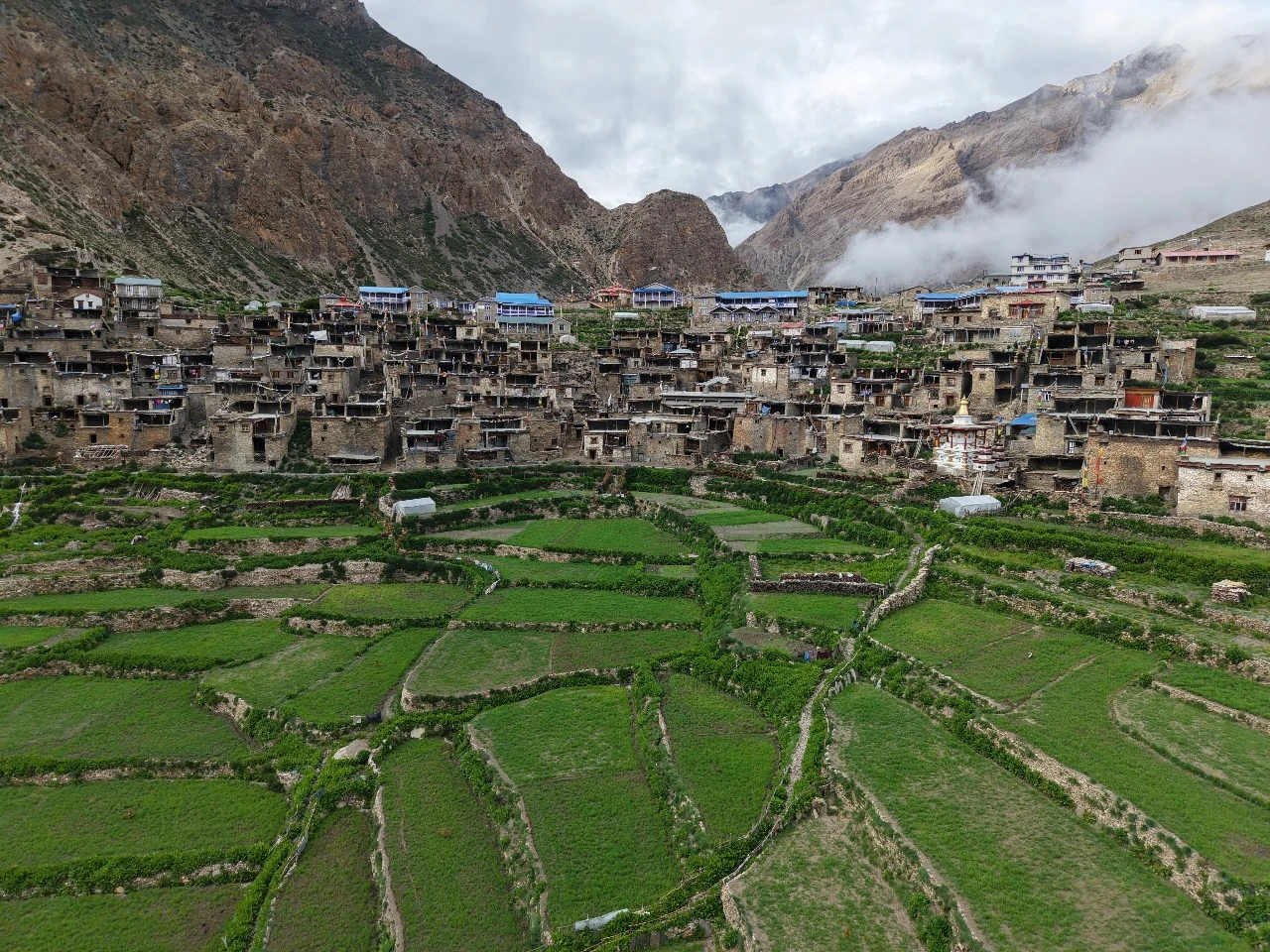
Nar Village, sitting at approximately 4,110 m above sea level, is the final major cultural destination before the Kang La Pass crossing. The approach to the village is a spiritual experience in itself as it features rows of chortens, mani walls, and fluttering prayer flags from the time you climb up from Nar Phedi.
Here, you get to meet the ancient Bhotia community and note that this village is even more populated than Phu. And the cultural texture here is also equally noticeably rich!
Those stone-built homes, active monasteries, and locals that are always engaged in daily agricultural life is what set the character of Nar (or Naar) village. It gives you a completely authentic Himalayan village vibe as it remains untouched by modern development.
Expect to get the brilliant views of Pisang Peak and Kang Guru from Nar Village. Besides, the surrounding cliffs and narrow gorges also add a dramatic visual frame to this already remarkable settlement.
Talking about accommodation, the teahouses here are among the best on all of the Nar Phu Valley trail. And since it’s run by locals, you get a genuine connection and learn the culture and community customs here.
If there is one moment on the Nar Phu Valley Trek that truly defines what adventure should be like, it has to be the moment you’ll stand on Kang La Pass at 5,320 m (17,454 ft).
The ascent from Nar Village towards Kang La Pass is long and comes with steep in multiple sections. But honestly, every step is justified the moment the full panorama opens up at the top.
You get the clear views of Annapurna II, Gangapurna, Tilicho Peak, Chulu Far East, Chulu East, Pisang Peak, and the broader Annapurna massif! This stretch across your field of vision in a 360-degree display and is very difficult to put into words (you have to experience it yourself, really).
On clear mornings, the Gangapurna Glacier is also clearly visible. In fact, it’s one of the most striking glacial views accessible on any standard trekking route in the Annapurna region. Just before the pass summit, a small pond welcomes you at around 5,306 m, serving as a brief resting point before the final push.
And then comes the descent! You’ll hike towards Ngawal, which is a steep and long section but equally rewarding, as views of the colorful Annapurna valleys below are truly A1!
One imporatnt thing to note here is: you need ot start at around 2 to 3 AM (which is recommended by our guides at A1 Treks), as afternoon winds through the pass can become strong and unpredictable in all seasons.
For trekkers who want to make the most of their acclimatization day in Phu village, we’ve included this optional hike to Himlung Base Camp. But do note that it can be a great investment of time and energy when reaching to the top.
If you haven’t heard of Himlung Himal, let’s get into it first. Sititng at 7,126 m (23,379 ft), it was only recently opened for climbing expeditions. So, getting to the trail to its base camp takes you through a stunning glacial valley with blue sheep herds navigating the cliffs above you.
The round trip to the base camp of this mountain covers approximately 16 km and takes about 6 hours up and 3 hours to return. For that reason, your acclimatization needs to start early.
The altitude gained during this hike (from 4,250 m in Phu to nearly 4,920 m at the base camp) serves as a critical acclimatization for the Kang La Pass crossing on Day 8. So, if you’re not tired, we highly recommend reaching here.
Now, beyond that practical benefit, the views from the base camp are extraordinary too! Those glacial terrain, high-altitude peaks, and the kind of silence that only exists this far from any road or settlement is truly amazing!
This 10-day Nar Phu Valley Trek also takes you to Satek Thrangu Gompa (aka Satek Gumba or Satek Monastery), which happens to be one of the most visually dramatic moments.
Why? Because this Tibetan Buddhist monastery lies in the high Himalayan terrain, the sight is truly worth watching. In fact, it serves as the junction where the Labse Khola and Ghatte Khola meet the Nar Khola.
There’s even an overnight stop here before the final approach to Nar Village. The monastery follows Tibetan Buddhist traditions, and from here onwards, the cultural landscape shifts noticeably.
As mentioned earlier, the mani walls, chortens, and dry-stone structures begin to appear regularly. And honestly, staying in the monastery area is an experience that every trekker must experience at least once (which Satek Gumba offers the best)!
The village of Kyang might be small and easy to rush through but it carries a historical significance that makes it worth slowing down for!
The ruined forts here are remnants of the Khampa settlement, which was a community of Tibetan refugees who occupied this remote valley and used it as a base for resistance operations before eventually vacating.
The crumbling stone structures that you see sitting at such a high altitude above the Nar Phu gorge are a quiet but powerful reminder of the turbulent 20th-century history that shaped much of this borderland region.
So, for anyone interested in learning about the intersection of Himalayan culture, politics, and geography, Kyang is a genuinely fascinating stop on this 10-day Nar Phu Valley Trek organized by A1 Treks!
From start to finish, the Nar Phu Valley Trek gives you an extraordinary gallery of Himalayan peaks:
Bonus Attraction: Wildlife encounters are also possible throughout the Nar Phu Valley trail. This means blue sheep (bharal) and Himalayan Tahr are regularly spotted on the rocky slopes, and snow leopard sightings, while rare, have been reported in the upper valley.
The Nar Phu Valley Trek sits in our moderate-to-challenging category. Let’s make you understand why it earns that rating so that it helps you prepare for this trek realistically.
The difficulty is not primarily about technical climbing. There are no ropes, ice axes, or climbing equipment required on this route. What makes this Nar Phu Valley Trek challenging are the following factors:
Likewise, the remoteness of the valley adds another layer of difficulty! The Nar Phu Valley has limited communication, sparse rescue infrastructure, and only few options if something goes wrong. That's why a licensed guide is not just recommended but legally required for this trek!
At Adventure A One Trek, we welcome guests to the Nar Phu Valley throughout the year. Every season has something distinct to offer in this hidden corner of the Annapurna region, and we've guided trekkers through all of them.
However, knowing what each season brings and what to watch for helps you plan the trip that's right for you. So, here’s a basic idea:
The most popular and arguably best season for the Nar Phu Valley Trek. Here’s why:
Do note that particularly in October, you can see teahouses in Phu and Nar reach capacity. So, booking ahead through a reliable operator like A1 Treks becomes even more important!
Possible for experienced, well-equipped trekkers with cold-weather gear, but not recommended for most. Why? Because Kang La Pass can be blocked by snow for weeks, making the crossing uncertain or impossible!
Keep these things in mind before choosing this season for Nar Phu Valley Trek:
The Nar Phu Valley lies in a rain shadow zone, meaning it receives significantly less rainfall than other trekking regions in Nepal. So, this is a genuine advantage if you’re thinking of travelling in the monsoon as:
To conclude, the best seasons are spring and autumn, compared to winter and monsoon, though the rain shadow characteristic of the valley makes monsoon a surprisingly viable option for those seeking solitude.
Seasons you have to avoid is the deep winter (January to mid-February) unless you are an experienced high-altitude trekker with full cold-weather equipment and complete flexibility on your itinerary.
Not to forget that climate change has made weather patterns across the Annapurna region less predictable in recent years. So, early autumn snowfall, unusual temperature spikes in spring, and shifts in the monsoon arrival and departure window can happen.
This is why we always recommend building one or two buffer days into your itinerary. And listen to our guides as they monitor conditions throughout the trek and adjust plans when necessary (all for you!).
Keep in mind that the Nar Phu Valley Trek is a teahouse trek from start to finish. Don’t worry as no tents are required, and accommodation is available at every overnight stop on the itinerary.
However, the quality and range of amenities can vary significantly depending on where you are on the trail. Let's give you a general idea:
The Nar Phu Valley is a restricted area, which means you cannot enter it independently. Permits are required for the protection of the fragile high-altitude ecosystem, to preserve the cultural integrity of the local communities, and to ensure that trekkers moving through this remote region are properly registered and supported.
The Nar Phu Valley is still accessible at a comparatively reasonable price while still offering a truly off-the-beaten-path experience. Here are the following permits that are required for the Nar Phu Valley Trek:
Don’t worry about taking the hassle of permits at all! Each one is arranged by Adventure A One Trek as part of this 10-day Nar Phu Valley Trek package.
The Nar Phu Valley Trek definitely demands preparation. No, not as a precaution but as the foundation for the kind of experience you're hoping to have!
The altitude, the remoteness, the long hiking days, and the high-mountain pass crossing are all factors that need to be kept in mind. So, just having the right gear won't do!
You will need to prepare building your body along with having the right mindset that can handle what this Nar Phu Valley trail will ask of you. Let our team at Adventure A One Trek help you out on this in detail:
The main physical demand of this trek has to be cardiovascular endurance, which can be improved, of course. Go for long daily hiking distances, leg strength for sustained uphills and steep descents, and most importantly, opt for core stability for navigating uneven and rocky terrain.
We suggest beginning your preparation at least 6 to 8 weeks before departure. Focus on activities like running, cycling, stair climbing, and swimming to build an aerobic base.
Another tip is to add strength training for the legs. These include exercises like lunges, squats, and step-ups are all directly transferable to the trail. Wherever possible, practice hiking on actual trails with a loaded backpack to simulate the real conditions you'll face.
In the 10-day Nar Phu Valley Trek, you will face moments of genuine physical discomfort on this trail. Those long days above 4,000 m with thin air, cold temperatures, basic accommodations, and limited communication with the outside world can wear on even experienced trekkers for sure!
The most important thing you can do for your mental preparation is to arrive with realistic expectations. Remember that this is not a luxury experience, and it is not a predictable schedule.
Here’s our most realistic tip: set yourself small daily goals rather than focusing on the summit or the endpoint the entire time.
Good thing is that our guides at Adventure A One Treks are trained to read the signs of mental fatigue as well as physical. So, they'll support you through both of the physical and mental journeys!
Yes, altitude sickness is definitely a real and present risk on this 10-day Nar Phu Valley Trek. And honestly, understanding its risks and prevention measures is one of the most important parts of your preparation that you seriously can't miss!
Here is how the daily altitude progression looks:
Dharapani (1,860 m) > Koto (2,640 m) > Meta (3,560 m) > Phu Gaon (4,250 m) > Acclimatization at Phu (4,250 m, hike to 4,920 m) > Nar Phedi (3,800 m) > Nar Village (4,110 m) > Kang La Pass (5,320 m) > Ngawal (3,660 m)
If you take a closer look, the elevation gain per day ranges from around 400 m to 900 m. And amongst all, Day 4 and Day 8 have the largest altitude commitments as you'll be spending most of the trek above 3,500 m. That is what significantly increases your exposure to Acute Mountain Sickness (AMS)!
So, watch out for AMS symptoms like headache, nausea, dizziness, loss of appetite, fatigue, and difficulty sleeping. These are your body's early signals indicating that it needs more time to adjust.
So, if you experience any of these symptoms, please stop ascending and instead, rest, hydrate, and communicate with your guide. While Diamox (Acetazolamide) can be used as a preventive measure or early treatment, always consult your doctor (before the trek) to ensure its absolutely suitable for you to consume.
Severe AMS may lead to HAPE (High Altitude Pulmonary Edema) or HACE (High Altitude Cerebral Edema), which are both serious and life-threatening escalations.
HAPE involves fluid accumulation in the lungs and presents as shortness of breath at rest, persistent cough, and a feeling of chest tightness. And HACE involves brain swelling and presents as severe confusion, loss of coordination, inability to walk in a straight line, and extreme lethargy.
In case your guide sees you showing signs of HAPE or HACE, they immediately help you descend.
In the event of a serious medical emergency in the Nar Phu Valley, helicopter evacuation is the most likely the only rescue option. But that too, depends on weather conditions and the specific location.
This is why comprehensive travel insurance that covers high-altitude trekking and helicopter rescue is a non-negotiable requirement (in fact, even for your guides, otherwise RAP won’t be permitted).
While this 10-day itinerary focuses primarily on the Nar Phu Valley itself (with A1 Treks’ inclusion of the Himlung Base Camp and the Kang La Pass crossing, there are several extensions and alternative combinations that can make this trip even more rewarding for the right trekkers.
Here are what our prior guests at Adventure A One Treks have preferred, so you can keep an eye out on each:
Our Adventure A One Trek representative will pick you up from your hotel in Kathmandu for an early start. Make sure you've had breakfast before the pickup, as the drive ahead is a long one and you won't want to delay the departure.
Depending on your group size, the vehicle will be a jeep or van, and we'll cover approximately 215 km over 9 to 10 hours, depending on traffic and road conditions.
The drive takes you through the districts of Dhading, Chitwan, Tanahun, Lamjung, and Manang before you finally reach Dharapani, which is the official entry point into the Annapurna Conservation Area. You'll need to show your permits at the checkpoint here before checking into your lodge for the night.
The scenery along the way is genuinely rewarding in its own right, with rivers, terraced hillsides, and the occasional glimpse of snow-capped peaks as you gain elevation. Your body will be tired after this drive, so dinner at the lodge and an early sleep are the right moves tonight. Tomorrow, the trek begins.


The first proper trekking day gets underway as you start walking alongside the Marsyangdi River. The trail passes through the villages of Thoche, Odar, Bagarchhap, and Timang, covering a total of 14 km in approximately 5 to 6 hours.
In the right season, waterfalls along this section are one of the main highlights. They add a beautiful energy to what is otherwise a relatively straightforward day on the trail!
A little further along, you pass through Kurung and Thanchok, and there's also a cave on the route worth pausing to look at. Koto is where the day ends, and it's also where the restricted zone officially begins. Sleep well tonight because tomorrow is one of the longest and most demanding days of the entire trek.
Before you start walking today, stop at the tourist checkpoint in Koto to show your permits. This is non-negotiable. From here, the real Nar Phu Valley experience begins as the trail veers off from the Annapurna Circuit and into the narrow gorge carved by the Nar Khola.
You'll cover 16 km in approximately 7 to 8 hours, walking alongside the Nar Khola for much of the day through dense pine forests, across suspension bridges, and past cascading waterfalls.
The trail is a good mix of ups and downs, perfectly manageable even for beginners, though the length of the day demands a steady pace. There are hot springs on the route, but the time required to enjoy them properly means you'll likely just appreciate them from a distance and continue.
A stop at a dharmashala for tea before the final uphill stretch to Meta is a welcome tradition on this day. When you finally arrive, the plateau-like setting of Meta and the first mountain views make it feel absolutely worth every hour on the trail.
If you have time in the morning before breakfast, walk over to the small stupa in Meta. It's a quiet and reflective start to what will be one of the biggest days of the trek. From Meta, you'll be covering a demanding 18 km hike over approximately 10 to 12 hours, mostly uphill. So, start as early as possible!
The trail continues alongside the Nar Khola as you reach the diversion point, one path leads toward Phu Gaon, the other toward Nar Village. Today, you take the path toward Phu, and you'll return to this junction on Day 6 to head to Nar.
From the diversion, the trail passes through Chyako and Kyang, where the ruined Khampa forts are visible, before crossing a series of suspension and wooden bridges to finally reach Phu Gaon by late evening.
Because this is a long day above 4,000 m, altitude sickness becomes a real consideration. Drink hot fluids consistently, stay hydrated, and listen to your body carefully. If you feel the warning signs of AMS: headache, nausea, dizziness. Slow down and communicate with your guide immediately!
Our team at A1 Treks also offer the option to break this day into two, with an overnight stay at Kyang, which makes for a significantly more relaxed itinerary. This is something we're happy to arrange, so just let us know.
If you start early and maintain a steady pace, you should arrive at Phu Gaon before it gets dark. But just in case, carry a headlamp or torchlight.
After yesterday's long and demanding hike, today is a day of rest, exploration, and for those of you with adventure running through your veins, one of the most rewarding side hikes of the entire Nar Phu Valley Trek!
Our team at A1 Treks strongly recommends the hike to Himlung Base Camp (4,920 m) on this day. It's approximately a 16 km round trip and takes about 6 hours up and 3 hours to return.
Not only does this hike offer a stunning glacial alpine experience with views of Himlung Himal and the broader high-altitude terrain, but it also serves as excellent acclimatization for the Kang La Pass crossing on Day 8.
Trekkers who complete this hike consistently report better sleep, better energy, and a noticeably more comfortable crossing of the pass two days later.
And if you're too tired for Himlung, there are shorter hikes to viewpoints around the village, or you can simply spend the day walking through the narrow alleys of Phu, visiting Tashi Lhakhang Monastery, and interacting with the local Lama, Ghale, and Gurung communities.
Learning about how people survive and thrive in this remote, high-altitude world through agriculture, animal breeding, yak wool spinning, and seasonal migration, it is genuinely fascinating!
Either way, an early night and a good meal are the order of the day. The next two days are demanding.
Start early today! The total hiking distance is 17 km and will take approximately 9 to 10 hours. From Phu, you retrace the same trail back to the diversion point, passing through Kyang and Chyako again.
This means today is mostly downhill with a few short uphills, which should feel considerably easier than Day 4 in the same direction. At the diversion point, you now take the other trail, which happens to be the one that you passed on Day 4 heading toward Nar.
This is also where the Labse Khola and Ghatte Khola merge with the Nar Khola, creating a dramatic river confluence that marks the shift in direction.
Just a short distance ahead is Satek Thrangu Gompa, known locally as Satek Gumba or Satek Monastery. This is an active Tibetan Buddhist monastery perched amid imposing cliffs, and you'll stay in the monastery area tonight.
The cultural experience here is immediate and profound. This means mani walls, chortens, and dry-stone walls begin appearing from this point onwards, signaling the deeply Tibetan Buddhist character of everything that lies ahead.
The cliffs and high Himalayan terrain surrounding the monastery make it one of the most visually dramatic overnight stops on the entire route. This place is also known as Nar Phedi and serves as a perfect cultural gateway before you ascend to the main Naar Village tomorrow.
If you didn't get a chance to properly explore the monastery yesterday evening, take some time this morning before moving on. It's totally worth it!
Today's trek is short and refreshing (just 4.5 km), which is a welcome change after the demanding distances of the previous days. You'll walk with the Ghatte Khola on your left and the Labse Khola on your right, passing through stone houses and narrow lanes with the active monastic life of the Nar community all around you.
Nar Village is a proper settlement with a good number of teahouses, and our guide will help you select the right one, as they always do throughout this trip.
Rest and hydration are the priorities this evening. An acclimatization hike in the afternoon is optional but encouraged if your body feels up to it. Most importantly, make sure you sleep early after a nutritious plate of dal bhat.
And don't forget to inform your teahouse or guide the night before about your preferred breakfast for tomorrow morning, because we’ll be starting early for Kang-La Pass.
As stated earlier, you need to wake up at 2 or 3 AM. The earlier you start, the better your chances of crossing the pass before afternoon winds pick up! And those winds can be strong throughout the season, remember that!
In the case of genuinely bad weather, our guide from A1 Treks will make the final call on whether to proceed or return. This is why choosing the right season matters, and it's why you should trust your guide's judgment completely on this day.
Our guides also make sure that you have packed lunches ready for the crossing, and we recommend informing your teahouse the evening before so that food is prepared in time. Without a packed meal, you'll be relying on snacks for a 10+ hour day, which is not ideal at altitude.
The 9 km stretch to Kang La Pass involves a gradual elevation gain that will feel increasingly demanding as the air thins. The ascent is steep in places but well-paced for anyone who has properly acclimatized over the previous days.
Just before the summit vantage point at around 5,306 m, a small pond welcomes you! Be sure to take a brief rest here before the final push, which has actually become a tradition worth keeping.
At the top, the reward is the full panoramic sweep of Annapurna II, Gangapurna, Tilicho Peak, Chulu Far East, Chulu East, and Pisang Peak, along with the clearly visible Gangapurna Glacier. It’s the main glacial feature visible during this 10-day Nar Phu Valley Trek. Take your time here, photograph everything, breathe it in.
From the pass, next up is the 6 km descent that takes you down to Ngawal village. The path is steep and can be tricky on loose terrain, so take care on the downhill.
Also note that on your approach to Ngawal, there is a Guru Padmasambhava Cave that can be added to the day if time permits. Ngawal welcomes you with proper cafes, better lodges, and a comfortable night's rest after the most demanding day of the trek.
Many trekkers choose to continue on the Annapurna Circuit trail at this point, but this 10-day Nar Phu Valley package from Adventure A One Treks is designed to return from Ngawal.
If you'd like to extend into the Annapurna Circuit (including Thorong La Pass, Muktinath, or Tilicho Lake) that is absolutely possible and can be arranged with us upon request and at additional cost.
Otherwise, today is your transition day back to the cities. You can explore Ngawal village or, upon request, we can include a visit to Manang village (accessible by road) at an extra cost.
The drive to Besishar takes approximately 7 to 9 hours. On the way down, you can get off the vehicle and do a short hike to Green Lake near Lower Pisang, which is a famous beautiful stop.
The route also takes you back through Tal Village and past the Octopus Waterfall, both of which are worth stopping for if you didn't catch them on the way in on Day 2.
At Dharapani, you'll need to show your permits again and say goodbye to the Annapurna Conservation Area. By the time you reach Besishar in the evening, a warm meal, a proper shower, and the quiet satisfaction of having completed the Nar Phu Valley Trek will be waiting for you.
Your Nar Phu Valley Trek with Adventure A One Trek comes to an end today! We'll drive you back to Kathmandu and drop you at your desired hotel. If you'd prefer to end your Nepal trip in Pokhara instead, we can arrange that too. Just let us know!
And if you're already thinking about your next adventure with A1 Treks, don't hesitate to start that conversation today.
We can also arrange a farewell dinner on your last evening in Kathmandu, if you'd like a fitting end to what was hopefully a genuinely memorable journey with A1 Treks.
From our entire team (guides, porters, drivers, and everyone behind the scenes, including me writing this package article), we truly hope you had a wonderful time in the Nar Phu Valley.
Once you're home, a review would mean the world to us! It helps us improve and helps future trekkers like you discover this hidden gem of the Himalayas.
Our Nar Phu Valley Trek with Adventure A One Treks was an unforgettable adventure through one of Nepal’s most remote and beautiful Himalayan regions. The trek offered breathtaking mountain views, ancient Tibetan-influenced villages, peaceful monasteries, and a unique cultural experience far from the crowded trails. Crossing Kang La Pass was both challenging and rewarding, with spectacular scenery that made every step worthwhile. Special thanks to Ajeeb Bhatta and the entire team for their outstanding organization, warm hospitality, and continuous support throughout the journey. Everything was perfectly arranged, from transportation and permits to accommodation and meals, making the trek comfortable and stress-free. Highly recommended for anyone looking to explore the hidden beauty and authentic culture of the Nar Phu Valley!
Our Nar Phu Valley Trek with Adventure A One Treks was an amazing experience through remote villages, stunning mountain landscapes, and beautiful Tibetan-influenced culture. Crossing Kang La Pass was challenging but incredibly rewarding with breathtaking Himalayan views. Special thanks to Ajeeb Bhatta and the whole team for their excellent organization, friendly support, and smooth management throughout the trek. Highly recommended for anyone looking for a unique and less crowded trekking adventure in Nepal!
Yes. Since the Nar Phu Valley is a restricted area, a licensed guide is legally required. Solo trekking is not permitted, and your permit application must include the name of your registered guide and trekking agency. This is a legal requirement, not a suggestion.
A minimum of two trekkers is required to enter the restricted area. Solo travelers who want to join this trek can do so by joining a group departure through a registered agency like Adventure A One Trek.
USD 100 per person per week during peak season (September to November), and USD 75 per person per week during off-peak season (December to August). Additional days beyond the first week cost USD 15 per person per day.
Without hesitation, yes, for the right trekker! The combination of absolute remoteness, medieval Tibetan cultural heritage, the Kang La Pass crossing, and the genuinely untouched character of the valley offers an experience that no standard Annapurna route can replicate. The permit cost is comparatively modest given what it unlocks, and the crowds, or rather the complete absence of them, are what many experienced trekkers describe as the most memorable part of the entire journey.
Yes, with the right preparation. The trail does not involve technical climbing, and trekkers with good physical fitness and proper cardiovascular training can complete it. The most challenging aspect is the altitude, particularly at Kang La Pass, which requires thoughtful acclimatization. Our guides at A1 Treks will support first-time high-altitude trekkers throughout.
The highest point is Kang La Pass at 5,320 m (17,454 ft). The Himlung Base Camp hike on the acclimatization day reaches approximately 4,920 m (16,142 ft).
It depends on the season. In spring (especially early March) and autumn (especially late November), snow and ice may be present on the pass. We recommend packing micro-spikes or lightweight crampons as a precaution. Our guides will advise you based on current conditions.
Your guide will assess the severity of your symptoms using a pulse oximeter and first-aid knowledge. For mild AMS, the recommendation is to rest, hydrate, and not ascend further until symptoms resolve. If symptoms worsen or signs of HAPE or HACE appear, immediate descent is mandatory. In severe cases, helicopter evacuation will be arranged. This is why travel insurance covering helicopter rescue is non-negotiable.
Surprisingly, yes. The valley lies in a rain shadow zone, meaning it receives far less rainfall than other trekking regions in Nepal during the monsoon. Trails remain relatively dry, and the season offers greater solitude and lower costs. Lower-altitude forested sections may have leech activity, so gaiters are useful. This is one of the few high-altitude treks in Nepal where a monsoon visit is genuinely viable.
No. There are no ATMs anywhere between Dharapani and Ngawal. Bring all the cash you need in Nepali Rupees before you start the trek. We recommend carrying an additional NPR 20,000 to 25,000 (approximately USD 150 to 185) for personal expenses such as hot showers, charging fees, snacks, and drinks.
No. All transactions on the trail, including teahouse meals, hot showers, and charging fees, are cash only.
Yes, Adventure A One Trek requires all participants to have comprehensive travel insurance that covers high-altitude trekking (above 5,500 m is recommended), emergency medical treatment, and helicopter rescue and evacuation. Please carry a copy of your policy and share the details with our team before the trek begins.
Contact us directly through our website or reach out to the Adventure A One Trek team with your preferred dates, group size, and any customization requests. We handle all permits, transportation, accommodation, guide and porter logistics, and meal arrangements so that your only job is to show up ready to walk.
Phu has a small number of teahouses, typically three to five, that are operational during the main trekking seasons. Nar has a slightly larger selection. Both villages can reach capacity during peak season (October and April), which is why booking through an agency that pre-arranges accommodation is important.
Possibly in Dharapani and Koto. Within the restricted zone, you are unlikely to encounter large numbers of other trekkers, and many teahouses will feel like they are essentially yours alone, particularly outside of peak months.
Basic medical facilities are available in Dharapani. Beyond that, proper medical care is limited or unavailable on the trail. Your guide carries a basic first-aid kit, but for anything beyond minor treatment, evacuation to Kathmandu would be necessary. This reinforces the importance of travel insurance, pre-trek medical consultation, and not pushing through serious symptoms on the trail.
Network is available in the lower altitude sections up to Koto, and occasionally at Meta. Beyond that, it becomes unreliable to non-existent. In Phu and Nar, you should expect to be largely offline. WiFi is available at some teahouses in Dharapani and Koto for a small fee. Inform your family and friends before departure that you will be off-grid from approximately Day 3 onwards.
A sleeping bag rated to at least -10°C is recommended for this trek. Nights in Phu and Nar can drop well below freezing, and the teahouse blankets alone may not be sufficient, especially in shoulder seasons or winter. Down sleeping bags are lighter and pack smaller, but synthetic ones perform better in damp conditions. Discuss with us at A1 Treks if you need a sleeping bag rental before the trek.
Yes, and we strongly recommend it. Carrying a full trekking pack at altitude is a genuine drain on energy that affects both your pace and your enjoyment. A porter can carry up to 20 kg and is typically shared between two trekkers. Hiring a porter through A1 Treks ensures they are properly compensated, insured, and equipped for the trail conditions.
Yes, absolutely. This is in fact the most popular extension and adds one of Nepal's most iconic treks, including the Thorong La Pass crossing, to the Nar Phu experience. Contact us at A1 Treks and we'll build you a customized itinerary.
Technically yes, but it is not recommended. The ascent of Kang La Pass from the Ngawal side is significantly steeper, and you would be arriving at the highest point of the trek with less acclimatization than the standard itinerary allows. The standard direction, entering from Koto and exiting at Ngawal, is intentionally designed to allow your body to adjust gradually.
Plastic bottles are not permitted within the Annapurna Conservation Area. Use a reusable water bottle and purification tablets or a filter for stream water. Carry out any personal waste that cannot be disposed of responsibly at the teahouses. Leave no trace principles apply on every section of this trek.
Yes, the monastery welcomes respectful visitors. Modest clothing is required. Remove your shoes before entering any prayer hall, walk clockwise around religious structures, and ask your guide before photographing monks or sacred ceremonies.
This cave is associated with Guru Padmasambhava, the 8th-century Indian Buddhist master credited with bringing Vajrayana Buddhism to Tibet and the Himalayan region. It is a small but spiritually significant site located on the descent from Kang La Pass toward Ngawal, and can be visited if time on Day 8 permits.