Private Car, flight
Some adventures are worth doing once and then there are those you spend years planning because you know that once will never feel like enough. The Island Peak Climb with Everest Base Camp Trek is exactly that kind of trip!
Two of the most legendary adventures in the Himalaya, combined into one 18-day journey that takes you from the rooftop of a tiny mountain airstrip all the way to a real Himalayan summit.
Think about it: you walk to Everest Base Camp, stand at the foot of the world's highest mountain, and then instead of turning back, you push further. You head to Island Peak, put on crampons, clip into fixed ropes, and climb. That is two entirely different categories of adventure in one itinerary, and very few people actually do both together. That is what makes this package from A1 Treks very special.
Also, this is exactly why Adventure A One Treks designed this package the way we did. We are not just handing you a permit and pointing you toward the trail. Our team handles everything from the moment you land in Kathmandu to the moment we drop you back at the airport.
Permits, accommodation, licensed trek plus peak climbing guides, technical training at base camp, airport transfers, and logistics at every step! We have done this route enough times to know where things go wrong, and our job is to make sure they do not go wrong for you.
This 18-day itinerary begins with a scenic flight into Lukla's Tenzing-Hillary Airport, widely considered the most dangerous airstrip in the world. From there you descend to Phakding along the Dudh Koshi River before the long haul up to Namche Bazaar, the so-called Sherpa capital of the Khumbu region.
After a full acclimatization day in Namche, you push through Tengboche and its famous monastery before reaching Dingboche, where a side hike to Nangkartsang Peak prepares your body for the altitude ahead.
From Dingboche, you continue towards Lobuche, followed by Gorakshep, and finally to Everest Base Camp itself. The next morning you wake before dawn and hike to Kala Patthar for the sunrise view of Everest that you have seen in a hundred photographs and are about to see with your own eyes.
Then, the second half begins: a descent to Chukhung, a trek to Island Peak Base Camp, a rest and training day, and then the summit push to Island Peak aka Imja Tse at 6,189 m. After that, it is a gradual and deeply satisfying return through Pangboche, Namche, and back down to Lukla before flying home to Kathmandu.
Ready to make this happen? Contact our Tour Expert of Adventure A One Treks, Mr. Ajeeb Bhatta, and let's start planning your double adventure!
The route of this combined adventure follows the classic Everest Base Camp trail before branching off into the Imja Valley for the Island Peak climb.
Starting from Lukla (2,840 m), the trail heads north along the Dudh Koshi River through the lower Khumbu settlements of Phakding, Monjo, and Jorsale before the steep climb up to Namche Bazaar at 3,440 m.
After acclimatization in Namche, the trail continues through the forested ridgeline route toward Tengboche and then climbs steadily through Pangboche and Dingboche. From Dingboche, the route splits. The main trail continues to Thukla, Lobuche, and Gorakshep before reaching Everest Base Camp at 5,364 m.
After Kala Patthar, you descend back to Dingboche, then head east into the Imja Valley toward Chukhung and Island Peak Base Camp.
In total, you pass through some of the most culturally and geographically rich terrain in the entire Himalaya.
The full route in order is:
Lukla > Phakding > Namche Bazaar > Tengboche > Dingboche > Nangkartsang Peak > Dingboche > Lobuche > Gorakshep > Everest Base Camp > Gorakshep > Kala Patthar > Dingboche > Chukhung > Island Peak Base Camp > Island Peak (Imja Tse) > Chukhung > Pangboche > Namche > Lukla.
Along the way, you will pass through more than a dozen Sherpa settlements. Each one has its own personality, its own community life, and its own set of teahouses and lodges.
Namche is the busiest and most commercial, with bakeries, gear shops, and internet cafes tucked into its amphitheatre-shaped layout. Tengboche is more serene, built around its famous monastery on a ridge with open mountain views.
Dingboche is quieter still, a high-altitude farming village surrounded by yak pastures and looming peaks. And then places like Lobuche and Gorakshep strip everything back further: basic teahouses, no running water, minimal comforts. But that contrast is part of what makes the journey so powerful.
The total distance of the trek is approximately 145 km. Here is the full breakdown:
| Source | Destination | Distance | Approx. Time |
| Lukla | Phakding | 7.5 km | 3 to 4 hours |
| Phakding | Monjo | 5.5 km | 2 to 3 hours |
| Monjo | Jorsale | 1 km | 45 minutes |
| Jorsale | Namche Bazaar | 4.5 km | 3 to 4 hours |
| Namche | Everest View Hotel | 500 m aprox. | 15 minutes |
| Namche | Syangboche | 1.5 km | 1 hour |
| Syangboche | Khumjung | 2 km | 1 hour |
| KKhumjung | Phunki Thanga | 4 km | 1.5 to 2 hours |
| Phunki Thanga | Tengboche | 2.5 km | 2 hours |
| Tengboche | Deboche | 800 m approx. | 20 minutes |
| Deboche | Pangboche | 3 km | 2.5 to 3 hours |
| Pangboche | Shomare | 2.5 km | 2 hours |
| Shomare | Dingboche | 4.5 km | 2.5 to 3 hours |
| Dingboche | Nangkartasang | 2 km (4 km two-way) | 3.5 to 4 hours (5 to 6 hours two-way) |
| Dingboche | Thukla | 5 km | 3 hours |
| Thukla | Lobuche | 3 km | 2 hours |
| Lobuche | Gorakshep | 4.5 km | 2.5 to 3 hours |
| Gorakshep | Everest Base Camp | 3 km (6 km two-way) | 2 hours (3 hours two-way) |
| Gorakshep | Kala Patthar | 2 km (4 km two-way) | 2.5 to 3 hours (4 hours two-way) |
| Gorakshep | Dingboche | 12 km | 4 to 5 hours |
| Dingboche | Chukhung | 4.5 km | 2.5 to 3 hours |
| Chukhung | Island Peak Base Camp | 6.5 km | 3 to 4 hours |
| Island Peak Base Camp | Island High Camp | 1.5 km | 2 hours |
| Island High Camp | Island Peak (Imja Tse) | 2 km | 4.5 to 5 hours |
| Total distance of this trek and peak climb | 145 km approx. | ||
This double adventure is a combination of natural grandeur, cultural depth, and genuine physical challenge that makes it one of the most rewarding experiences anywhere in the world.
From the moment you land in Lukla to the moment you descend from Island Peak's summit, every day on this route offers something different. Here is a closer look at the major highlights:
Your adventure begins before you even set foot on the trail. Tenzing-Hillary Airport in Lukla sits at 2,840 m with a runway of just 527 m, pitched at an 11.7% gradient. For more than two decades, it has consistently been called the most dangerous airport in the world, and that reputation is well earned.
Pilots flying into Lukla have no room for error. They land uphill on the short strip and cannot circle back for a second attempt because of the sheer cliff face at the runway's end.
The approach is entirely visual, which means flights are completely weather-dependent. When clouds roll in or visibility drops, flights are canceled until conditions improve, sometimes for days at a time. This is exactly why our team at Adventure A One Treks always recommend building buffer days into your itinerary!
But here is the thing: that dramatic approach sets the tone perfectly for what lies ahead. When the plane drops through the clouds and that tiny runway appears in the mountain valley, you realize the adventure has already started. It is one of those experiences that feels unreal until you are actually in the middle of it.
For the first several days of this trek, the Dudh Koshi River is your constant companion. The name translates to "Milk River," a reference to its glacial, milky white waters.
It is loud, especially when you cross it, and its roar follows you through the steep gorges and forested valleys of lower Khumbu. There is something grounding about having that sound in the background as you walk, rest, and gain altitude.
The Dudh Koshi is fed by several major tributaries along the route. The Imja Khola drains the Island Peak and Imja Tse area and joins the main river near Dingboche. The Bhote Koshi flows in from the northwest, and the Lobuche Khola drains the glacial terrain above.
Every major river confluence on this trek is a landmark of its own, and crossing the suspension bridges strung over these cold, fast-moving streams is one of the recurring joys of the journey.
By the time you are walking through the Imja Valley on your way to Island Peak Base Camp, the rivers have become quieter and the landscape more barren. But those first few days along the Dudh Koshi, with its noise and energy and the way it pulls you forward, stay with you until the end of this 18-day journey.
This entire trek takes place within Sagarmatha National Park, a UNESCO World Heritage Site that spans from around 2,000 m at its lower boundary all the way to the summit of Everest at 8,848 m.
That enormous elevation range supports an equally enormous variety of ecosystems, and you move through most of them over the course of this itinerary.
In the lower sections, rhododendron forests and birch-fir woodlands cover the slopes. So, in spring, these forests burst into color as rhododendrons bloom, which happens to coincide with one of the best trekking seasons.
Above the 4,000 m mark is where the trees thin out as they give way to alpine meadows, shrubs, mosses, and lichens. And as you go higher, the terrain becomes rocky and largely barren. So, this is where you'll only find resilient plants.
Moreover, wildlife in the Everest region includes snow leopard, Himalayan tahr, musk deer, ghoral, and the rare red panda. In fact, more than 200 bird species have been recorded in the park, including the Himalayan monal (Nepal's national bird), blood pheasant, snow cock, and several species of chough.
While sightings are never guaranteed, it can still be possible depending on your luck. And simply knowing you are in an ecosystem this rich adds nothing but to the great experience!
You've probably heard of the famous Sheraps, haven't you? Well, the Khumbu region is in fact the home to these legendary Sherpa people, who have a Tibetan origin and have lived at such high altitude places for generations. And they have been able to build a culture as resilient and layered as the tall mountains surrounding them.
Nearly all Sherpas practice Tibetan Buddhism, and that faith is visible everywhere you look on this trek: in the prayer flags strung between ridgelines, the mani walls carved with sacred mantras, the painted chortens at village entrances, and the monasteries that anchor every major community.
Sherpas have become synonymous with Himalayan mountaineering. Tenzing Norgay, a Sherpa from the Khumbu region, was one of the first two people to summit Everest in 1953, alongside Edmund Hillary.
That legacy continues today, with Sherpa guides leading the vast majority of serious expeditions in the Nepal Himalaya. But beyond their role in mountaineering, Sherpas are farmers, traders, lodge operators, and community leaders who have built a remarkable life in one of the harshest environments on earth.
When you sit down for a meal of dal bhat in a teahouse in Namche, or share a cup of butter tea with a lodge owner in Dingboche, you are getting a small window into that world.
Take this time to engage with the locals. Ask them questions. Listen to their stories. These interactions are genuinely one of the most valuable parts of this 18-day Island Peak Climb with Everest Base Camp trip.
So, what will you be calling home for 16 days? Well, it’s going to be the Sherpa towns and villages. Let us walk you through the main stops in the Khumbu region (note that for the final two days, your accommodation shall be in tents at Island Peak Base Camp):
From Dingboche, a side hike up to Nangkartsang Peak (5,083 m) is built into the acclimatization day, and it is well worth the effort. The summit is just 2 km from the village but involves a steep climb of about three to four hours one way, making it a five to six hour round trip in total.
The reward at the top is a full sunrise panorama that includes Everest (8,848 m), Lhotse, Pumori, Ama Dablam, Island Peak, and the beautiful Dingboche village spread out below, with Dowo Tsho lake catching the early light.
Nangartsang Peak (that some refer to as “Nagarjung Hill”) is one of the lesser-known viewpoints on this route, but anyone who has done it will tell you it is one of the most memorable mornings of the entire trek. It also serves as excellent acclimatization before pushing above 5,000 m!
After roughly ten days of walking up through the Khumbu Valley, you finally reach Everest Base Camp at 5,364 m. By this point the landscape is pure glacier and moraine, the air is noticeably thin, and every step requires conscious effort. And then you are there.
Base Camp is not a permanent settlement. During expedition season it is a colorful city of tents, fixed ropes, and high-altitude equipment spread across the glacial moraine at the foot of the Khumbu Icefall.
Prayer flags flutter around a small Buddha shrine, and the sounds of the glacier cracking beneath you remind you that this is a living, moving landscape. Everest's summit is still 3 km above you, hidden by the icefall, but standing here carries a weight that is hard to describe.
Remember: you are at the base of the world's highest mountain, and everything about that feels significant!
Be aware that the actual view of Everest from Base Camp is partial. The peaks that dominate the skyline here are Nuptse (7,861 m), Khumbutse (6,636 m), and Pumori (7,161 m).
Lhotse and Ama Dablam also look spectacular from here. For the full frontal view of Everest, that comes the next morning on Kala Patthar!
Kala Patthar at 5,545 m is a small rocky summit above Gorakshep that delivers what is widely considered the single best view of Mount Everest available to trekkers anywhere in the Himalaya.
The pre-dawn hike begins as early as 3 AM, so you arrive at the summit in time for sunrise, and the moment the light hits Everest's south face is one of those experiences that stays with you long after you return home.
From the top of Kala Patthar, the view is a 360-degree panorama of the Mahalangur Himal sub-range. Looking directly ahead you have Everest (8,848 m), with Lhotse North I and II, Lhotse (8,516 m), and Nuptse Shar I and III lining up alongside it.
To the left are Changtse West and Khumbutse Peak. Pumori (7,161 m) sits close and imposing. Kangri West and Kangri East are visible, as is Lingtren. On a clear morning, this summit provides the definitive Everest photograph, the one you came here for.
This route is essentially a gallery of Himalayan giants. Here is the full list of major peaks visible across various points on the trek:
Everest, Lhotse, Nuptse, Ama Dablam, and Pumori dominate the skyline across most of the upper route. But different viewpoints reveal different combinations, and part of the joy of this trek is noticing how the mountain lineup shifts as you gain altitude and change direction.
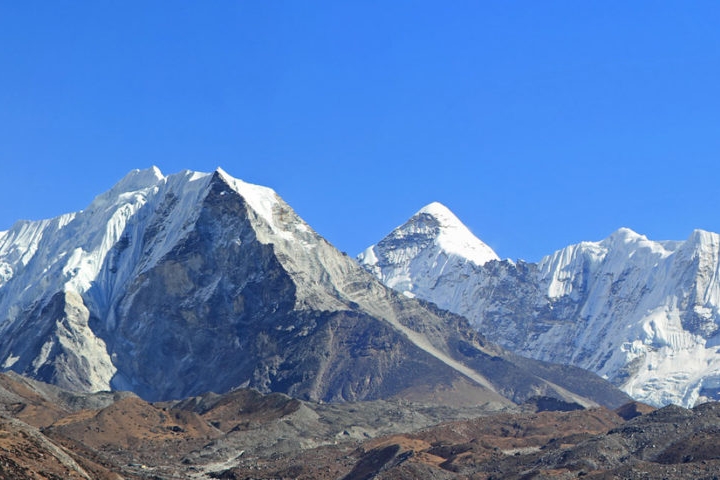
Island Peak, locally called Imja Tse, rises to 6,189 m in Sagarmatha National Park. The name comes from a 1953 British expedition that described how the peak appeared like an island in a sea of ice when viewed from Dingboche. And this description still holds today!
Climbing Island Peak requires a permit from the Nepal Mountaineering Association and basic mountaineering gear: crampons, ice axe, harness, and rope.
The standard route starts at Island Peak Base Camp (around 5,087 m), passes through High Camp (around 5,600 m), and then tackles a glacier crossing followed by a steep 100 to 150-meter headwall with fixed ropes leading to the summit ridge.
The summit itself is narrow, with steep drop-offs on both sides, and sits at the top of one of the most rewarding climbs available to non-professional mountaineers anywhere in the world.
The peak is rated Alpine Grade PD, meaning it is non-technical by the standards of serious alpinism. But do not let that mislead you!
At 6,000 m with thin air, cold temperatures, and an early morning start, the summit push is genuinely demanding. With proper preparation and the right guidance, however, most trekkers who complete the EBC portion of this itinerary have the fitness and acclimatization to go for the summit.
That is exactly the logic behind our team at Adventure A One Treks to combine both adventures in one itinerary of 18 days (can be extended too).
The two best seasons for this combined trek are Spring (March to May) and Autumn (October to November). Both windows offer the stable weather and clear visibility that an itinerary of this difficulty and elevation demands.
Spring, particularly April and May, brings mild temperatures and the bloom of rhododendrons through the lower forests. The days are long, the mountains are sharp against blue skies, and the overall atmosphere on the trail is energetic.
Late spring, on the other hand, can bring some haze as pre-monsoon moisture builds up, but the vast majority of spring treks are completed without significant weather disruptions.
Autumn, from late September through November, is cooler and arguably even clearer. The post-monsoon air is freshly washed, views tend to be outstanding, and the entire Khumbu region settles into the busiest and most festive trekking season of the year.
If you are doing this trek for the first time and want the best possible conditions, October is generally the sweet spot!
The other two seasons are significantly less ideal. The monsoon from June to August brings heavy rainfall, muddy trails, washed-out bridges, and frequent flight cancellations to and from Lukla. Visibility suffers considerably, and the risk of landslides is real.
Most experienced trekkers avoid the Everest region entirely during monsoon, and for an itinerary that includes a technical summit, the risk-to-reward ratio simply does not work in your favor.
Winter, from December to February, is a different kind of challenge, honestly. The temperatures at Lobuche and Gorakshep (where you'll be spending nights) can drop well below minus 20 degrees celsius.
Many teahouses above Namche close after mid-November, which creates logistical challenges for accommodation and resupply. Ice on the trail above Dingboche becomes a serious hazard, and storms can pin teams down for days.
This part of the Everest region is quieter in winter, which some trekkers find appealing, but the safety considerations for a combined EBC and Island Peak itinerary make it a season best left to very experienced, well-equipped teams.
In short: plan for spring or autumn. Everything else requires exceptional preparation and a willingness to accept considerably higher risks.
Two main categories of permits are required for this itinerary. Let us share it with you as our team at A1 Treks believe in transparency (yes, no hidden costs at all)!
For the Everest Base Camp trek portion, you need:
For Island Peak, you require a climbing permit issued by the Nepal Mountaineering Association (NMA) as Imja Tse is one of the NMA 27 peaks. The fee is USD 250 per group of up to four climbers in spring, and USD 125 per group of up to four climbers in autumn.
Groups larger than four pay additional fees, and it is always worth verifying current NMA rates at the time of booking as these figures are subject to change.
All permits must be carried with you throughout the trek and presented at checkpoints including Lukla, Monjo, Namche, and other ones that you find along the Everest trail. Well, if you are trekking with Adventure A One Treks, our guides shall handle all permit arrangements on your behalf so you arrive ready to trek.
Let us be straightforward with you: this is a challenging itinerary. Not the most technically difficult in the Himalaya, but one of the most demanding in terms of the combination of sustained altitude, total distance, and physical effort.
The Everest Base Camp trek on its own is non-technical. No ropes or ice axes are required, and the trail itself is well-marked and walked by thousands of trekkers every year.
But it covers approximately 145 km round trip over 12 to 14 days, with most of that distance on rocky, often steep terrain above 3,000 m. Your lungs work harder, your muscles fatigue more quickly, and recovery is slower. Endurance is far more important than speed on this route.
Island Peak raises the stakes considerably! It is real alpine climbing, rated Alpine Grade PD. The route involves glacier travel, crampon use, fixed rope ascent on the headwall, and a narrow summit ridge with significant exposure.
The main summit day of Island Peak begins around 1 to 2 AM and typically takes 12 to 14 hours in total. You are doing this after already spending ten days on trail at altitude. That cumulative fatigue is what makes the combined itinerary particularly demanding!
The main challenges are altitude and endurance. You will sleep as high as 5,164 m at Gorakshep and push to 6,189 m on summit day. Nights are sub-zero from Lobuche upward!
The cold, the thin air, the early starts, and the sheer length of the days all test your mental and physical reserves in ways that are hard to fully prepare for at home. Most climbers who complete this itinerary train seriously for several months beforehand. That is not an exaggeration but the truth! Check out our article on the difficulty of the Island Peak climb combined with the Everest Base Camp trek.
Accommodation on this 18-day trek plus peak climbing adventure comes with a mix of teahouses and mountain lodges, with standards dropping noticeably the higher you go. Here is what to realistically expect at each stage:
For food, nearly every teahouse along the route serves a combination of Nepali and Western dishes. Dal bhat is the most preferred and the best valued choice, often unlimited and packed with carbohydrates and protein.
Some other Sherpa specialties include thukpa (noodle soup), shyakpa stew, and momos (available in lower regions) are worth ordering whenever they appear on the menu.
For drinks, hot tea, milk coffee, butter tea, and hot chocolate are standard. Alcohol is also available but genuinely not recommended above Namche, as it dehydrates you and interferes with acclimatization.
For drinking water, expect to buy bottled water or pay a small fee to refill with boiled or filtered water at teahouses. Bottled water costs approximately USD 1 to 6 per liter, increasing as you gain altitude.
Most trekkers carry a reusable bottle and purification tablets or a filter to treat water from taps or streams where running water is still available. This is generally up to around Dingboche.
But above that, you’ll have to purchase water from teahouses. Whatever it is, plan to drink three to four liters per day minimum.
The single most effective thing you can do to prevent altitude sickness is to ascend slowly. Above 3,000 m (or after reaching Namche), try not to increase your sleeping altitude by more than 500 m per day. Take a full rest and acclimatization day for every 1,000 m gained.
Good news to you if you’ve decided to book this package with Adventure A One Treks. Our itinerary is built with those principles in mind, with acclimatization stops at Namche and Dingboche specifically designed for this purpose.
Staying hydrated should be your top priority! So, drink three to four liters of water daily throughout the trek. Remember that dehydration worsens altitude sickness considerably, and at high altitude it is easy to underestimate how much fluid you are losing.
And yes, avoid alcohol and sleeping pills! Eat consistently, even when your appetite drops.
Acetazolamide (Diamox), taken at 125 mg twice daily starting the day before ascending into high altitude, is widely used to reduce the risk of acute mountain sickness. It stimulates breathing and helps your body acclimatize faster.
However, you have to consult your doctor before the trek to discuss whether Diamox is appropriate for you and to get prescriptions for any other altitude medications you may need, including dexamethasone for emergencies.
If symptoms appear, the most important thing is not to ignore them.
For mild acute mountain sickness, which includes headache, slight nausea, and fatigue, stop gaining altitude:
For severe symptoms, including confusion, loss of coordination, inability to walk, vomiting, or breathlessness at rest, these are signs of HACE or HAPE and require immediate descent. And this is not a situation where you wait and see. So,
You see, descent is the definitive treatment for altitude sickness. Every member of our Adventure A One Treks team is trained to recognize these symptoms and respond appropriately, but everyone on the trail needs to understand them too!
With good preparation, patience, and the willingness to listen to your body, the vast majority of trekkers complete this itinerary safely every season. Altitude sickness is manageable when respected and it only becomes dangerous when ignored.
Note: If you prefer not to do the Island Peak Climb with the Everest Base Camp Trek and want to go for the Island Peak Climb only, then our Island Peak Climbing package can be an excellent choice for you.
Share your flight details with us as early as possible. One of our Adventure A One Treks representatives will be waiting at Tribhuvan International Airport to pick you up and transfer you directly to your hotel in Thamel.
Take the rest of the day easy. Kathmandu's altitude is manageable but the travel fatigue is real, so give yourself time to freshen up and settle in. In the evening, you will meet your lead guide for the trek.
This is your chance to go through the itinerary, ask every question you have, check your gear, and get a clear picture of what the next 17 days look like. It is also when we confirm your personal health, experience level, and any specific considerations before the trek begins.
Feel free to add a buffer day here if you feel this itinerary is too rushed for your comfort level or if you want to explore Kathmandu before heading into the mountains. Otherwise, sleep early. Tomorrow's start is very early indeed.


Your wake-up call will be at 2 or 3 AM. That is not a typo. Our driver picks you up from the hotel for the roughly three to four hour drive covering approximately 120 km to Manthali Airport in Ramechhap.
During peak trekking season, most Lukla flights are routed through Manthali rather than Kathmandu's Tribhuvan Airport, as the volume of traffic makes direct flights operationally difficult. In the off-season, the flight may depart directly from Kathmandu, which means a far more relaxed morning.
The reason we fly early matters. Lukla's weather window for safe landings is typically narrowest in the afternoon. By getting into the air as early as possible, we maximize the chances of a smooth landing. Even so, flight delays and cancellations happen on this route more than anywhere else in Nepal.
Weather can hold flights at Manthali for two to three days in bad stretches, and in those cases decisions need to be made together: do we wait it out, take a helicopter (at additional cost), or look at an alternative approach by road? We will navigate that call together as a team, because staying flexible is part of trekking in the Everest region.
Upon landing at Tenzing-Hillary Airport, you are officially in the Khumbu. Today's hike is 7.5 km to Phakding, which takes about three to four hours. The trail passes through Chaurikharka, Cheplung, Nachipan, Thadokosi, Nurning Ghat, and Chhuthawa before descending to the riverside settlement of Phakding.
You will cross a suspension bridge over Thado Koshi Khola on the way and walk alongside the Dudh Koshi River for the first time. Both tributaries welcome you to the lower Khumbu in style.
You are not yet inside Sagarmatha National Park. That begins tomorrow. Rest well and sleep early.
From Phakding, today's 11 km hike takes you to the gateway of the Everest region.
The trail passes through the lower Khumbu Sherpa villages of Zamphuti, Toc-Toc, Benkar, and Chumoa before reaching Monjo, where you enter Sagarmatha National Park and must present your permits for the first time. Make sure everything is in order here.
After Monjo, the trail continues through temperate forests of blue pine, fir, rhododendron, and Himalayan birch, crossing multiple suspension bridges as it follows the river upstream.
Passing through Jorsale, you reach the confluence where the Bhote Koshi meets the Dudh Koshi, one of those small geographical moments that feels significant in the field. From this point it is an unrelenting uphill section all the way to Namche Bazaar.
When you finally emerge into the bowl-shaped settlement of Namche, it feels almost surreal: a mountain town with real bakeries, gear shops, and warm lodges perched at 3,440 m.
We are spending two nights here, so take your time this evening. Have dinner, explore a little, and start drinking more fluids. You are already in the high-altitude zone and your acclimatization starts tonight.
If you woke up this morning with no signs of altitude sickness, that is a great sign. For some first-time trekkers at this elevation, mild symptoms like a slight headache or reduced appetite can appear, and today is specifically designed to let your body adjust before pushing higher.
From your lodge in Namche, you have direct views of Kongde Ri (6,187 m), Thamserku (6,608 m), and Kusum Kanguru (6,367 m). But resting in the lodge all day is not the plan.
For acclimatization, the rule of thumb is simple: walk high, sleep low. So we have organized a short hike to the Everest View Hotel (approximately 3,780 m), which can be done in the morning or at another hour of your choosing. It is a two-hour round trip with excellent views and a perfect way to activate your lungs at a safe elevation.
We also recommend spending time at the Sherpa Cultural Museum and the Tenzing Norgay Sherpa Heritage Centre in Namche. Both are worth your time and give genuine context to the community and history you are walking through.
If you feel up to it, we also give you the option to hike up to Syangboche Airfield the same day, but if you prefer to stay at the Namche lodge, that is absolutely fine. Either way works.
Today's hike covers approximately 9.5 km and can take up to eight hours from Namche Bazaar, depending on your pace and the time you spend at the various stops along the way.
The route begins with permit checks at the Namche checkpoint before passing by the Syangboche Airfield and crossing the Khumjung-La Pass to reach Khumjung village.
Khumjung is a deep dive into traditional Sherpa life. The village is dotted with stupas, monasteries, chortens, and mani walls, and the cultural texture here is richer than anything you encountered in commercial Namche.
You also have the option to detour through Khunde village before rejoining the main trail toward Sanasa, Lawi Schyasa, and Phungi Thanga. The trail from Khumjung down to Phunki Thanga is all downhill and moves through dense rhododendron and pine forest, the kind of trail that would be completely unremarkable anywhere else but feels extraordinary against this backdrop.
From Phunki Thanga, the real uphill begins. This final section to Tengboche is the most demanding stretch of the day, and you arrive at the monastery ridge by late afternoon.
The views from Tengboche of Everest, Lhotse, Nuptse, and Ama Dablam are extraordinary, especially in the evening light. Check into the lodge arranged by our guide and rest well.
Today's 10 km hike to Dingboche is a gradual and manageable climb that can still take seven to eight hours depending on your pace.
From Tengboche, you descend to the forest settlement of Deboche and then continue to Milingmo, passing stupas and mani walls and crossing a few suspension bridges and wooden bridges over the Dudh Koshi River.
The trail then passes through Pangboche, an ideal lunch stop and a good place to check in with yourself about how your body is responding to the altitude.
From Pangboche onward, you cross the 4,000 m mark and the landscape shifts noticeably from alpine forest to arid, high-altitude terrain. Tell your guide immediately if you are showing any signs of acute mountain sickness from this point on.
After lunch in Pangboche, continue through Shomare, Chejung, and Churro toward the diversion point where the Lobuche Khola and Imja Khola merge to form the Dudh Khola River.
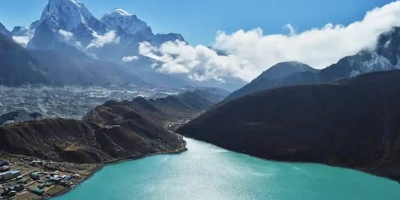
We take the Imja Khola route toward Dingboche, where the Dowo Tsho lake can be spotted on the way down. The sounds of the Imja Khola make for a peaceful arrival in Dingboche. We will be here for two nights, so take rest and sleep well.
This is your second dedicated acclimatization day, and it is not a day for passive rest. Pushing beyond 4,000 m means acclimatizing to 5,000 m before you go anywhere near Lobuche. The best way to do that here is the side hike to Nangkartsang Peak, also known locally as Nagarjuna Peak.
The peak is just 2 km from Dingboche but takes three to four hours to reach, making it a five to six hour round trip over 4 km total.
Beyond the acclimatization benefit, the views from the top are genuinely spectacular: Ama Dablam, Makalu, Cho Oyu, and Lhotse fill the horizon, and the Dingboche village below with Dowo Tsho lake makes for a surreal backdrop.
After returning to the village, take the afternoon to explore the high-altitude Sherpa cultural surroundings. Keep yourself warm, keep drinking fluids, and monitor how your body is feeling.
If anything feels off, tell your guide. If you need an extra rest day rather than a hike, that option exists too, especially if you have buffer days built in.
Assuming your body has handled the acclimatization well, today you continue forward to Lobuche (also spelled Labuche), approximately 9 km from Dingboche and five to six hours of hiking away.
We take the Thukla route rather than Pheriche, which means fewer teahouses along the way. Fill your water bottles before you leave and aim to reach Thukla at a reasonable pace for a lunch stop.
After Thukla, the trail crosses a bridge over the Lobuche Khola and continues to climb into high-altitude, rugged terrain. Crossing the Thokla Pass at 4,830 m, you are surrounded by some of the most dramatic mountain scenery on the entire route.
Lobuche East and West stand to your left, Pokalde and Kongma Tse to your right, and Pumori, Kala Patthar, and Changtse West dominate the view directly ahead.
Note that Everest is still not fully visible from here. That moment comes tomorrow. The Khumbu Glacier, the largest and highest glacier in Nepal, sits to your right as you approach Lobuche.
You are now close to 5,000 m, and the altitude demands consistent self-monitoring. Drink warm water, keep yourself warm, and get a good night of sleep.
This is the day. Start early with a good breakfast: from Lobuche, it is approximately 4.5 km and three hours of hiking to Gorakshep, and you want to reach Everest Base Camp during the best light and have enough time to actually absorb being there.
En route to Gorakshep, you get your first real glimpse of Everest, though not the definitive view.
After reaching Gorakshep, which sits directly beside and slightly above the massive Khumbu Glacier, have lunch, drop your larger pack, and continue toward EBC with your daypack. Gorakshep is the final stop with teahouses, and they are basic. This is your accommodation tonight.
The trail to Everest Base Camp passes several high-altitude ponds and lakes, including Dride Lake, and includes a short non-technical section across the Khumbu Glacier before arriving at the iconic base camp itself.
Despite the name, the view of Everest from Base Camp is actually partial. Nuptse (7,861 m), Khumbutse (6,636 m), and Pumori (7,161 m) dominate the skyline here.
You see the tip of Everest's peak but it does not fully reveal itself. Lhotse and Ama Dablam are more dramatic from this angle, along with a range of peaks on the Tibetan side.
But the experience of standing there, on the moraine at 5,364 m beside prayer flags and expedition monuments honoring past climbers, is something no photograph adequately prepares you for.
Spend time here. Explore the stupas and monuments. Then make your way back to Gorakshep for an early night. Your body has now fully acclimatized to 5,000 m mountain air, and that means tonight should actually deliver a decent sleep.
The hike to Kala Patthar begins as early as 3 AM. This is non-negotiable if you want the sunrise view, which is the whole point.
The trail is 2 km and takes about three hours to reach the summit. From the very first uphill steps out of Gorakshep, Everest begins to reveal itself. By the time you reach the top at 5,545 m, the thin mountain air may genuinely catch your breath.
Go absolutely slow. Take your time. And when you finally turn to face the horizon, here is what you see: Changtse West, Khumbutse, Pumori, Lingtren, Kangri West and East, and then directly in front of you, the south face of Mount Everest (8,848 m), flanked by Lhotse North I and II, Lhotse (8,516 m), Nuptse Shar I and III, and the full Mahalangur Himal sub-range on a 360-degree panorama.
This is what you came for. Take your time up there!
Once satisfied, return to Gorakshep for breakfast. Today you also begin the long descent back toward Dingboche (approximately 12 km) and then the separate uphill section of 4.5 km to Chukhung, walking along the Imja Khola. In total, expect around 17 km of hiking covering five to six hours.
It is a long day but you are at a lower altitude for most of it, and knowing the first half of this adventure is complete gives you more energy than you might expect.
Rest well in Chukhung. The second and more technical half of this journey begins tomorrow.
Today marks the start of the Island Peak climbing chapter. From Chukhung it is a two to three hour hike to Island Peak Base Camp, which sits right beside the beautiful Imja Tsho glacial lake.
This is where the teahouses end and the tents begin, and the shift in atmosphere is immediate. It genuinely feels like mountaineering from here.
The Imja Valley at this elevation is surrounded by extraordinary scenery: the south wall of Lhotse (8,501 m) and Nuptse (7,879 m) to the north, Ama Dablam (6,856 m) to the south, and close-up views of the Chukhung Glacier and Baruntse (7,720 m).
If you take any photographs on this entire trek that stop people in their tracks, it is likely from somewhere around here.
The afternoon is yours for short viewpoint hikes, familiarizing yourself with the gear, and beginning your mental preparation for the summit push. Your guide will brief you on what to expect over the next two days.
After ten days of trekking to EBC and the approach to Island Peak Base Camp, your body needs a full recovery day before attempting the summit. But this is not a passive rest day. It is a technical preparation day, and the training that happens here matters.
Even if you have some prior mountaineering experience, your Sherpa guide will run mandatory technical training sessions to ensure every member of the team is confident with the specific techniques required for the 100-meter vertical headwall on Island Peak.
Here is what the training covers:
Beyond the technical training, use this day to finalize your gear. Check that your harness, helmet, and crampons fit correctly over your summit-day layers, which will be significantly bulkier than your trekking clothes.
Pack your summit daypack, typically 30 to 40 liters, with water, high-energy snacks, your headlamp and spare batteries, and an extra warm layer.
Listen carefully to your guide's summit briefing on pacing, the route, and weather windows. And sleep as early as possible. Tomorrow starts before midnight.
Today is the highest point of the entire adventure. And it starts in the darkest part of the night.
You will wake around 1 to 2 AM, dress in your summit layers and crampons, and set off by headlamp across the dark terrain below base camp.
The first section is a steep, rocky scramble uphill, demanding in the darkness and harder than it looks on any map. This initial climb of several hundred vertical meters tests your endurance well before the technical sections begin, and the goal is to reach the glacier by first light.
Once above the boulder fields, you reach what climbers call the crampon point, a small ledge at around 5,500 m where the team pauses to put on harnesses and rope up. It is exposed and cold at this elevation, so the gear change happens quickly.
From here, the roped team begins the glacier crossing. Your Sherpa guides have pre-fixed the route over the ice, navigating around crevasses. In some years, steel ladders span the deepest gaps.
The glacial section is moderately angled but uneven, with ice humps and hidden fissures requiring careful footwork throughout. The rope team moves steadily at this elevation, pausing frequently to rest at around 5,700 to 5,800 m.
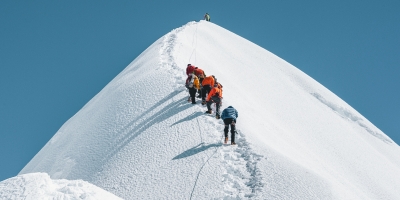
After the glacier comes the headwall. This final face of ice and rock, roughly 100 to 150 m high and angled at 45 to 60 degrees, is the crux of the entire climb.
Fixed ropes have been set up the face. Each climber attaches a jumar to the rope and works up the slope, kicking steps in the ice with every move. At 6,000 m, every step is hard work.
Teams typically leave heavy packs at the base of the wall and carry only essentials for the push to the top. Bottlenecks can form as the rope is shared, so patience and steady pacing are more valuable than strength here.
Above the headwall, a short and narrow summit ridge leads to the peak. The ridge is thin, with steep drop-offs on both sides, and every climber stays clipped to the fixed line. The summit itself is small, not much wider than a dining table, with a central anchor for the team to clip into on arrival. If the timing is right, teams reach the summit around sunrise.
And the views from the top: Lhotse (8,516 m) towers immediately to the north, its south wall massive and close. Ama Dablam (6,812 m) dominates the southern view. Makalu (8,485 m) is clearly visible to the east.
Mount Everest's peak appears above the Lhotse-Nuptse ridge on clear days. Baruntse (7,129 m) sits to the east, Nuptse (7,861 m) alongside Lhotse's ridge, and Cho Polu (6,735 m) stands nearby. It is a view that belongs to the summit and nowhere else.
The descent follows the same route in reverse: rappel the headwall, cross back over the glacier, and return to Base Camp by late morning or early afternoon.
From base camp you continue back to Chukhung for the overnight stay, completing approximately 13 km of total hiking in nine to ten hours. It is exhausting. It is also one of the best days of your life.
Time to head home. Today's 11 km descent to Pangboche takes about five to six hours and covers familiar ground, though the perspective from the other direction always brings something new. The Himalaya have a way of looking completely different depending on which way you are facing.
At below 4,000 m, your body and mind shift noticeably. Breathing is easier, sleep comes more naturally, and the sense of achievement from the last two weeks starts to settle in properly. We will not push beyond Pangboche today. Rest matters as much now as it did on the way up.
If you want to vary the return route slightly, it is also possible to pass through Pheriche instead, going via Churro and Shomare, which gives you a different landscape perspective and a settlement you bypassed on the way in. Your guide can arrange this if you want it.
Back to Namche. Back to bakeries and warm lodges and the unmistakable energy of the Sherpa capital. Today's 14 km route takes about seven to eight hours and is a combination of flat sections, downhill, uphill, and more downhill.
It is honest trekking with no technical drama, and by the time Namche appears in the valley below you will find yourself walking faster whether you intend to or not.
Celebrate tonight. You have earned it.
The final day on trail. Take it slow. Let yourself look back at the Khumbu peaks one more time before the valley closes around you and the familiar sounds of Lukla's teahouses and gear shops fill the air.
The route back to Lukla passes through Monjo again, where you will need to show your permits one final time before continuing the descent to the airstrip.
Lukla today feels almost like a proper town compared to what you have been sleeping in for the last two weeks. Enjoy the evening on your own terms and sleep early. The morning flight has its own set of requirements.
The departure flight from Lukla is subject to the same weather variables as the arrival, and the same dramatic approach applies in reverse.
Take-off from the sloped runway is equally intense. But once you are in the air and the Khumbu Valley drops away beneath you, the views through the small aircraft windows are genuinely surreal. That is what makes this particular journey feel complete from both ends.
In case of bad weather, returning via helicopter or vehicle are the backup options. In fact, many trekkers and climbers choose to fly directly from Island Peak Base Camp to Lukla or even to Kathmandu by helicopter at the end of the trip. Adventure A One Treks can arrange this for you at an additional cost if that is the experience you want.
Upon landing in Kathmandu, our A One Treks representative will be at the airport to transfer you back to Thamel. The evening is yours completely: explore the nightlife, wander through the streets, or simply rest.
If you want to spend an extra day doing Kathmandu sightseeing, we can arrange that too. Just let us know. And we do typically close the trip with a farewell dinner along with your trekking and peak climbing certificate, something worth framing.
It is time to leave Nepal. We hope you loved every step of it.
We will drop you at Tribhuvan International Airport three hours before your scheduled departure. Before you go, pick up souvenirs from the shops in Thamel.
And if you have a moment, leave us a review on Google or TripAdvisor. It genuinely helps other trekkers find us and make this same journey.
If you want to extend your time in Nepal after this adventure, whether that is a jungle safari in Chitwan, a few days in Pokhara, or another trek entirely, get in touch and we will make it happen. Otherwise, bon voyage. The Himalaya will be here when you are ready to come back.
The Itinerary can customize to your needs and the primary piece of gear for day hiking is about 15/20 Liter. you can keep your personal belongings in this bag.
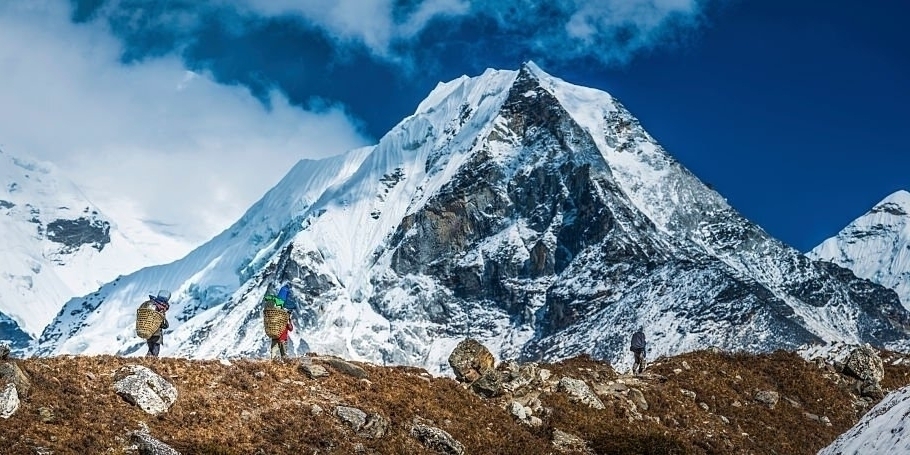
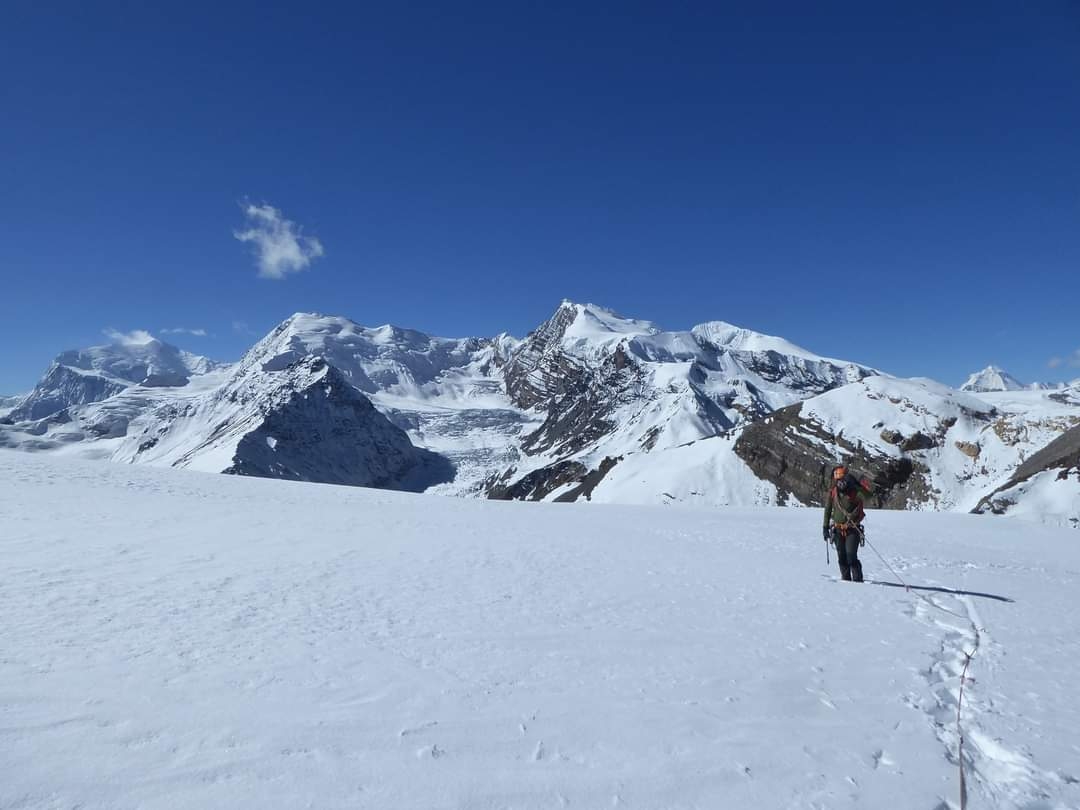
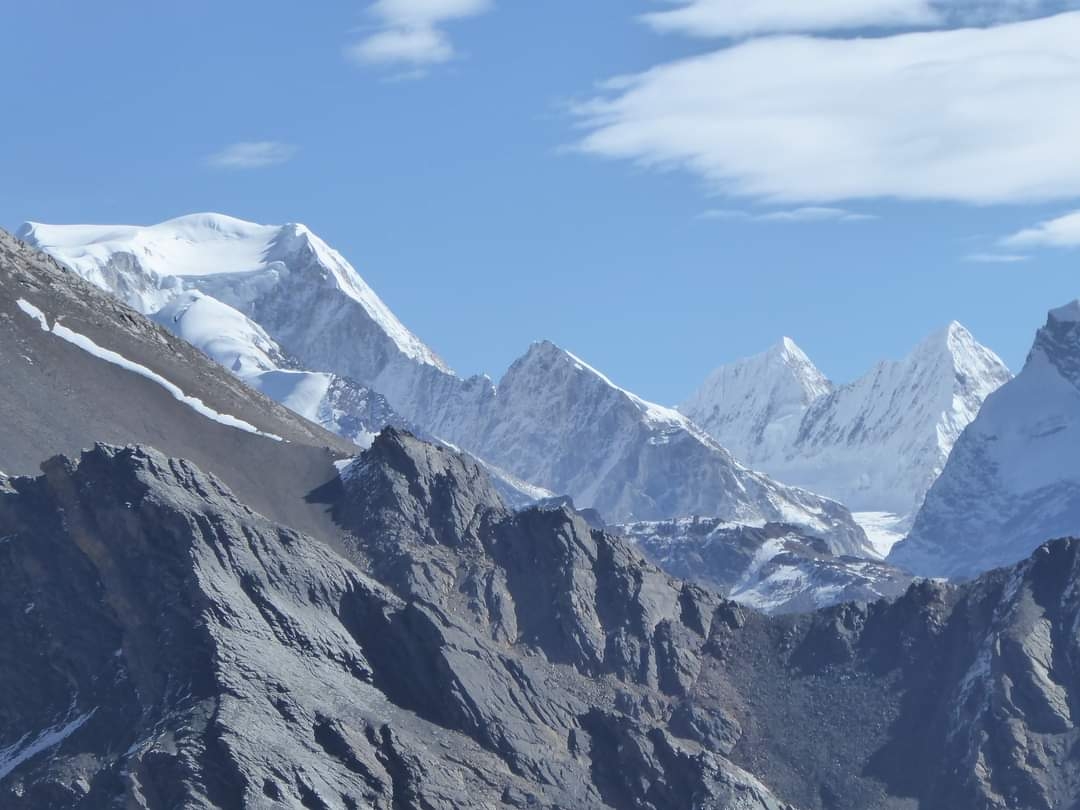
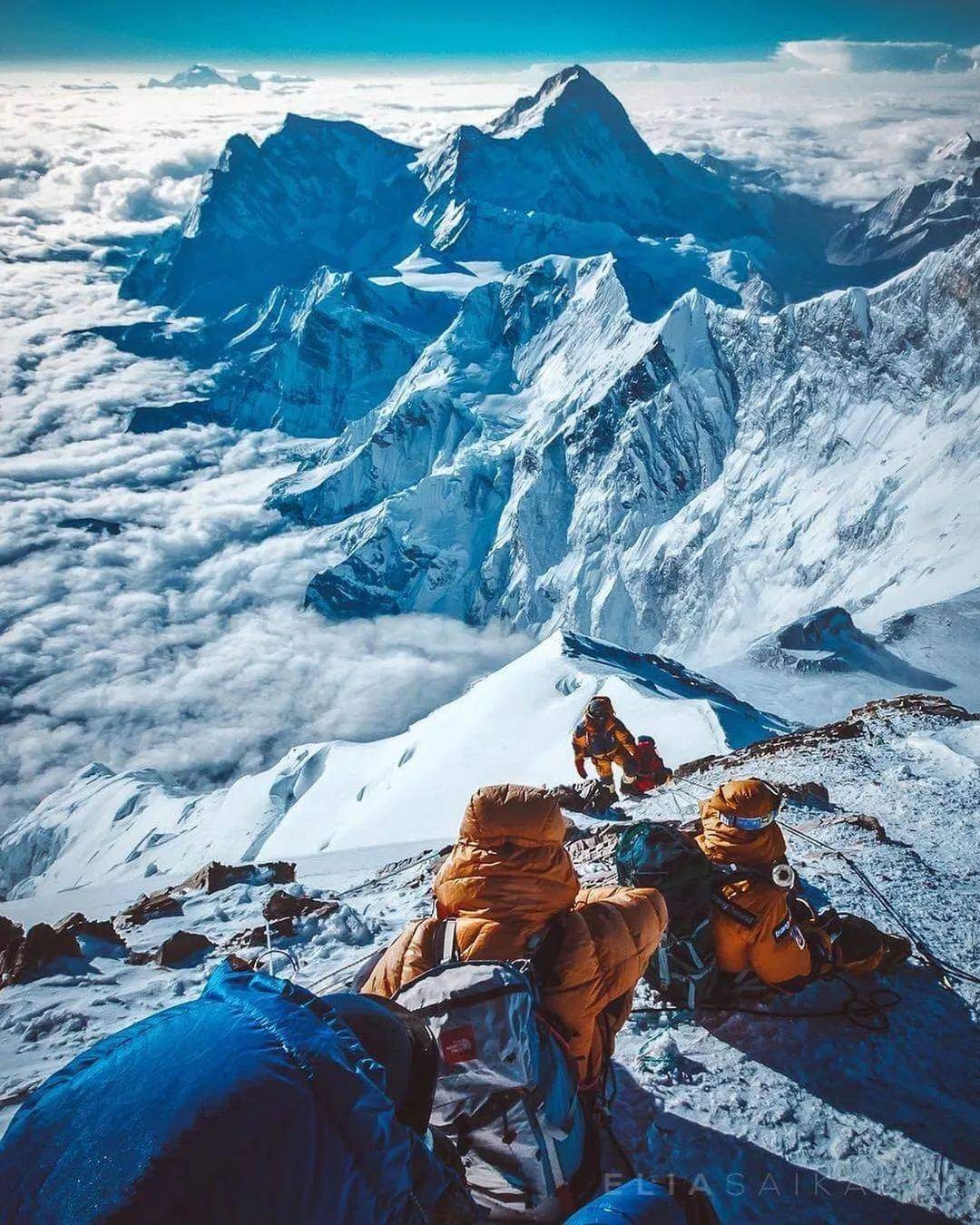
I had an amazing time doing a fall sland Peak Climb and Everest Base Camp Trek with Adventure A One Treks. The trip was well-organized and professional, and the guide and porters were knowledgeable and kind. Our guide was very attentive to our needs and answered all of our questions. The accommodations that were provided were comfortable and clean, and the food was delicious. The trek itself was challenging but well-rewarded with spectacular views. We even got to visit exotic monasteries and Buddhist stupas along the way. I would definitely recommend Adventure A One Treks to anybody looking for a high-quality trekking experience. 5 stars for sure!

The Island Peak Climb combined with the Everest Base Camp trek through Adventure A One Treks was an unforgettable high-altitude adventure. The journey to Everest Base Camp offered incredible views of glaciers, Sherpa villages, and the world’s highest peaks, making every step exciting and rewarding. The climb to Island Peak was challenging but extremely satisfying, with breathtaking panoramic views from the summit. The entire expedition was well organized, safe, and professionally managed. I highly recommend this adventure for anyone looking for a perfect mix of trekking and peak climbing in the Everest region.
My Island Peak Climb with Everest Base Camp trek was one of the most thrilling experiences of my life. The trek to Everest Base Camp was full of stunning scenery, beautiful trails, and rich Himalayan culture. Reaching Island Peak summit was the highlight of the journey, offering incredible views of Everest, Lhotse, and surrounding peaks. Everything was very well managed throughout the expedition, with smooth logistics and great support. I would highly recommend this package for anyone seeking a true Himalayan adventure.
Island Peak Climb with Everest Base Camp Trek is a combined trip to Everest Base Camp. The fantastic trip is designed to experience easy mountain climbing and trekking.
After leaving the small settlement of Chukung, there are no lodges at Island base camp, where tented camping is established.
Overnights in tents, till the climb is complete as per the itinerary set by Adventure 1. The camp with separate kitchen tent backed
by cook and kitchen staff, all meals are cooked by our camping cook.
In all Adventure-1, when booked, provides an expert climbing guide as well porters or pack animals to carry heavy baggage. Throughout the trek and climb our porters as well yaks will be at disposal to carry all the gears.
The EBC trek portion is open to anyone with reasonable fitness and a willingness to train. You do not need prior trekking experience to walk to Everest Base Camp. Island Peak, however, is a different story. It involves real alpine climbing with crampons, fixed ropes, and a demanding high-altitude summit push. Absolute beginners are not ideal candidates for Island Peak unless they are willing to commit to serious physical and technical preparation beforehand. We at Adventure A One Treks always assess this honestly during the booking process, because getting you to the summit safely matters far more than getting you to sign up.
Prior experience with crampons, ice axes, and harnesses definitely helps and will make the technical training day at base camp much more intuitive. But it is not a hard requirement. The dedicated training day built into the itinerary is designed to bring less experienced climbers up to speed on the exact techniques needed for this specific route. What matters more than previous experience is your fitness level, your attitude, and your willingness to follow your guide's instructions without ego getting in the way.
There is no strict national regulation that sets a universal minimum age for trekking in Nepal. However, for this specific combined itinerary involving high-altitude trekking to 5,364 m and a summit push to 6,189 m, we at Adventure A One Treks do not recommend it for anyone under 16 years old. Even at 16 to 18, a thorough health assessment and parental consent are essential. Young bodies generally acclimatize differently and the physical and mental demands here are serious.
Absolutely. In fact, a significant number of trekkers who book through Adventure A One Treks are solo travelers. You will have your licensed guide with you at all times, and on the trail you naturally meet other trekkers at teahouses. The social side of this trek takes care of itself. The only question is whether you want a private itinerary or a group departure, which we can discuss when you get in touch.
Yes. If you want the EBC experience without the technical climb, we offer that as a standalone package. The Island Peak addition is for those who want to take the adventure one significant step further. Both are worthwhile on their own terms. Just let us know what you are aiming for and we will match the right itinerary to your goals.
We provide fixed ropes, base camp tents, and group technical equipment at Island Peak Base Camp. What you need to bring or rent yourself includes your personal mountaineering gear: crampons, ice axe, harness, helmet, ascender (jumar), carabiner set, and appropriate high-altitude clothing layers. If you do not own this equipment, we can arrange rental through our Kathmandu partners at an additional cost. Let us know during the booking process and we will sort it before you arrive.
Yes. Thamel in Kathmandu and the gear shops in Namche Bazaar both offer rental equipment ranging from down jackets and sleeping bags to full mountaineering kits. Quality varies significantly, so it is worth inspecting anything you rent carefully before you head up. For summit-critical items like crampons and harnesses, we recommend either buying your own or renting through a reputable shop that we can refer you to. A worn harness buckle is not the kind of surprise you want at 5,800 m.
Yes, you need your own sleeping bag. Teahouses do provide blankets but they are not consistently warm enough above Namche, and cleanliness is not guaranteed. For this itinerary, a sleeping bag rated to at least minus 20 degrees Celsius is recommended. Anything less and you will spend more energy shivering than recovering. At Island Peak Base Camp in a tent, the cold is serious, especially in autumn nights.
There is a well-known altitude sickness clinic at Pheriche (4,240 m), operated by the Himalayan Rescue Association (HRA), which trekkers can visit during the season. Dingboche also has a small health post. Above Dingboche, medical facilities are essentially nonexistent. Helicopter evacuation is the primary emergency option above Namche, and it is expensive, typically USD 2,000 to 5,000 or more depending on conditions. This is exactly why comprehensive travel insurance with high-altitude evacuation coverage is not optional on this itinerary.
It is not legally mandatory but Adventure A One Treks will not run this itinerary for any trekker without confirmed travel insurance. The policy must specifically cover trekking and mountaineering above 6,000 m and helicopter evacuation. Standard travel insurance does not cover high-altitude activities. Read your policy carefully and bring a printed copy. Your guide needs a copy as well. Insurance companies that commonly cover this itinerary include World Nomads, Battleface, and Global Rescue, but shop around and confirm the altitude coverage limit in writing.
There are no mandatory vaccinations required to enter Nepal. However, the recommended ones include hepatitis A and B, typhoid, tetanus, diphtheria, and a course of rabies vaccination if you plan on spending significant time in rural areas. Altitude sickness is not vaccine-preventable, so acclimatization and medication are your tools there. Consult a travel medicine clinic at least six to eight weeks before your departure date.
Your guide makes this call, and their decision is final. We know that is hard to hear when you have trained for months and spent significant money to be on this trail. But the descent protocol exists for your safety and your guide is trained to enforce it. In most cases of mild AMS, a rest day or a descent of 300 to 600 m resolves the issue and the trek can continue. For more serious cases, helicopter evacuation may be the only option. Adventure A One Treks has an established emergency protocol and will support you through the process regardless of what decision needs to be made.

| No of people | Price per person |
|---|---|
| 1 - 1 | $1,085 |
| 2 - 4 | $990 |
| 5 - 10 | $910 |
| 11 - 20 | $850 |