Private Car/van or Flight
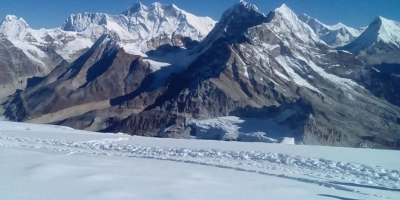
Here is something that most people do not realize about the Lobuche Peak Climb with Everest Base Camp Trek. On summit day, when you reach 6,119 m and look south, you can actually see Everest Base Camp far below you.
Those tiny colored shapes on the moraine? That is the very campsite where you stood a few days ago! The Khumbu Glacier stretches away in front of you. Lhotse fills the sky above and it suddenly hits you how far you have actually come!
That moment is something you simply cannot get from just doing the EBC trek alone. And it is one of the reasons why this 18-day package from Adventure A One Treks is so special.
So what exactly is this trip? It is two major adventures combined into one:
Lobuche is actually the peak that Everest teams use to test their skills and acclimatize before their main expedition. And you are doing it right after EBC, in the same valley, in the same 18 days!
Now, let us be honest with you: Lobuche is not the easiest peak in Nepal. It is a step above Island Peak in difficulty. The headwall goes up to 40 to 50 degrees. The glacier has real crevasse hazards. The summit ridge is also exposed.
If you are coming with no climbing background at all, some prior alpine training before this trip is something we strongly recommend!
But with proper preparation and the right guiding team, this is absolutely achievable. Our itinerary is designed so that by the time you reach Lobuche Base Camp, your body has had nearly two weeks to acclimatize at altitude. You are more ready than you think.
Adventure A One Treks takes care of everything: licensed Sherpa guides, climbing permits, teahouse and camp accommodation, all meals on trail, porters, airport transfers, and technical equipment at the climbing section. You just need to show up ready!
Want to get started? Reach out to our Tour Expert, Mr. Ajeeb Bhatta at Adventure A One Treks, and let us put this adventure together for you!
Here are the main attractions of this trek:
Let’s get started with something interesting about Lobuche Peak.
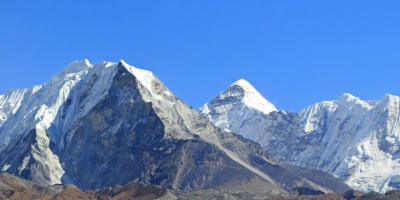
Unlike many climbing objectives that stay hidden until the very last section, Lobuche East is visible from the main EBC trail. From Dingboche onward, you can clearly see its two summits across the valley, separated by a sharp ridgeline.
Lobuche West looks intimidating and technical (it is, and it is not our objective). Lobuche East presents its southeast ridge, clean and obvious against the sky!
By the time you have been on trail for a week, this mountain has become familiar. You have seen it from different angles, in different light, at different hours of the day. That matters more than you might expect!
When you finally put your crampons on at Base Camp, the mountain does not feel like a stranger. It feels like something you have been building toward the whole time. And that mental familiarity genuinely helps on summit day.
On the walk from Dingboche to Lobuche, the trail climbs a steep section from Thukla village to the Thokla Pass at around 4,800 m. Most trekkers expect a viewpoint. What they find is something much more powerful.
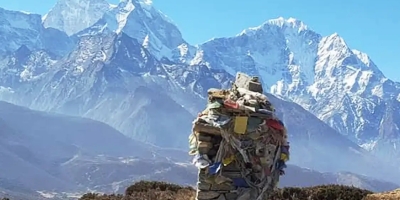
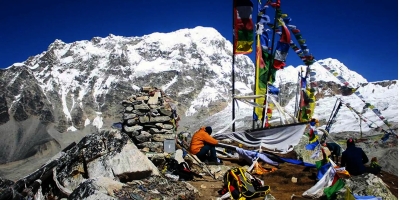
At the top of that climb, there is a field of over 100 stone chortens and memorials. Each one honors a climber or Sherpa who lost their life on the mountains of the Khumbu. Families built these. Sherpa communities built these. Fellow mountaineers built these!
Many of the stones carry inscribed names, dates, and short messages. The most recognized is Scott Fischer's memorial, the American mountaineer who died in the 1996 Everest disaster. But dozens of others are here too, each with their own story.
Most trekkers go quiet when they reach this place. There is not much to say. What the Thokla Pass does better than any guide briefing is remind you, in the most human way possible, that the mountains ahead deserve respect.
The people whose names are on these stones knew that better than anyone. This is one of the most meaningful stops of the entire 18 days, and it happens on the way to your own summit.
From Lobuche onward, the Khumbu Glacier takes over the landscape completely. This is the highest glacier in the world, flowing from the Western Cwm near Everest's summit all the way down to around 4,900 m at its terminus.
It stretches over 17 kilometers in length and covers roughly 70 square kilometers. Once you hit this section, nothing on the lower trail has prepared you for what it looks like.
You can actually hear the glacier in places, particularly near crevassed sections where the ice shifts and cracks. Walking along its lateral moraine on the way to Gorakshep and Base Camp gives you two full days of this experience.
And by the time you reach Everest Base Camp, you are standing directly on the glacier's edge. The Khumbu Icefall towers above, a chaotic wall of moving ice and seracs that marks where trekkers stop and Everest climbers begin.
The ice in the icefall moves roughly 0.9 to 1 meter per day, which is why the climbing route through it has to be re-fixed every single season.
For the Lobuche climb, the glacier becomes even more personal. The Lobuche Glacier, which feeds into the Khumbu system, is the approach terrain for the summit headwall.
You do not just walk beside it. Above 5,800 m, you are crossing it on a rope team, and the crevasse navigation here is real.
Not every day on this trek is hard, honestly. So, understanding where the genuinely challenging sections fall will help you pace yourself and enjoy the easier days more.
For that, let’s break down the trail to understand this even better:
Every single day of this trek happens inside Sagarmatha National Park, a UNESCO World Heritage Site that stretches from around 2,000 m all the way to the summit of Everest at 8,848 m. That range means you walk through completely different landscapes as you gain altitude!
In the lower sections, the trail passes through rhododendron and birch forests. In spring these burst into red, pink, and white blooms that cover entire hillsides.
The forest section on the way to Tengboche is genuinely beautiful, and it might actually be your favorite day on the lower trail.
Above 4,000 m, the trees give way to open meadows and the scale of the mountains starts to dominate everything. And above 5,000 m, it is rock, moraine, glacier, and sky.
The park is also home to snow leopard, Himalayan tahr, musk deer, and red panda in the lower zones.
More than 200 bird species have been recorded here, including Nepal's national bird, the Himalayan monal, as well as lammergeiers you can sometimes spot riding thermals far above the ridgelines.
Big wildlife sightings are never guaranteed, but this ecosystem is far richer than the barren upper sections would suggest.
You spend most of this trip sleeping in Sherpa villages, and each one feels different from the last.
Namche Bazaar (3,440 m) is the Sherpa capital of the Khumbu: busy, commercial, and well-resourced. It has ATMs, bakeries, gear shops, internet cafes, and a weekly market.
It is also your last chance for real comfort before the trail gets serious. Spend both acclimatization days here properly. The Sherpa Cultural Museum and Tenzing Norgay Heritage Centre are absolutely worth a few hours.
Tengboche (3,867 m) sits on a ridge around the largest monastery in the Khumbu. The gompa was first built in 1916, destroyed in the 1934 earthquake, rebuilt, and then destroyed again in a fire in 1989 before the current reconstruction.
The evening puja at the monastery is one of the most quietly affecting things you can experience on this trek.
Dingboche (4,410 m) is an open, flat village with wide yak pastures and mountains on every side. Ama Dablam, Lhotse, and both summits of Lobuche are visible from here.
Two nights at Dingboche, including the acclimatization hike, give you some of the best views of the entire trip.
Lobuche (4,930 m) is functional and cold. Teahouses here are basic, no electricity in rooms, limited menu. But Lobuche has its own atmosphere. It is where trekkers and climbers from different expeditions share the same limited space, and that energy is real.
Gorakshep (5,164 m) was the original Everest Base Camp in 1952 and is now the highest settlement on this route. No running water, no showers. But it is the launch point for both Everest Base Camp and Kala Patthar, and that is all that matters here.
After about nine days of walking, you reach Everest Base Camp. By this point the air is genuinely thin, every step requires thought, and the Khumbu Icefall fills your view ahead.
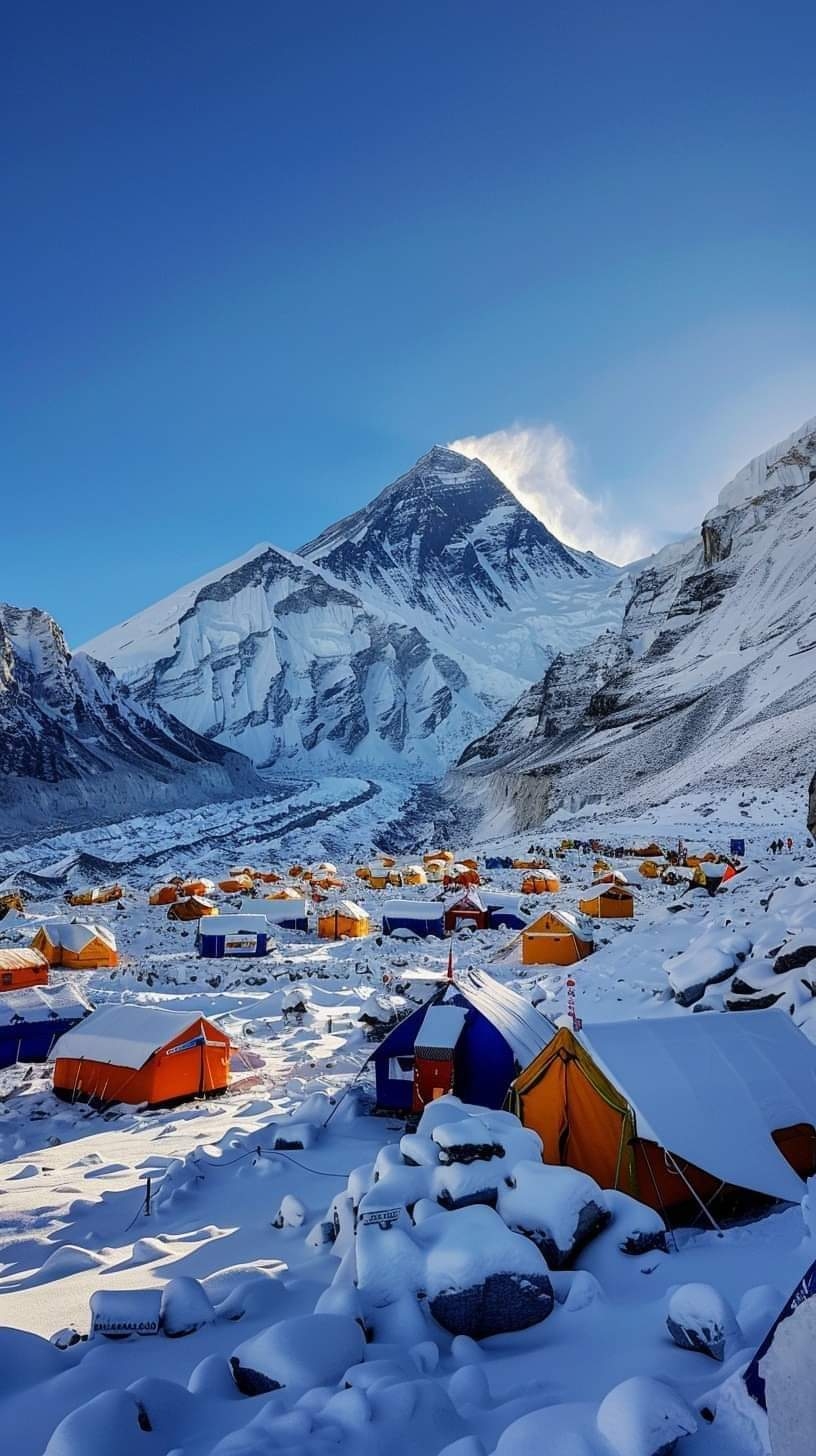
During expedition season, Base Camp is a temporary city: hundreds of tents, fixed rope teams, high-altitude equipment, and prayer flags around a small Buddha shrine at the center.
The glacier makes sounds beneath you. Cracks, shifts, a low periodic groan. It reminds you that this is a living landscape, not a postcard.
Everest's summit is still 3,484 m above you at this point, hidden behind the icefall. What you see from Base Camp is Nuptse (7,861 m), Khumbutse (6,636 m), and Pumori (7,161 m) dominating the immediate skyline.
The real Everest view only comes the next morning on Kala Patthar, and it is worth every step of that 3 AM start.
The hike to Kala Patthar starts as early as 3 AM from Gorakshep. It is 2 km and about two hours of steep climbing in complete darkness. But when the light starts coming and you reach the top at 5,545 m, the wait becomes irrelevant.
In front of you, Everest (8,848 m) glows in the first light of sunrise. Lhotse (8,516 m) lines up to the right. Nuptse (7,861 m) is on the left. Pumori (7,161 m) sits close and dramatic to the northwest. Ama Dablam (6,812 m) defines the southern skyline.
And below you, the full length of the Khumbu Glacier runs down through the valley you have spent ten days walking through.
This is where you photograph! The one you have seen a hundred times and are now standing inside.
Let us be direct here. Lobuche East is graded Alpine Grade PD (Peu Difficile, meaning "not very difficult" in French alpine grading). In global climbing terms, that rating is accurate. But that does not mean this is a casual climb!
To give you proper context: Everest expedition teams climb Lobuche East as a training and acclimatization exercise before their high-altitude rotation. They use it to test skills and fitness at 6,000 m before heading to 8,848 m. That context tells you more about what kind of mountain this actually is than any grading system.
There are two summits:
The standard route starts at Lobuche Base Camp (around 4,865 m), moves up to High Camp (around 5,600 m), and then pushes for the summit.
The summit day starts at 1 to 2 AM. From High Camp, the first section is moderate snow slopes that steepen as you gain elevation. Then you hit the Lobuche Glacier itself. This is where crevasse awareness becomes real and non-negotiable.
The rope team moves together here with your Sherpa guide leading the way across pre-identified safe crossings. The glacier shifts between seasons, so your guide's knowledge here matters enormously.
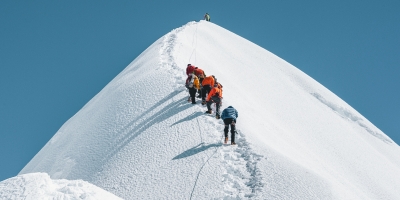
Above the glacier, the headwall begins. This is the section that truly defines Lobuche as a technical climb and sets it clearly apart from Island Peak. It is a sustained 40 to 50-degree slope of snow and ice, roughly 200 to 300 vertical meters, climbed entirely on fixed ropes using a jumar (ascender).
The technique is:
At 5,800 to 6,000 m, every single one of those breath cycles is working hard. The angle does not let up, and the exposure on both sides increases as you gain height.
Drop your heavy pack at the base of the headwall. Carry only essentials: water, high-calorie snacks, headlamp, spare batteries, and a warm layer.
Teams can sometimes bottleneck on the fixed lines if multiple groups are attempting the summit on the same day. Patience matters more than speed at this stage.
Above the headwall, you reach the summit ridge. This ridge is corniced, with steep drop-offs on both sides, and every climber stays clipped to the fixed line the entire way. The summit dome is small. There is a central anchor. You clip in and look around.
Looking north, Lhotse's south wall fills the entire horizon, close and massive. Nuptse is to its left. Everest's summit appears above the ridge on clear days. Pumori is directly across the valley.
And looking south, far below on the moraine, you can see Everest Base Camp. Those tiny shapes are the tents. That is where you were standing just a few days ago.
The descent goes back down the same route: rappel the headwall on fixed lines, cross back over the glacier, return to High Camp, then down to Base Camp.
Total summit day is eight to nine hours. It is the longest and most demanding day of the entire 18. It is also the one you will talk about for years!
Spring (March to May) and Autumn (October to November) are your two windows. Everything outside those seasons comes with significantly more risk and significantly less reward!
Let’s breakdown:
The EBC trekking portion is non-technical. Any reasonably fit person who trains properly can complete it. The Lobuche climb is a different category.
Prior mountaineering experience is strongly recommended before attempting Lobuche. This means at least some hands-on exposure to crampon technique, moving on fixed ropes with a jumar, and rappelling on descent.
An introductory alpine climbing course, even a short one, will make the dedicated training day at Lobuche Base Camp much more effective. Our training day is designed to reinforce skills you already have, not introduce them for the first time at 5,000 m.
Adventure A One Treks always assesses this honestly during the booking process. Getting you to sign up matters less to us than getting you to the summit and back down safely.
Here are all the permits you need for the 18-day Lobuche Peak Climbing with Everest Base Camp Trek:
Kindly note that the permit fees vary by season and group size (generally, autumn is priced lower than spring).
When you book with Adventure A One Treks, all permit arrangements are handled by our team before you arrive. You just carry the documents and submit to us beforehand.
From Lukla through Namche, lodges are comfortable and reasonably well-equipped. Most have electricity, running water, hot showers (some included, others charged separately), and Wi-Fi.
Namche has the most varied food menu on the entire route: dal bhat, momos, pizza, pancakes, eggs, noodles, and decent coffee are all available.
Above Namche, things get progressively more basic. Tengboche and Dingboche have electricity and tap water, with hot showers available at an extra cost (around NPR 600 to 800).
At Lobuche and Gorakshep, there is no running water or electricity in rooms. The menu narrows to dal bhat, noodles, soups, and garlic bread. At Lobuche Base Camp and High Camp, you sleep in tents provided by Adventure A One Treks.
Dal bhat is almost always your best choice on this route. Unlimited portions, high in complex carbohydrates and protein, and always freshly prepared!
Sherpa specialties like thukpa (noodle soup) and shyakpa stew are worth ordering wherever they appear on the menu.
Avoid alcohol above Namche. It dehydrates you and actively interferes with acclimatization.
Instead, focus on drinking three to four liters of water daily throughout the trek. Carry purification tablets or a filter for use through about Dingboche; above that, purchase water from teahouses.
The last reliable ATM on this route is in Namche Bazaar. There are no cash machines above it. Plan your spending cash before leaving Namche and bring enough for the full upper trail.
Start your physical training at least three to four months before the trek. Here are the training you can opt for:
For altitude sickness prevention, the golden rule is: go slow, sleep low, drink water. Above 3,000 m, do not increase your sleeping altitude by more than 500 m per day. Take a full rest day for every 1,000 m gained.
Eat consistently even when your appetite drops above 4,000 m. Acetazolamide (Diamox) at 125 mg twice daily is widely used and effective. Talk to your doctor before the trek to confirm whether it is right for you.
Do not underestimate the mental side too. There will be days when everything hurts, the weather is bad, and you still have hours of walking ahead.
The trekkers who complete this itinerary are not always the fittest. They are the ones who stay patient, listen to their guides, and understand that discomfort is just part of what the Himalaya feels like.
Our Adventure A One Treks representative meets you at Tribhuvan International Airport and transfers you to your hotel in Thamel.
In the evening, meet your lead guide, go through the full itinerary, check your gear, and ask any questions you have. Sleep early. Tomorrow starts very early!


We start with a 2 to 3 AM start for the three to four-hour drive to Manthali Airport in Ramechhap.
During peak season, most Lukla flights route through Manthali rather than Kathmandu’s domestic airport.
The 30-minute flight into Tenzing-Hillary Airport is one of the most dramatic landings in aviation. From Lukla, you descend alongside the Dudh Koshi River to Phakding for the overnight.
Today, it’s going ot be 11 km hike through lower Khumbu Sherpa villages, into Sagarmatha National Park at Monjo.
You’ll cross multiple suspension bridges over the Dudh Koshi and up the steep final climb to reach Namche Bazaar. Here, you’ll be spending two nights!
Walk high, sleep low will be the formula on this day.
You’ll head for a short morning hike to the Everest View Hotel that gives you your first proper view of Everest from the trail.
Spend enough time exploring Namche, visit the Sherpa Cultural Museum and Tenzing Norgay Heritage Centre, and yes, drink lots of water!
Through Khumjung village, you’ll hike down through dense rhododendron and pine forest to reach Phunki Thanga.
Then, the steep final climb begins to the monastery ridge at Tengboche. The evening view from the gompa grounds is one of the best of the entire EBC part of the trek!
You’ll go through Deboche, Pangboche, and across the 4,000 m mark into high-altitude terrain.
The landscape shifts dramatically here! Your first clear view of Lobuche's two summits appears across the valley during this section. And you’ll be spending two nights at Dingboche.
On this rest day, we have arranged a 4 km round-trip hike to Nangkartsang above Dingboche, which is a real acclimatization work!
The highlight of this day is the panoramic view of Ama Dablam, Lhotse, Makalu, and the Dingboche valley. It is going to be one of the best slide hikes of the whole trip.
The trail climbs steeply from Thukla to the Thokla Pass at 4,800 m, and you’ll pass through the field of over 100 memorials honoring fallen climbers and Sherpas.
Take time here to pay your respects. And once above the pass, you will walk the moraine alongside the Khumbu Glacier to reach Lobuche village.
Start early from Lobuche! The moraine trail to Gorakshep runs alongside the glacier, with the Khumbu Icefall appearing ahead as you get closer.
From Gorakshep, you will leave your main pack and continue to EBC on a daypack. Spend time here at the camp and return to Gorakshep for the overnight.
You will start at pre-dawn for the sunrise at Kala Patthar to get the best Everest view of your life.
Then, you’ll make a return to Gorakshep for breakfast. Descend back toward Lobuche today and then continue to Lobuche Base Camp.
Note that from here onwards, stays are going to be in tents set up by your climbing guides and A1 Treks crew. The climbing chapter begins as soon as you reach the base camp!
We have set this as a full rest day that is actually going to be a preparation day!
Your Adventure A One Treks climbing guides run mandatory training covering crampon technique on mixed terrain, jumar movement, and anchor transitions on fixed lines, rappelling for the descent, and full gear and harness checks.
The climb to Lobuche High Camp is a technically difficult one as you go three to four hours of steep ascent over rocky and glaciated terrain from Base Camp.
Your guide briefs the full summit route beforehand so it will be easy. You should also check weather windows and be mentally prepared for the descent plan in case anything goes wrong.
While our team ensures the technicality, be sure to do some easy tasks from your side too. These include eating well, drinking enough water, and sleeping early. The alarm is coming at 1 AM, so get ready!
Your friends for today: headlamps, crampons, fixed ropes, and guess what? Darkness!
From High Camp, moderate snow slopes lead to the Lobuche Glacier. The rope team has to cross together with crevasse awareness throughout.
Above the glacier, the headwall, 40 to 50 degrees of fixed rope climbing on a jumar demands steady technique and controlled breathing!
The summit ridge above is clipped throughout and once you reach the summit, at 6,119 m, Lhotse will fill the northern sky. Even Everest is visible above the ridge, and EBC visible far below in the moraine (as we have already explained in detail in the overview section).
After this, you neeed to start the descent immediately, cross the glacier, and return to Base Camp. Today, will be a total of 8 to 9 hours of trekking with peak climbing!
Time to return back!. It’s going to be 11 km descent to Pangboche that takes five to six hours!
Note that at Adventure A One Treks, we also offer a return via helicopter option, which reduces the overall duration, but that comes at an extra price. If you want that, you can request us beforehand.
Below 4,000 m, your breathing starts to ease (a thing you’ll feel immediately), the body also starts to recover (in case you had previous signs of AMS), and the scale of what you just did starts to settle in properly!
Rest tonight. You have earned it. Tomorrow, we’ll celebrate in Namche!
As mentioned above, we’ll be back to Namche taking the same old route.
There are bakeries, warm lodges, and the energy of the Sherpa capital that will instantly remind you that it’s the final night in the EBC trail.
Celebrate tonight with some drinks, but be sure you’re sober enough to do the final hike tomorrow.
This is last day on Everest region trail. So, take it slow and look back at the peaks one more time before the valley closes around you.
You’ll start getting the sight of the airport, and a flashback comes from the first day of this trekking plus peak climbing trip. Sleep early today, as we need to catch an early morning flight the next day!
Kindly note that the Lukla departure is subject to the same weather variables as arrival.
Once you are in the air, the Khumbu drops away beneath the windows in a way that makes the whole journey feel complete from both ends.
Our representative meets you in Kathmandu. And today, our team at Adventure A One Treks will close this trip with a farewell dinner and your trekking and peak climbing certificates!
We shall transfer you to the Tribhuvan International Airport three or four hours before your flight.
And in case you want to extend your Nepal trip with Pokhara, Chitwan, or another short trek (in another region), just let us know. We will surely make it happen!
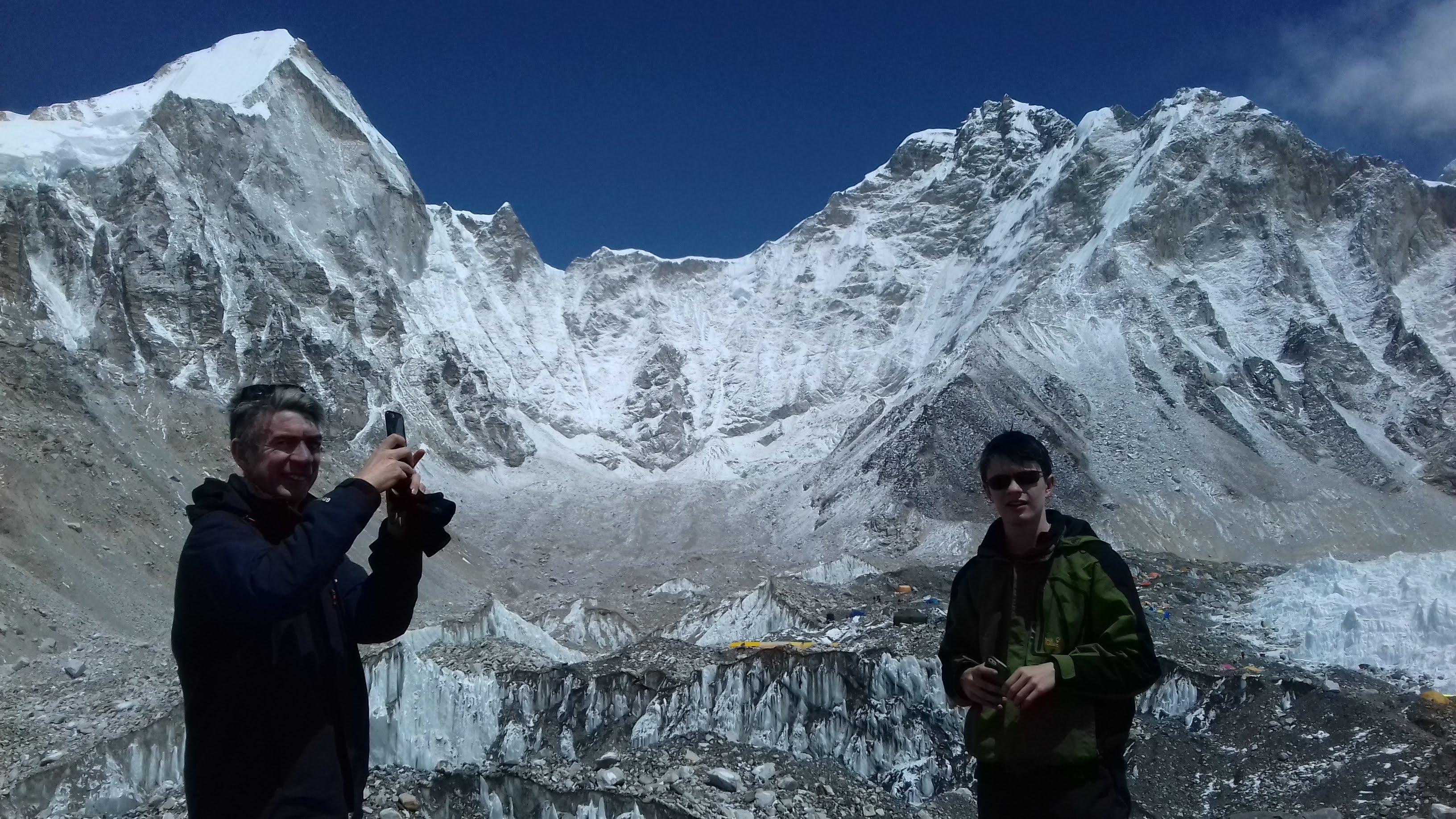

I am really to share my thoughts on peak climbing in Nepal. I planned to go to Nepal for some extra adventure activity and I chose the Lobuche Peak Climbing with Everest Base Camp Trek. I choose the Nepal Company as Adventure A One trek. they had very experienced Gudie and porters who helped us to summit the Lobuche peak and my self I enjoyed it, but from Highcamp to on up to the summit is breathed less, my climbing guide Dawa Sherpa was so helpful and he encouraged me to achieve the dream, finally, we succeed and get back to Kathmandu. then Mr. Dhruba Bhatta the arranger of our trip to Nepal met and explained my experience of climbing Peak. He was so happy with our achievement. I wish to climb Mount Everest One day in the future with this team. Thank you. MRS. Emly Chicago, United States.
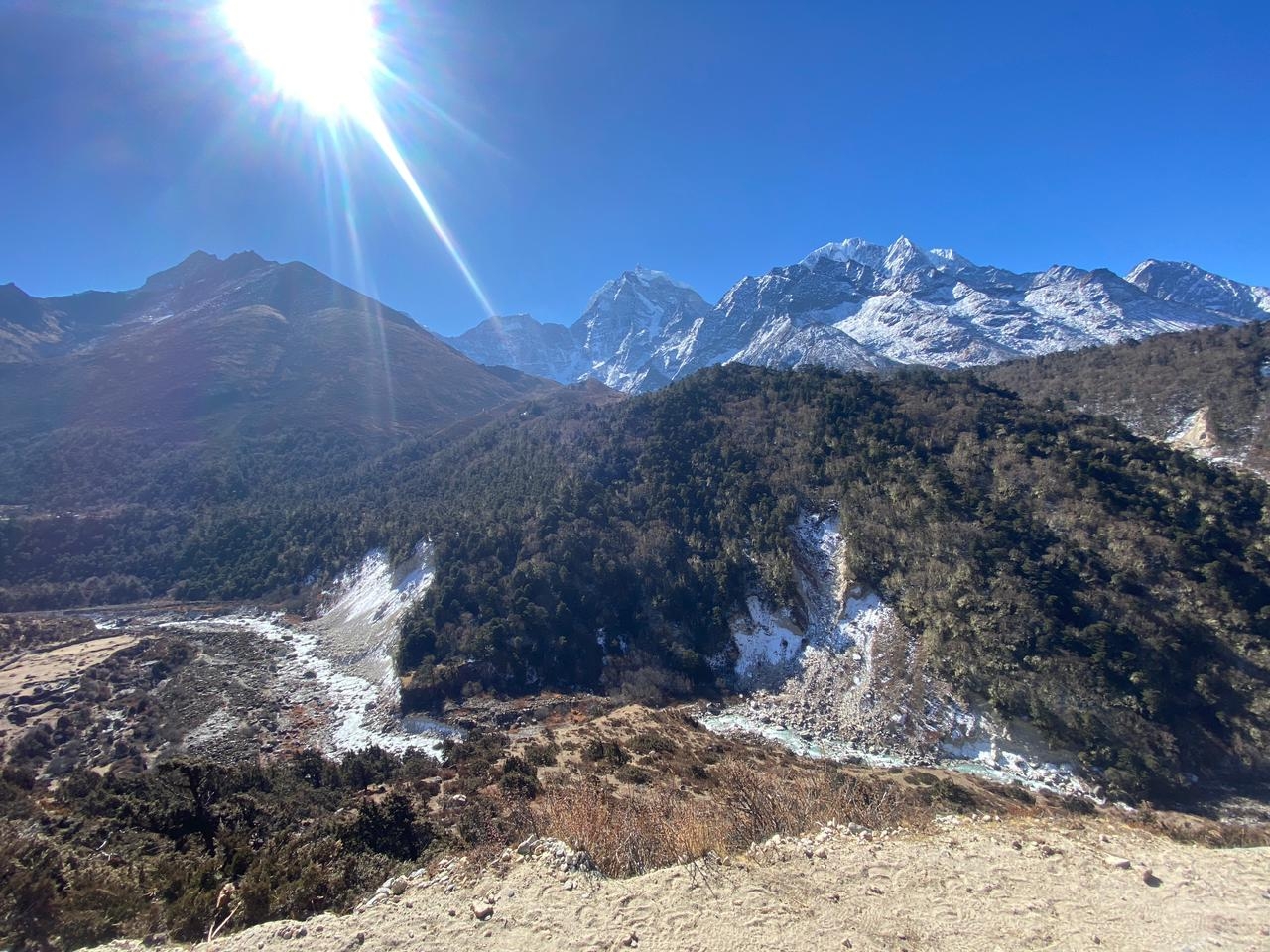
Our trip was planned well in advance and my telephone contact with Ajeeb (the agency owner) was excellent. He planned our entire route to the EBC and then acclimatisation climbs to peaks around 5500 m.a.s.l. Next was the climb to Lobuche Peak 6119 m.a.s.l. Overnight in tents at Hicamp and summit attack successfully completed. The guide on the route D.K. as well as the climbing guides excellent. As flights from Lukla to Ramechhap were delayed Ajeeb arranged for us to be evacuated by helicopter straight to Kathmandu. He provided us with a great hotel in Kathmandu and attractive excursions in and around the city. Transfer to the airport very punctual. I heartily recommend this agency. A1TRAK.
I recently completed the combined Lobuche Peak climb with Everest Base Camp trek with dventure A One Treks, and it was honestly one of the most rewarding and challenging experiences of my life. The journey began with a thrilling flight into Lukla, followed by a gradual trek through the stunning Khumbu Region. Each day brought incredible scenery—suspension bridges, glaciers, and panoramic views of towering peaks including Mount Everest. Stopping at Namche Bazaar gave us time to acclimatize, and visiting Tengboche Monastery added a spiritual touch to the trek. Reaching Everest Base Camp was a huge milestone, but the real highlight was still ahead. The climb of Lobuche East was physically demanding but incredibly rewarding. The guides provided basic mountaineering training, including how to use crampons and ropes, which made the climb accessible even for someone without prior technical climbing experience. Summit day was tough—cold, windy, and steep—but standing at over 6,000 meters with breathtaking Himalayan views was absolutely unforgettable. Seeing the sunrise over peaks like Everest and Lhotse made every step worth it.
The Lobuche Peak Climbing with Everest Base Camp Trek through Adventure A One Treks was an outstanding Himalayan adventure. The journey to Everest Base Camp offered breathtaking glacier views, Sherpa villages, and close-up scenery of the world’s highest peaks. Every step of the trek was filled with excitement and natural beauty. The climb of Lobuche Peak was challenging but incredibly rewarding, with a stunning summit view of Everest, Lhotse, and surrounding mountains. The expedition was very well organized, safe, and professionally managed from start to finish. I highly recommend this trip for anyone looking for a perfect combination of trekking and peak climbing in the Everest region
My Lobuche Peak Climbing with Everest Base Camp Trek was one of the best adventures I have ever done. The trek to Everest Base Camp was full of incredible landscapes, cultural experiences, and unforgettable mountain views. The climb to Lobuche Peak was tough but extremely satisfying, offering amazing panoramic views from the summit. Everything was well managed throughout the journey, including accommodation, logistics, and safety support. I would highly recommend Adventure A One Treks for this challenging and rewarding Himalayan expedition.
Labuche peak is known as Lobuche peak, it is popular trekking peak situated in the Everest region of Nepal. It stands at an elevation of about 6,119 meters (20,075ft). The climb is considered moderately inspiring and requires basic mountaineering skills. It comprises steep ascents. Icy Sections and some technical Climbing. Prior high-altitude trekking familiarity is recommended.
People have difference thought and achievement, there is no age limit for climbing peaks. But we prefer up to 15 will be more worthy.
During peak trekking season (spring and autumn), most Lukla flights are routed through Manthali Airport in Ramechhap, which is roughly a three to four hour drive from Kathmandu. The reason for this is air traffic management at Tribhuvan International Airport. In the off-season, flights may depart directly from Kathmandu. Your Adventure A One Treks team handles all coordination and transfers, including the early morning drive to Ramechhap when required.
The 18 days are structured around safe acclimatization, and shortening the itinerary significantly increases the risk of altitude sickness, especially for the Lobuche climb at 6,119 m. We strongly advise against compressing the schedule. However, if you want to skip the EBC portion and do only the Lobuche climb, that is a different and shorter package we can discuss separately.
The full route in order is: Lukla, Phakding, Namche Bazaar, Tengboche, Dingboche, Nangkartsang Peak (acclimatization hike), Lobuche, Gorakshep, Everest Base Camp, Kala Patthar, Lobuche Base Camp, Lobuche High Camp, Lobuche East Summit, Lobuche Base Camp, Pangboche, Namche Bazaar, and Lukla.
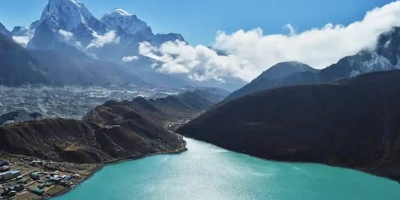
Yes, and it is a beautiful extension. The Gokyo Lakes route gives you different perspectives on the Khumbu region and access to Gokyo Ri, another outstanding Everest viewpoint. It does require additional days. Contact our team at Adventure A One Treks and we can design a combined itinerary that works for your timeline.
There's no single best place for renting. However, we can confirm that mountaineering gear in Kathmandu is easily available Thamel area (whether it be for renting or buying brand new). This is because there are numerous gear shops here that offer rental equipment ranging from crampons and ice axes to full harness sets. But do keep in mind that quality varies considerably between shops, so we recommend renting through shops that we personally suggest (don't worry, we will let you know once we start communicating). We can arrange this for you before the trek begins, at an additional cost. For summit-critical items like crampons and harnesses, always inspect the condition carefully before accepting any rental.
Double plastic mountaineering boots or stiff four-season alpine boots compatible with your crampons are required for the technical climbing section. Standard trekking boots, even high-altitude ones, are not appropriate for the Lobuche headwall and glacier. If you do not own mountaineering boots, rental through our Kathmandu partners is available.
A full one-piece down suit is not required for Lobuche East. A good four-layer system, base layer, mid layer, insulated down jacket, and hardshell outer layer, combined with insulated climbing pants, is sufficient for most climbers on the standard route. However, conditions on summit day can be extreme, particularly pre-dawn on the headwall. Do not compromise on insulation. Cold hands and cold feet on the headwall at 5,800 m are a real problem.
A minimum of minus 20 degrees Celsius is strongly recommended. Teahouse blankets above Namche are not reliably warm enough, and at Lobuche High Camp (5,600 m) in a tent, a sleeping bag rated lower than this is a real problem. Do not borrow or rent a cheap bag for this itinerary. It is the one piece of personal gear that directly affects how well you sleep and recover before summit day.
Supplemental oxygen is not standard equipment on Lobuche East climbs and is not provided as part of this package. The peak is below the altitude threshold where most climbers need it. Your team will carry emergency oxygen in the event of a serious altitude emergency, but it is not used as a performance aid on this climb the way it is on 8,000 m peaks.
Your guide always sets a turnaround time that is based on the current conditions, weather forecast, team pace, and safety assessment. Typically, this is somewhere between 8 and 10 AM on summit day so that you get enough time to descend safely before afternoon weather starts to change. What this turnaround policy does is it protect you! Well, your guide's decision is final regardless of how close the summit feels when the call is made (so, please keep this in mind).
Yes, you can take Diamox as it is widely used for altitude sickness prevention on treks like this one. In fact, it is generally considered safe for the duration of the trip when taken at the recommended dose of 125 mg twice daily. However, it is a prescription medication, so you should always consult your doctor before the trek to confirm whether it is appropriate for your health situation or not. Also, note that Diamox is not a substitute for proper acclimatization. It only supplements the process, not replaces it!
Absolutely. The Lobuche Peak with EBC trek is completed safely by solo female travelers every season. Traveling with Adventure A One Treks means you have a licensed guide with you at all times. The teahouse network across the Khumbu is well-established and generally safe. Our guides are experienced in supporting trekkers of all backgrounds, and we have helped many solo female clients complete this exact itinerary successfully.
Symptoms of Acute Mountain Sickness (AMS) can begin above 2,500 m but become more common above 3,500 m. The risk increases significantly above 4,000 m, and Lobuche at 4,930 m and Gorakshep at 5,164 m are where you need to be most vigilant. Above 5,000 m, untreated AMS can progress rapidly to HACE (High Altitude Cerebral Edema) or HAPE (High Altitude Pulmonary Edema), both of which are life-threatening. Tell your guide immediately if you feel confused, lose coordination, cannot walk straight, or experience severe breathlessness at rest. These are emergency signs, not things to push through.