Breakfast, lunch and Dinner included
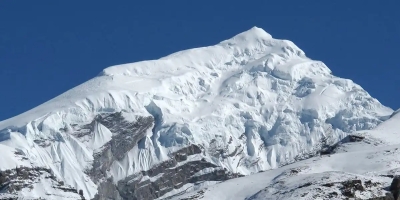
Island Peak, which hits a height of 6,153 meters, is a really well-known climbing peak in Nepal that people from everywhere love. It's smack-dab in the Khumbu area, so it's a good way to get into Himalayan mountaineering, but it's still hard enough to be a real. Because it's super close to Mount Everest, it's a popular pick for folks who want to climb high without a crazy long trip.
The trip to Island Peak kicks off with a hike through the Everest area. You go by old trading paths and Sherpa villages like Namche Bazaar, Tengboche, and Dingboche. The hike is cool because you're right in the middle of mountain culture, with monasteries and views of the mountains. Honestly, the walk there is just as good as the climb itself with views of snowy peaks and valleys made of ice.
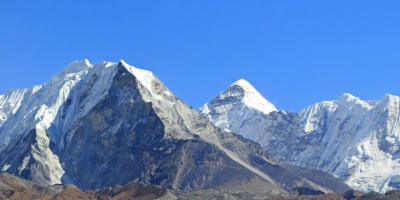
Island Peak got its name because it looks like an island coming out of a sea of ice when you see it from Dingboche. It's right by the Imja Glacier, Lhotse Shar Glacier, and big Himalayan mountains, so the scenery is amazing. Being out there on its own makes getting to the top feel like a big win.
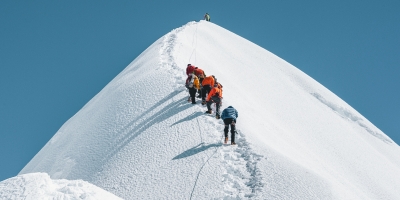
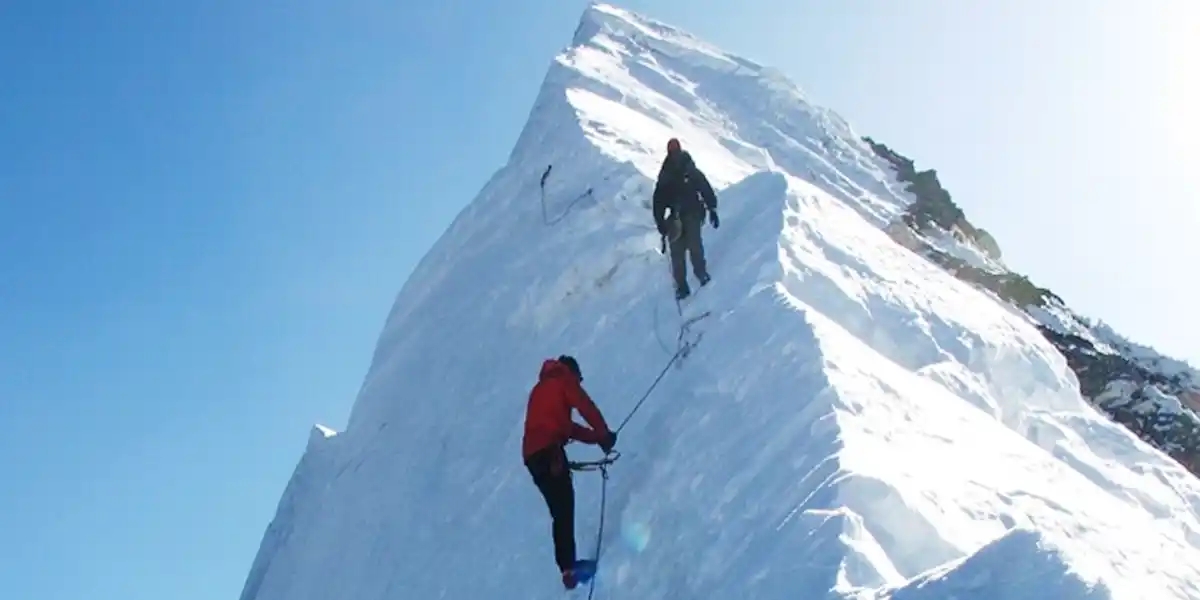
Climbing Island Peak? It's got hiking, walking on glaciers, and some climbing, It's a great way to try out climbing. You'll hit some steep snowy hills, icy spots, and a final headwall where you need ropes, crampons, and ice axes. It's a bit tricky in spots, but if you've got a guide and know some basic climbing stuff, you'll be fine.
Getting used to the altitude is a must for Island Peak. Usually, climbers chill out at higher spots for a few days, going for hikes around Nagarjun Hill or Chhukung Ri. These extra days aren't just for safety, they also give you cool views of the Himalayas.
Summit day is the hardest and best part. It starts super early. As you go up the glacier and the steep ridge, it gets exciting. Getting to the top of Island Peak is amazing. You can see Mount Everest, Lhotse, Makalu, Ama Dablam, and Baruntse.
From up there, you can see the Himalayas all around you. It's awesome. Getting a close look at Lhotse’s south face and the glaciers is something else, and it makes you feel part of the Everest area. Not many things beat standing on a Himalayan peak that's over 6,000 meters high.
For people who want to hike and climb, Island Peak is a good call. It mixes seeing the culture, cool hikes, and climbing. For anyone dreaming of going high-altitude climbing, Island Peak is hard, but you can do it.
Island Peak, or Imja Tse if you want to be formal, is chilling in Nepal's Khumbu region. You'll find it inside Sagarmatha National Park, which is kind of a big deal. It sits between Lhotse South Face and the Imja Glacier, so the scenery is unreal – some of the highest peaks on Earth are right there. Being close to Everest, Ama Dablam, Makalu, and Baruntse makes it a hotspot and awesome to look at. From Dingboche, it seriously looks like an island popping out of the ice, which is why people call it Island Peak. Its spot lets climbers get a real feel for the Everest area while tackling a 6,000-meter peak.
Back in 1953, some folks from the British Everest Expedition climbed Island Peak to get used to the altitude before hitting Everest. They named it Island Peak because it looks like an island in the Imja Valley glaciers. Later, they made it official and called it Imja Tse, but everyone still uses the old name. Over time, Island Peak has turned into a go-to practice mountain for people aiming for Everest and a cool challenge for hikers wanting to try some real Himalayan climbing.
To get to Island Peak, you usually hop on a flight from Kathmandu to Lukla. From there, you trek through Sherpa villages like Phakding, Namche Bazaar, Tengboche, Dingboche, and Chhukung. The route goes along the usual Everest Base Camp trail before heading into the Imja Valley. On the way, you'll see suspension bridges, glacial rivers, forests, and Buddhist monasteries. There are plenty of chances to get used to the altitude, and you’re always looking at huge Himalayan peaks, which makes the whole trip worth it.
Getting used to the altitude is super important for climbing Island Peak. Most trips include rests in Namche Bazaar and Dingboche, along with hikes to viewpoints like Nagarjun Hill or Chhukung Ri. Slowly going higher helps your body handle the thinner air, which means you’re less likely to get altitude sickness. Getting used to the altitude isn't just about being safe; it also makes it much easier to reach the top without feeling awful.
Island Peak is a somewhat technical peak, so you need some basic mountaineering skills. You'll be walking on glaciers, crossing cracks in the ice, dealing with steep snow, and climbing a final headwall using ropes, crampons, harnesses, and ice axes. Having climbing experience helps, but even beginners can make it with some training and good guides. The last bit to the top is narrow and exposed, which makes it exciting and gives you that alpine feel.
The best times to climb Island Peak are spring (March to May) and autumn (September to November). Spring has good weather, warmer temps, and clear skies, and autumn has clear air and great mountain views. These seasons make it safer and easier to get to the summit. You can climb in winter, but it's way harder because of the cold and snow. It's best to skip the monsoon season.
Kathmandu is the cultural and logistical gateway to the Island Peak expedition. The city offers a fascinating blend of ancient temples, royal palaces, and vibrant streets. Before the trek begins, climbers complete permit formalities, attend trip briefings, and make final gear preparations here. Kathmandu also provides a chance to explore UNESCO World Heritage Sites such as Pashupatinath, Boudhanath, and Kathmandu Durbar Square.
Lukla is the starting point of the Everest region trek and is accessed by a scenic mountain flight from Kathmandu. Known for the famous Tenzing–Hillary Airport, Lukla marks the transition from urban life to the Himalayan wilderness. Surrounded by forested hills and mountain trails, Lukla sets the tone for the adventure ahead and offers the first taste of Sherpa hospitality.
Phakding is a peaceful riverside village located along the Dudh Koshi River. It is usually the first overnight stop on the trek, allowing gradual acclimatization. The trail to Phakding passes through pine forests, suspension bridges, and small monasteries, offering a gentle introduction to trekking in the Everest region.
Namche Bazaar is the vibrant heart of the Khumbu region and a key acclimatization hub. Built into a natural amphitheater, the town offers breathtaking views of surrounding peaks and serves as a major trading center for local communities. Trekkers spend an extra day here to adjust to the altitude, explore local markets, visit museums, and hike to nearby viewpoints for the first views of Mount Everest.
Tengboche is renowned for its iconic monastery, the largest and most spiritual monastery in the Everest region. Set against a stunning backdrop of Ama Dablam, Everest, and Nuptse, Tengboche offers a serene and culturally enriching experience. Visiting the monastery provides insight into Tibetan Buddhism and the spiritual life of the Sherpa people.
Dingboche is a picturesque high-altitude village surrounded by stone-walled fields and dramatic mountain views. It serves as a major acclimatization stop before heading higher. Trekkers often hike to nearby viewpoints such as Nagarjun Hill for acclimatization and panoramic views of the Imja Valley and surrounding peaks.
Chhukung is a small settlement located at the head of the Imja Valley, close to Island Peak. This village offers stunning views of Lhotse, Ama Dablam, and the Imja Glacier. It is a key staging point for acclimatization hikes to Chhukung Ri and for final preparations before heading to Island Peak Base Camp.
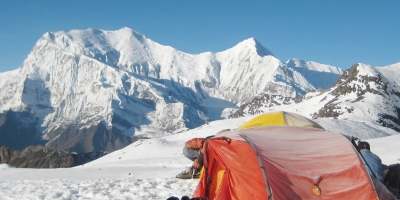
Island Peak Base Camp is set on rocky terrain near the Imja Glacier and serves as the launch point for the summit attempt. Climbers receive pre-climb training here, learning essential mountaineering techniques. The campsite offers dramatic views of surrounding glaciers and towering peaks, creating an authentic high-altitude expedition atmosphere.
The summit of Island Peak is the ultimate goal of the expedition and offers a truly unforgettable Himalayan experience. From the top, climbers enjoy panoramic views of Mount Everest, Lhotse, Makalu, Ama Dablam, and the vast glacial landscapes below. Standing on the summit is a moment of immense accomplishment and a highlight of any mountaineering journey in Nepal.
After the climb, the return journey passes through villages such as Pangboche, known for one of the oldest monasteries in the region. The descent allows climbers to revisit familiar trails, enjoy the scenery at a relaxed pace, and celebrate the successful completion of the Island Peak adventure before returning to Lukla and flying back to Kathmandu.
If you're thinking about climbing Island Peak, get travel insurance. Period. Make sure it covers trekking and climbing way up high (at least 6,500 meters). It needs to cover things like emergency helicopter rescues and getting medical help. Rescues in the Himalayas can cost a fortune, and good insurance means you can get help fast without worrying about the cash. Insurance also covers stuff like canceled trips, delayed flights, lost luggage, and just plain accidents. It lets you chill out and enjoy the climb.
The weather around Everest is nuts. It changes super fast because of the altitude. One minute it's sunny and warm, the next it's freezing, especially when you're above 4,000 meters. If you're climbing, expect snow, crazy winds, and total whiteouts. Know what the weather can do and pack clothes for anything. Also, be flexible with your plans – you might need to wait out a storm.
Getting used to the altitude slowly is really important. It stops you from getting altitude sickness, which can hit anyone. Go up slowly, take breaks, and drink lots of water to help your body adjust to the thinner air. If you don't, you risk getting seriously sick – like, life-threatening sick. Plan your trip carefully to make sure you have time to get used to the altitude. It makes a huge difference.
Climbing Island Peak is tough, both on your body and your mind. You'll be trekking for days, it'll be freezing, and the climb to the top is a killer. You need to be strong and have a lot of stamina. But you also need to be mentally tough. High-altitude climbing messes with your head. Train hard before you go – it'll make you feel way more confident when you're up there.
Experienced climbing guides are super important for staying safe. They know the route, can read the weather, know how to handle altitude problems, and can deal with emergencies. Sherpas help carry your gear, which lets you focus on getting used to the altitude and performing your best. Having pros around makes the whole experience safer and way better.
Having the right gear is a must to be comfy and not die in the mountains. If your gear sucks, you could get frostbite, hypothermia, or just be too tired to go on. Get good climbing gear like crampons, harnesses, and ice axes to stay safe on the ice. Dress in layers, so you can adjust to the crazy weather.
You need to eat and drink a lot when you're up high. Your body burns way more calories and loses water faster, so you can easily get dehydrated and worn out. Eat good food and drink tons of water to keep your energy up, get used to the altitude, and climb well.
The Everest region is beautiful but fragile. It's also a UNESCO World Heritage Site. Be a responsible trekker: don't litter, use less plastic, and respect the animals. Stay in eco-friendly places and support the local people. This helps keep the region awesome for everyone in the future.
The Everest region is home to the Sherpa people, and their culture is based on Buddhism. Be respectful of their customs, monasteries, and religious spots. It makes the trip better and helps you connect with the locals.
Climbing at high altitude always has risks, like bad weather, altitude sickness, and dangerous terrain. Have a plan for emergencies, know how to communicate, and have a first-aid kit. Know how to get evacuated if you need to and listen to your guides. This will help you react quickly if things go wrong.
Upon arrival at Tribhuvan International Airport in Kathmandu, you will be warmly welcomed by a representative and transferred to your hotel. After check-in, you can rest and recover from your journey or explore the lively streets nearby at your own pace. This day is kept relaxed to allow you to adjust to the new environment. In the evening, you may enjoy a welcome drink and receive a brief overview of the upcoming adventure.
Early in the morning, you drive from Kathmandu to Ramechhap, a journey of around five hours. From Ramechhap, a short scenic flight takes you to Lukla, the gateway to the Everest region. After meeting your trekking crew, the trek begins with a gentle walk toward Phakding. The trail passes through small villages, suspension bridges, and lush forests, offering beautiful views of Kusum Kanguru. Phakding is a peaceful riverside settlement along the Dudh Koshi River where you spend your first night in a teahouse.
After breakfast, the trail follows the Dudh Koshi River, crossing several suspension bridges before reaching Monjo, the entrance to Sagarmatha National Park. As you ascend through dense forests of pine, rhododendron, and fir, the trail becomes steeper. On a clear day, you may catch your first glimpse of Mount Everest. After a steady climb, you arrive at Namche Bazaar, the vibrant Sherpa capital of the Khumbu region, where you will stay for two nights to acclimatize.
This day is dedicated to acclimatization. After breakfast, you hike uphill to the Everest Viewpoint, which offers stunning panoramic views of Everest, Lhotse, Ama Dablam, and surrounding peaks. After enjoying the scenery, you descend back to Namche Bazaar. The afternoon is free to explore local markets, visit the Sherpa Museum, or relax at a café while adjusting to the altitude.
Leaving Namche Bazaar, the trail follows a scenic contour path with spectacular views of Everest, Lhotse, Nuptse, and Ama Dablam. After descending to the Dudh Koshi River, you cross a suspension bridge and climb steadily through forested trails to reach Tengboche. This village is famous for Tengboche Monastery, the largest and most important monastery in the Everest region. In the evening, you can enjoy sunset views over the Himalayas before settling into a teahouse for the night.
The trek continues through beautiful alpine landscapes, passing Pangboche village, which offers stunning close-up views of Ama Dablam. The trail gradually ascends through open valleys and stone-walled fields, with the scenery becoming increasingly rugged. Dingboche, a small high-altitude settlement in the Imja Valley, serves as an important acclimatization stop, where you will spend two nights.
After breakfast, you take a short but steep hike to Nagarjun Hill for acclimatization. From the top, you are rewarded with magnificent views of Ama Dablam, Lhotse, Lobuche Peak, and the surrounding valleys. After enjoying the scenery, you descend back to Dingboche and spend the remainder of the day resting and preparing for higher altitude trekking.
Leaving Dingboche, the trail moves through a high-altitude landscape of rocky terrain and glacial valleys. Along the way, you enjoy impressive views of Ama Dablam, Pumori, Nuptse, and Lhotse. As you gain elevation, the air becomes thinner, and the environment more alpine. Lobuche is a small settlement with basic teahouses, where you spend the night surrounded by dramatic mountain scenery.
This is one of the most exciting days of the trek. You first walk to Gorakshep, the last settlement before Everest Base Camp, where you stop for lunch. In the afternoon, you hike to Everest Base Camp, walking alongside the Khumbu Glacier. Upon reaching base camp, you can take photos and enjoy the sense of achievement at the foot of the world’s highest mountain. Afterward, you retrace your steps back to Gorakshep for the night.
Early in the morning, you hike up to Kala Patthar to witness a breathtaking sunrise over Mount Everest and nearby peaks. This viewpoint offers the closest and most dramatic views of Everest. After descending to Gorakshep for breakfast, you begin your trek toward Chhukung, passing Lobuche before branching into the Imja Valley. Chhukung is a small village with excellent mountain views and serves as the gateway to Island Peak.
From Chhukung, the trail gradually ascends toward Island Peak Base Camp, crossing rocky terrain and glacial moraines. The route offers stunning views of Lhotse, Ama Dablam, and the surrounding glaciers. Upon reaching base camp, tents are set up, and you can relax while enjoying the high-altitude expedition atmosphere. Overnight is spent in a tented camp.
This day is reserved for acclimatization and preparation. Your climbing guide will provide practical training on the use of crampons, ice axe, harness, and fixed ropes. You will also review safety procedures and climbing techniques required for summit day. The rest of the day is spent resting and mentally preparing for the ascent.
Summit day begins very early in the morning. You climb across glaciers, avoiding crevasses, and ascend steep snow and ice sections using fixed ropes. The final push leads to the summit of Island Peak, where you are rewarded with incredible panoramic views of Everest, Lhotse, Ama Dablam, Makalu, Baruntse, and surrounding peaks. After celebrating your achievement, you carefully descend back to base camp for the night.
After a successful climb, you begin descending toward Pangboche via Chhukung. The trail offers relaxing walking conditions with magnificent mountain views throughout the journey. Pangboche is one of the oldest Sherpa villages in the region and is known for its monastery and stunning surroundings. Overnight is spent in a teahouse.
The trail retraces your earlier route through Tengboche, passing forests, rivers, and suspension bridges. As you descend, the air becomes richer in oxygen, making the walk more comfortable. You arrive back in Namche Bazaar, where you can enjoy good food, warm showers, and celebrate the success of your expedition.
On the final trekking day, you walk downhill through familiar villages and landscapes, passing Phakding before reaching Lukla. In the evening, you join a farewell dinner with your trekking team, celebrating the completion of your Island Peak adventure.
After breakfast, you take a scenic flight from Lukla back to Kathmandu. Upon arrival, you are transferred to your hotel, where you can relax, shop for souvenirs, or explore the city at your leisure.
Today marks the end of your journey. After breakfast, you are transferred to the airport for your onward flight, carrying unforgettable memories of trekking in the Everest region and successfully summiting Island Peak.
Great Experience, professionell guiding and fantastic landscape near to Ama Dablam and Lohtse.
Sun Hat / Cap & Warm Beanie
Sunglasses (UV Protection)
Buff / Neck Gaiter
Base Layer (Thermal Tops)
Insulating Layer (Fleece or Down Jacket)
Waterproof & Windproof Shell Jacket
Thermal Base Layer (Bottoms)
Trekking Pants
Waterproof Pants (Shell Pants)
Inner Gloves (Thermal)
Insulated Outer Gloves / Mittens
Trekking Boots (Well Broken-In)
Mountaineering Boots (Crampon-Compatible)
Trekking Socks & Thermal Socks
Gaiters
Crampons
Ice Axe
Climbing
Helmet
Carabiners, Ascender (Jumar), Belay Device
(Some technical climbing equipment may be provided by the company—confirm before departure.)
Sleeping Bag (-15°C to -20°C rated)
Sleeping Mat (Optional)
Trekking Backpack (30–40 L)
Duffel Bag (80–100 L)
Headlamp with Extra Batteries
Trekking Poles
Water Bottles / Hydration System
Sunscreen & Lip Balm (High SPF)
Personal First Aid Kit & Medications
Toiletries & Quick-Dry Towel
Passport & Copies
Travel Insurance Documents
Cash (Nepali Rupees)
Island Peak, locally known as Imja Tse, is a popular trekking peak in Sagarmatha National Park, Nepal, rising to about 6,189 m (20,305 ft). It is famous for its astonishing position among the Himalayan giants and is normally en route with the Everest Base Camp trek.
Island Peak is graded PD+ (a little difficult) — meaning it involves real alpine climbing (fixed ropes, crampons, glacier travel), but it’s often considered a suitable first Himalayan peak for well-prepared climbers with some technical instruction.
No formal prior experience is strictly required, though any experience with crampons/ice axe and basic rope skills is highly recommended. Many operators include training before the summit push.
Most Island Peak climbs are from 14 to 20+ days, including the trek in/out via Lukla, acclimatization, base camp, and summit attempt, often combined with Everest Base Camp.
The principal hazards are altitude sickness (AMS), low temperatures, crevasses, and weather. These risks are greatly reduced with good acclimatization, fitness, and experienced guides.
Direct views of Everest from the top of Island Peak are generally obscured by intervening peaks, but stunning panoramas of Ama Dablam, Lhotse, Makalu, and other high Himalayan peaks unfold from the summit.
Yes — technical equipment (crampons, harness, helmet, ice axe) can be rented in Kathmandu or Namche Bazaar, but high-quality personal gear is recommended.
The weather on an Island Peak is very unstable due to it is at a very high altitude. In fact, it might be bright and quite during the day in a good season, yet at night the temperature is extremelylow, especially above the Base Camp. Fist hard winds and sudden snowfalls occur frequently in
the close vicinity of the peak.
The Island Peak is located in the alpine region of the Himalayan climate. Further the temperature of the low areas is rather cool, while the upper regions are always freezing. The level of oxygen is very low and the temperature may change from calm and clear to storm and snow surprisingly.
| No of people | Price per person |
|---|---|
| 1 - 1 | $1,400 |
| 2 - 4 | $1,240 |
| 5 - 9 | $1,180 |
| 10 - 20 | $1,050 |