
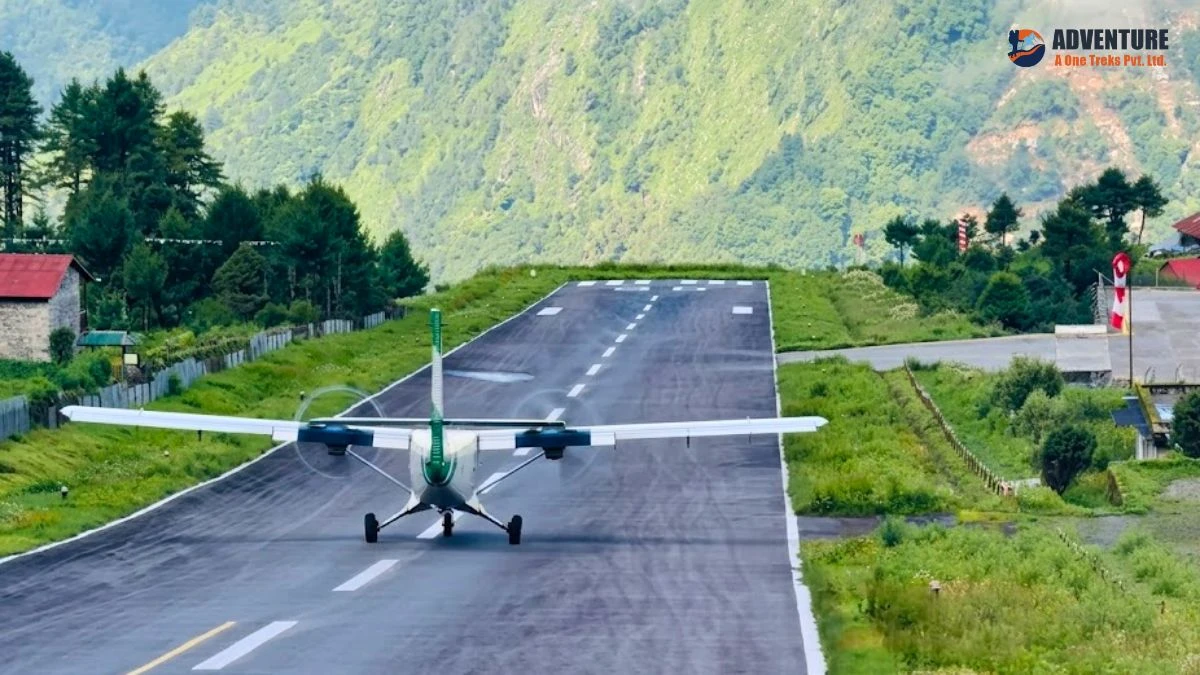
If you're planning the Everest Base Camp Trek, Gokyo Lakes Trek, or any other trek in the Khumbu region, the first logistics question you'll face is the Kathmandu to Lukla flight.
Note that it's not as simple as booking a regular domestic flight. Depending on the season, your flight might not even depart from Kathmandu!
On top of that, weather cancellations happen often enough to throw off your entire itinerary if you aren't prepared for them. And Tenzing-Hillary Airport itself, where you land, is one of the most talked-about airports in the world, for good reason!
This guide covers everything you need to know about flying to Lukla, from current costs and airline options to the Ramechhap situation, what to do when flights cancel, and whether a helicopter makes sense for your trip.
| Flight Duration (from Kathmandu) | 30 to 40 minutes |
| Flight Duration (from Ramechhap) | 15 to 20 minutes |
| Air Distance | 138 km approx. |
| Destination Airport | Tenzing-Hillary Airport, Lukla (2,860 m) |
| Departure Airports | Kathmandu (TIA) or Ramechhap (Manthali) |
| Airlines | Tara Air, Summit Air, Sita Air |
| Aircraft Types | Twin Otter, Dornier 228, LET-410 |
| Baggage Allowance | 10 kg checked + 5 kg carry-on |
| Flight Schedule | Early morning only (VFR) |
| Best Seasons | Spring and Autumn |
This is the most important thing to understand before booking anything!
Until a few years ago, all Lukla flights operated from Tribhuvan International Airport (TIA) in Kathmandu. That changed significantly after October 2022, when the Civil Aviation Authority of Nepal (CAAN) shifted peak season operations to Manthali Airport in Ramechhap district.
The reason was very practical indeed. TIA is Nepal's only international airport, and during spring and autumn trekking seasons, the runway gets overwhelmed by huge number of Lukla-bound flights stacked on top of regular domestic and international traffic.
Delays pile up and by the time many small aircraft finally get clearance to take off from Kathmandu, the narrow morning weather window at Lukla already gets closed. The result is a day of waiting, and then possibly another!
Ramechhap's Manthali Airport handles none of that international traffic. It sits at 474 metres with a cleaner early morning weather window, and the Lukla flight from there takes only 15 to 20 minutes instead of 30 to 40.
Basically speaking, more rotations per morning, far fewer delays!
During off-peak months, which are mainly the monsoon season (June to mid-September), early winter (December), and also deep winter (January to February), the flights operate from Kathmandu's domestic terminal itself.
During peak trekking seasons (which are mid-March to mid-May for spring and late September to late November for autumn), consider that all Lukla flights are rerouted to Manthali Airport.
That’s because direct Kathmandu flights during these windows are very rare to find. So, our team at A! Treks do not recommend relying on this at all.
The distance of Ramechhap from Kathmandu is about 132 km by road, and it takes around 4 to 5 hours to reach there.
Since Lukla flights depart in the early morning, you need to leave Kathmandu well before dawn, typically between 2 AM and 3 AM.
Some trekkers even prefer to drive to Ramechhap the evening before and stay overnight at a local guesthouse too. This is one customization that even we (Adventure A One Treks) provide to our guests.
For general idea, check the transportaiton options below:
| Transport | Duration | Cost (Approx.) | Notes |
| Shared Jeep/Van | 4 to 5 hours | USD 25 to 35 per person | Most common option for trekkers |
| Private Jeep/Car | 4 to 5 hours | USD 150 to 220 | 3 to 7 seats, arrange in advance |
| Reserved Bus Seat | 5 to 6 hours | USD 25 to 30 per seat | Budget option; slower |
Note that most trekking agencies, including A1 Treks include this transfer as part of their Everest region trek package.
But if you're booking independently, you’ll have to arrange transport several days in advance, especially during peak season when shared vehicles fill up fast!
The straight-line distance between Kathmandu and Lukla is approximately 138 km. However, actual flight time depends entirely on which airport you're departing from.
From Kathmandu's domestic terminal, the flight takes around 30 to 40 minutes. And from Ramechhap's Manthali Airport, you're in Lukla in 15 to 20 minutes.
Both routes are genuinely scenic. Shortly after takeoff from Kathmandu, the city gives way to terraced hillsides, river valleys, and forested ridges heading northeast.
In fact, on clear days you can spot peaks like Gaurishankar, Numbur, and Karyolung before the final approach into Lukla's uphill runway.
The Ramechhap route, on the other hand, is shorter but equally striking, flying directly into the mountains!
For the best mountain views, our tip is to sit on the left side if flying from Kathmandu, and the right side if departing from Ramechhap.
Currently, three domestic airlines operate on the Lukla route. And all use STOL (Short Take-Off and Landing) aircraft built specifically for mountain airstrips.
Here’s what you should know about these airlines:
| Airline | Aircraft | Notes |
| Tara Air | Twin Otter, Dornier 228 | Largest operator; most daily departures on this route |
| Summit Air (Goma Air) | LET-410 | STOL specialist with a solid safety record |
| Sita Air | Dornier 228 | Established carrier; Lukla is one of its primary destinations |
Among the three, Tara Air is the dominant carrier and runs the highest frequency of flights, particularly during trekking season. All of these three airlines operate under CAAN safety protocols and are certified for mountain flying (but risks is definitely there mainly because of the landscape).
During peak season, up to 40 flights per day operate in and out of Lukla. Despite this huge volume, all flights fall under Visual Flight Rules (VFR), meaning pilots need adequate visibility to fly.
That means: No visibility, no flight! That's simply the reality of aviation in this mountainous terrain.
The cost of Kathmandu to Lukla flight depends on your nationality, the departure airport, and also the season. Take a peek below to understand this better:
| Passenger Type | From Kathmandu (One Way) | From Ramechhap (One Way) |
| Foreign Nationals | USD 215 to 240 | USD 177 to 214 |
| Indian Nationals | Approx. INR 11,000 to 18,000 | Approx. INR 11,000 to 18,000 |
| Nepali Citizens | NPR 6,000 to 7,000 | NPR 5,000 to 6,500 |
Note that the ones we’ve mentioned are just one-way fares. Round-trip is roughly double (but do inspect for discounts). And most important thing to remember is that prices vary slightly between airlines and booking channels.
Here are a few things to keep in mind about Lukla flight pricing:
Well, it’s the same as the the best time to visit Nepal. Spring (March to May) and autumn (October to early November) offer the best flying conditions, with clearer skies, stable temperatures, and manageable wind.
You see, these exactly coincide with the peak trekking season months, and that’s the reason why Ramechhap operations came into effect in the first place (as explained earlier).
One important thing, though: all Lukla flights operate exclusively in the morning. You will never see a Lukla flight departing in the afternoon. That’s because mountain weather in the Khumbu region deteriorates quickly through the day.
Basically, by 10 to 11 AM, conditions at Tenzing-Hillary Airport often become unsuitable for landing. So, even your Kathmandu to Luka flight depends on that early morning window!
Let’s tell you the most reliable way to handle Lukla flight bookings! Well, it is through a registered trekking agency in Nepal.
In fact, most agencies include the flight as part of your trek package itself, which means the ticket, any weather-related rebooking, and the Ramechhap transfer are all managed on your behalf!
But if you're booking independently, here's what to know:
Honestly speaking, cancellations and delays are a real and recurring part of the Lukla flight experience. This is not something to take lightly when planning your itinerary.
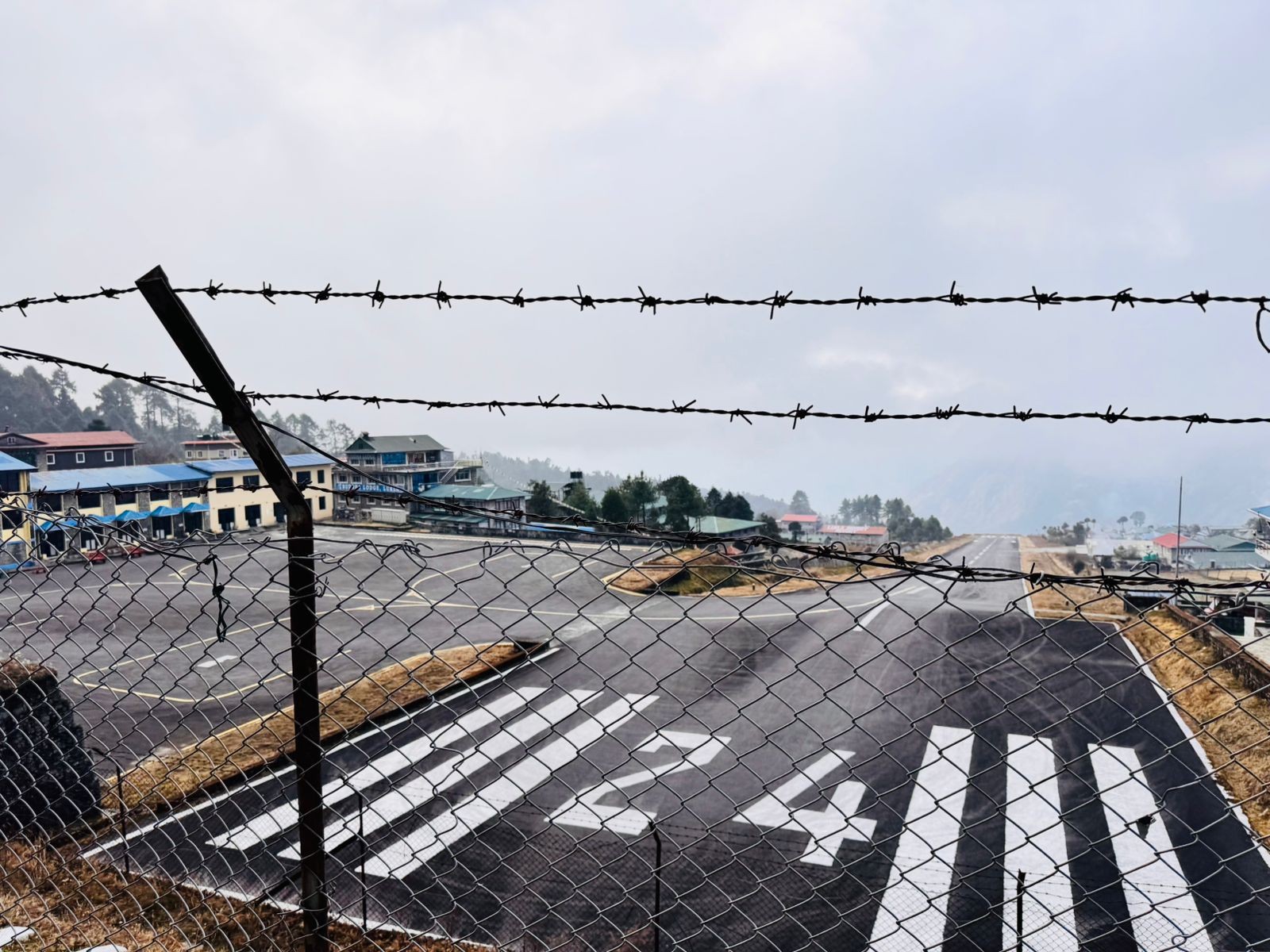
Tenzing-Hillary Airport operates entirely under Visual Flight Rules. The runway is 527 metres long, slopes uphill at an 11.7% gradient, and sits at 2,860 metres above sea level. There are no instrument landing systems to help pilots in poor visibility. When clouds settle into the valley or wind exceeds safe limits, all flights stop until conditions improve!
Common causes for cancellations are:
During monsoon season or any time when it’s raining continuously/abruptly, 2 to 3 day delays are not unusual, honestly.
Yes, that happens even in spring and autumn, where a full-day or two-day disruption can happen at any time!
What you have to note is that this is not an exceptional event. It is a normal part of flying into this region considering the mountain weather plus the extreme risk of landing.
First things first, don't panic!
Your airline or agency will automatically move you to the next available slot. However, the waiting system is managed by the airlines, so sometimes, things aren’t fixed (particularly during the peak season).
Secondly, you have to know how to use the time in Kathmandu well (if you’re booking with A1 Treks, our team will help you sort out on this). A day of forced rest before a demanding trek is rarely a bad thing, but if you’re coming to Nepal on a limited time, you may have to manage your time accordingly!
Third, if the delay stretches beyond 2 to 3 days and your itinerary is at serious risk, consider switching to a helicopter (we'll cover that in the next section).
The best thing you can do to protect yourself is to add at least 1 to 2 buffer days before and after your Lukla flights when planning your Nepal trip.
Do not schedule a tight international connection on the day of your return Lukla flight. We mention this so many times, but still some guests miss their international flights because of a single-day weather delay in Lukla.
And honestly, this is the reason we are writing this blog and forwarding to you (in case you’re reading this after our representative sent you this article). And if you were not aware of Adventure A One Treks, we’re sure you know us by now.
Helicopters fly to Lukla year-round and depart from Kathmandu directly, regardless of peak season Ramechhap restrictions like airplanes have.
For trekkers who want to skip the early morning Ramechhap drive or need a reliable backup when fixed flights are cancelled, a helicopter is honestly the best thing to consider!
The flight from Kathmandu to Lukla by helicopter takes around 45 to 50 minutes. That’s longer than a fixed-wing flight but the visibility from a helicopter is significantly better!
You get to sit lower, the cockpit glass is wide, and the Himalayan views on the approach to Lukla are hard to match from a small twin-propeller cabin.
There are two options for choosing Kathmandu to Lukla helicopter, and they are:
| Option | Cost (Approx.) | Passengers | Notes |
| Group Joining Helicopter | USD 600 to 700 per person | 4 to 5 | Cost-shared; most common option |
| Private Charter | USD 2,750 to 3,500 per helicopter | Up to 5 | Fixed price split among your group |
Here are a few things to keep in mind before choosing the helicopter option:
Now, let us share some handy tips (that come directly from our own experiences and knowledge from our guides). We’re sure these few things will genuinely make a difference, especially if this is your first Lukla flight:
Can you fly directly from Kathmandu to Lukla during peak season?
During spring (mid-March to mid-May) and autumn (late September to late November), almost all Lukla flights are operated from Ramechhap's Manthali Airport, and not from Kathmandu’s domestic terminal. So, direct Kathmandu flights during these periods are not something to count on!
What is the baggage allowance for Lukla flights?
All airlines operating the Lukla route allow 10 kg of checked baggage and 5 kg of carry-on per person. Excess baggage is charged per kilogram and the rates can feel a little steep, so sort your bags the night before and stay within the limit.
How far in advance should I book Lukla flights?
During spring and autumn, book at least 4 to 6 weeks in advance. Seats are limited, demand is very high during peak season, and last-minute availability is unreliable.
For monsoon and winter months, a 1 to 2 week lead time is usually sufficient.
Is it worth taking a helicopter to Lukla instead of a fixed-wing flight?
If you want to avoid the Ramechhap drive during peak season, skip the early morning rush, or need a backup after a multi-day cancellation, a shared helicopter at USD 600 to 700 per person is a reasonable option. Note that it can take a little longer (from 45 to 50 minutes vs 15 to 40 minutes), but the views are better and comes with higher flexibility.