
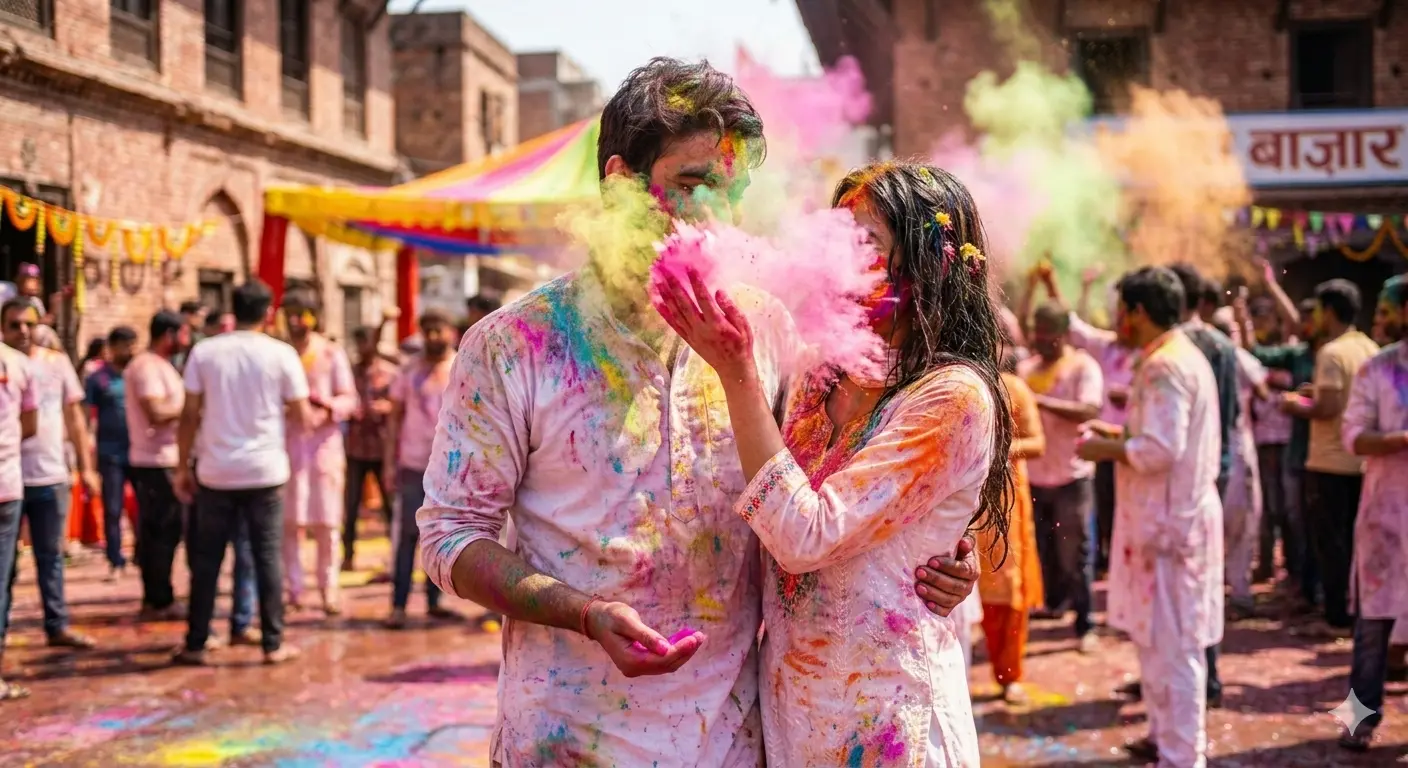
Holi, also known as Fagu Purnima, is Nepal’s most vibrant and joyous festival. Celebrated with immense enthusiasm across the country, this festival marks the arrival of spring and the end of winter’s chill. Streets, villages, and cities transform into a canvas of bright colors as people gather to throw powdered pigments, splash water, dance to traditional music, and share festive sweets. More than just a celebration of colors, Holi carries deep spiritual meaning; it symbolizes the triumph of good over evil, the renewal of life, and the opportunity to let go of past misunderstandings, mend broken relationships, and begin anew with open hearts. During this time, social barriers fade, laughter fills the air, and communities come together in a spirit of unity, forgiveness, and happiness.
The lively and colorful Holi festival in Nepal is deeply rooted in Hindu mythology, with its origins tied to the victory of good over evil. The most well-known story centers around an arrogant demon king named Hiranyakashipu. The king had a young son, Prahlad, who was a devoted follower of Lord Vishnu. Despite the king’s orders to stop worshipping Vishnu, Prahlad remained steadfast in his faith. Infuriated by his son’s defiance, Hiranyakashipu conspired with his sister, Holika, to eliminate the boy. Holika, who possessed a boon making her immune to fire, tricked Prahlad into sitting with her in a blazing fire. She believed that she would emerge unscathed while Prahlad would perish. However, thanks to Lord Vishnu’s divine protection, Prahlad remained unharmed, while Holika was consumed by the flames. The following day, people celebrated this triumph of good over evil by smearing themselves with Holika’s ashes. Over time, this practice evolved in Nepal, and the ashes were replaced with vibrant powders and water, symbolizing the mythical event. Holi, now known as the “festival of colors,” represents not only the arrival of spring but also the victory of love over hatred and the importance of maintaining moral integrity in the face of adversity, as exemplified by Prahlad’s unwavering devotion.
Today, the joyful celebrations of Holi in Nepal, filled with music, dancing, colors, and delicious treats, have made it one of the most cherished and widely celebrated festivals in the country.
Unlike some places where Holi is celebrated on a single day, Nepal observes Holi on two separate days due to regional traditions and the lunar calendar.
If you are travelling across different parts of Nepal, you can experience the Holi celebration on back-to-back days!
Holi in Nepal is not just about throwing colors; it is a deeply rooted cultural and spiritual celebration that blends mythology, seasonal change, and community bonding. Passed down through generations, Holi traditions reflect Nepal’s religious heritage and social harmony.
Forgiveness and reconciliation: Holi is a time for letting go of grudges. People greet each other with “Bura namano, Holi hai," meaning “don’t mind, it’s Holi," and strengthen social bonds. The playful exchange of colors becomes a symbol of forgiveness, dissolving past misunderstandings in a spirit of joy.
Spring and Renewal: Holi marks the arrival of spring (Vasant Ritu). The bright colors represent blooming flowers and fresh beginnings. As winter fades away, nature awakens with new life, warmth, and vibrant energy. In the same way, a festival inspires people to embrace renewal, positivity, and a hopeful start to the season ahead.
Color Play: People smear dry powder and splash colored water on friends and strangers alike. The act of applying color breaks social barriers. Young, old, friends, and strangers, locals and tourists, everyone becomes equal in a vibrant display of joy.
Holika Dahan- The Scared Bonfire: The festival begins on the evening before the main celebration with Holika Dahan, a ritual bonfire symbolizing the victory of good over evil. This tradition is linked to the Hindu myth of Prahlad and Holika, which involves devotion and cruelty. Families and communities gather around the fire to offer prayers, grains, and wood, believing that the flames burn away negativity, misfortune, and past grievances.
Music and Dance: Drum circles, folk bands, and spontaneous dancing fill the streets. The rhythmic beats of madal and traditional songs create an atmosphere of pure celebration and excitement. Laughter, cheers, and joyful movements turn every corner into a lively stage of cultural expression.
Temple Rituals: Devotees offer prayers and receive blessings with a dab of color from priests. Scared spaces fill with chants, incense, and spiritual devotion as people seek peace and prosperity for the year ahead. The gentle application of color becomes a symbol of divine grace, protection, and positive beginnings.
Kathmandu is the most energetic place to celebrate Holi in Nepal. Areas like Basantapur and Thamel turn into colorful party zones with music, dancing, and large gatherings. It’s perfect if you want a lively street celebration with both locals and tourists.
Pokhara offers a scenic and slightly more relaxed Holi experience. Celebrations around Lakeside are vibrant, with beautiful views of Phewa Lake and the Annapurna range adding a special touch to the festival atmosphere.
Chitwan combines Holi fun with cultural traditions. Along with color throwing and music, you can experience local Tharu culture, traditional dances, and community celebrations.
In the Terai region, Holi is celebrated with great enthusiasm, often a day later than in the hills. Janakpur, being a religious city, adds spiritual and cultural significance to the festival with traditional songs and gatherings.
Smaller hill towns celebrate Holi in a more peaceful and traditional way. These places are ideal if you prefer a cultural and less crowded experience while still enjoying the joy of colors.
Experiencing Holi in Nepal is unforgettable, but a little preparation will make your trip smoother, safer, and far more enjoyable. Follow these simple guidelines to ensure a safe, comfortable, and unforgettable Holi experience in Nepal.
Nepal’s Holi is more than just a party; it is an immersive cultural journey. From historic temple rituals to modern street celebrations, this festival brings together centuries-old traditions and joyful spontaneity against one of the world’s most stunning backdrops. Whether you are dancing in Durbar Square, splashing colors by Phewa Lake or walking through village lanes, Holi 2026 in Nepal promises memories you won’t forget. It is a celebration where locals and travelers come together in a spirit of unity and friendship. The streets come alive with music, laughter, and vibrant colors filling the air. Every corner becomes a scene of happiness and cultural expression. This is the perfect time to experience Nepal’s warm hospitality and festive energy. Join the celebration and create unforgettable moments with your loved ones.
1. Why is Holi celebrated on two different days in Nepal?
Nepal follows the lunar calendar due to regional tradition; the hilly areas and Terai areas observe Holi on different days.
2. Is Holi safe for tourists?
Yes, Holi is safe for tourists, especially in organized places. However, tourists should follow local guidelines and stay aware in crowded areas.
3. Where is the best place to celebrate Holi in Nepal?
Kathmandu Durbar Square, Pokhara (lakeside), and major towns in Terai regions are the best places to celebrate Holi in Nepal.
4. Can tourists join the Holi celebration?
Of course, tourists are welcome to celebrate Holi, but you should ask before applying the color to someone.
5. What is the meaning of Holi?
Holi means the victory of good over evil, the arrival of spring, and the celebration of forgiveness, unity, and new beginnings.
6. What food is eaten during Holi?
Traditional sweets and snacks like malpuwa, selroti, and other festive dishes are eaten during Holi.
7. Can I take photos during Holi?
Yes, you can take photos during Holi. Make sure to protect your camera or phone from colors and water.
8. What colors are used in Holi?
Traditionally, natural and herbal colors are used. But in a modern celebration it may include various bright colors.