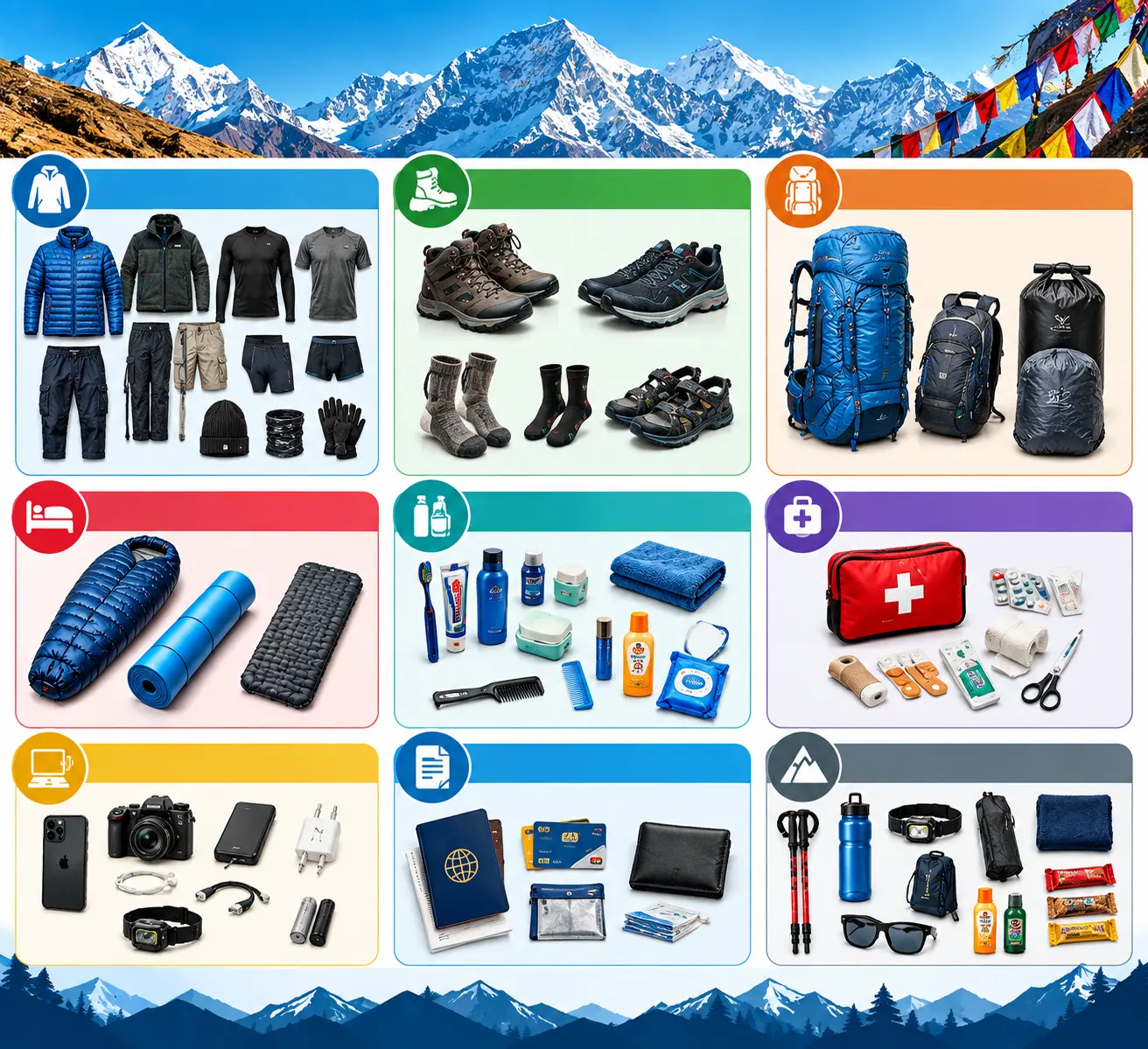
Packing the right gear is an important part of preparing for the Annapurna Circuit Trek. The route takes you through changing weather, colder temperatures, high elevations, and long days of walking, so carrying the right essentials can make a big difference in your comfort and safety.
You may have already planned your trip, arranged your time off, and prepared yourself for one of Nepal’s classic trekking routes. Now comes another important question: what should you actually pack?
The Annapurna Circuit can take around 12–18 days, depending on your itinerary. Carrying too much can make long uphill sections harder, especially as you approach Thorong La Pass at 5,416 meters (17,769 feet). Every extra item in your backpack becomes more noticeable when the trail gets steep and the air gets thinner.
This Annapurna Circuit Trek packing list focuses on the practical essentials you are likely to need on the trail. It covers clothing, footwear, warm layers, personal items, health and first-aid supplies, and other useful trekking gear.
The goal is not to fill your backpack. It is to pack smart, carry only what you need, and keep your load manageable. With the right preparation and weather-appropriate gear, you can walk the Annapurna Circuit more comfortably and concentrate on the trail rather than the weight on your back.
Spring (March to May) and autumn (September to November) are the best-known trekking seasons in Nepal. The Annapurna Circuit usually has relatively stable weather during these months, with clearer mountain views, dry trails, and comfortable daytime temperatures at lower and mid-altitudes.
However, temperatures can drop significantly as you gain elevation, especially around Thorong La Pass. Your Annapurna Circuit Trek packing list should therefore include lightweight layers that can be added or removed as the weather changes.
You do not need to carry every item on the list. Pack according to your itinerary, the season, and the altitude you expect to reach. Your trekking agency may also provide or arrange some equipment, such as sleeping bags or other essential gear.
The monsoon (June to August) and winter (December to February) are considered less popular periods for the Annapurna Circuit because weather conditions can be more demanding. Monsoon brings frequent rain and wet trails in the lower sections, while winter can bring freezing temperatures and snowfall, particularly at higher elevations.
Your packing strategy should therefore change according to the season.
Much of the spring and autumn packing list remains useful during the monsoon, but waterproofing becomes a priority. Keep your clothing and electronic equipment protected from rain and moisture.
Clothing
Rain Protection
The monsoon can make some trails muddy and slippery, so footwear with good grip is particularly important. Keeping spare clothes and important items inside waterproof bags can also make the trek more comfortable.
Winter requires more insulation because temperatures can fall below freezing at higher elevations. Snow and icy conditions may also affect the trail around high passes such as Thorong La.
Head and Upper Body
Lower Body and Feet
Winter Personal Care
Cold, dry mountain air can cause cracked lips and dry skin, so sunscreen, lip balm, and moisturizer are particularly useful during winter.
Winter Trekking Gear
A portable heater is generally unnecessary and adds weight to your pack. A good sleeping bag, insulated layers, and a warm water bottle are more practical for most trekkers.
The Annapurna Circuit Trek is possible throughout the year, but spring and autumn are the most favorable seasons for trekking. These months offer more stable weather, comfortable daytime temperatures, and better trail conditions, especially at higher elevations.
Spring (March to May) brings warmer days, blooming rhododendrons, and improving mountain visibility. Temperatures gradually rise throughout the season, making the trails more comfortable for long trekking days. In March, temperatures generally range from 8°C to 25°C, while April sees around 11°C to 31°C. By May, temperatures can reach approximately 12°C to 31°C, although conditions become warmer at lower elevations.
Autumn (September to November) is widely considered one of the best periods for the Annapurna Circuit. The monsoon has usually cleared, leaving drier trails, clearer mountain views, and pleasant trekking conditions. September temperatures range from around 19°C to 31°C. In October, temperatures generally stay between 12°C and 27°C, creating comfortable conditions for trekking. By November, temperatures become cooler, ranging from approximately 10°C to 25°C.
Keep in mind that temperatures vary significantly with altitude. Higher sections of the Annapurna Circuit, particularly around Thorong La Pass, can be much colder than the lower valleys. Trekkers should therefore prepare for both warm daytime conditions and freezing temperatures at higher elevations.
| Season | Month | Temperature |
| Spring | March | 8°C to 25°C |
| Spring | April | 11°C to 31°C |
| Spring | May | 12°C to 31°C |
| Autumn | September | 19°C to 31°C |
| Autumn | October | 12°C to 27°C |
| Autumn | November | 10°C to 25°C |
The ideal packing list depends mainly on the season, trekking duration, altitude, and current trail conditions. Spring and autumn generally require a combination of lightweight clothing and warm layers. Monsoon trekking calls for stronger rain protection, while winter requires substantially warmer clothing and equipment for possible snow and ice.
Avoid overpacking. You will carry your gear for several hours each trekking day, so choose lightweight, versatile clothing that can be layered rather than packing separate outfits for every temperature.
Before starting the trek, check the latest weather and trail conditions and confirm with your trekking agency whether items such as sleeping bags, down jackets, trekking poles, or other equipment are provided.

A good Annapurna Circuit packing list should help you stay warm, dry, safe, and comfortable without making your backpack unnecessarily heavy. Choose versatile layers, sturdy trekking boots, a warm sleeping bag, reliable water-purification options, sun protection, and basic first-aid supplies.
Before setting out, wear your trekking boots on shorter walks and test your backpack with the gear you plan to carry. Keep important items such as your passport, medicines, cash, electronics, and an extra warm layer where they are easy to reach. Before leaving Kathmandu or Pokhara, check that your permits, travel insurance, weather information, and route conditions are up to date.
With thoughtful preparation and a well-organized backpack, you can travel more comfortably through the forests, mountain villages, changing landscapes, and high passes of the Annapurna region. Carrying only what you need allows you to walk more easily and enjoy the trek with greater confidence.
1. What should I pack for the Annapurna Circuit Trek?
Pack layered clothing, comfortable trekking boots, warm and waterproof jackets, trekking pants, a sleeping bag, trekking poles, sunglasses, water bottles, sunscreen, personal medicines, and a basic first-aid kit. Your exact packing list should depend on the season, itinerary, altitude, and trail conditions.
2. What clothes are needed for the Annapurna Circuit Trek?
Bring moisture-wicking base layers, trekking shirts, fleece, a lightweight down jacket, waterproof and windproof shell, trekking pants, warm socks, gloves, and a warm hat. Layering allows you to adjust your clothing as temperatures change.
3. Do I need a sleeping bag for the Annapurna Circuit Trek?
A sleeping bag is recommended, especially for cold nights at higher elevations. For winter, choose a sleeping bag suitable for sub-zero temperatures. Check with your trekking agency because some agencies may provide or arrange one.
4. What shoes are best for the Annapurna Circuit Trek?
Comfortable trekking boots with good ankle support are a practical choice. They should be well broken in before the trek. Quick-drying trekking socks and blister-care supplies are also useful.
5. What should I pack for the Annapurna Circuit in winter?
For winter, pack thermal layers, an insulated down jacket, warm gloves, thick wool socks, warm waterproof boots, gaiters, and a sub-zero sleeping bag. Microspikes may also be useful depending on snow and ice conditions.
6. What should I pack for the Annapurna Circuit during monsoon?
Prioritize rain protection during the monsoon. Carry a waterproof jacket and trousers, backpack rain cover, dry bags, waterproof pouches, gaiters, and quick-drying clothing and footwear. Spare waterproof bags can help protect wet clothing and electronics.
7. How heavy should my backpack be for the Annapurna Circuit Trek?
Keep your backpack as light as practical and carry only the essentials. The trek includes long walking days and steep sections, particularly near Thorong La Pass at 5,416 meters, so unnecessary weight can make walking more difficult. Pasted markdown
8. What health and first-aid items should I pack for the Annapurna Circuit?
Carry personal medicines, blister treatment, bandages, antiseptic wipes, oral rehydration salts, sunscreen, lip balm, and other basic first-aid supplies. If you take regular medication, consult your doctor before the trek and carry enough for your trip.
9. Do I need trekking poles for the Annapurna Circuit Trek?
Trekking poles are useful for maintaining balance and stability on uneven, steep, or slippery sections. They are especially practical when walking with a backpack over long distances.
10. What should I check before starting the Annapurna Circuit Trek?
Before starting, check the latest weather and trail conditions, confirm your permits and travel insurance, test your trekking boots and backpack, and confirm which equipment your trekking agency provides. Keep important items such as your passport, medicines, cash, electronics, and an extra warm layer easily accessible