
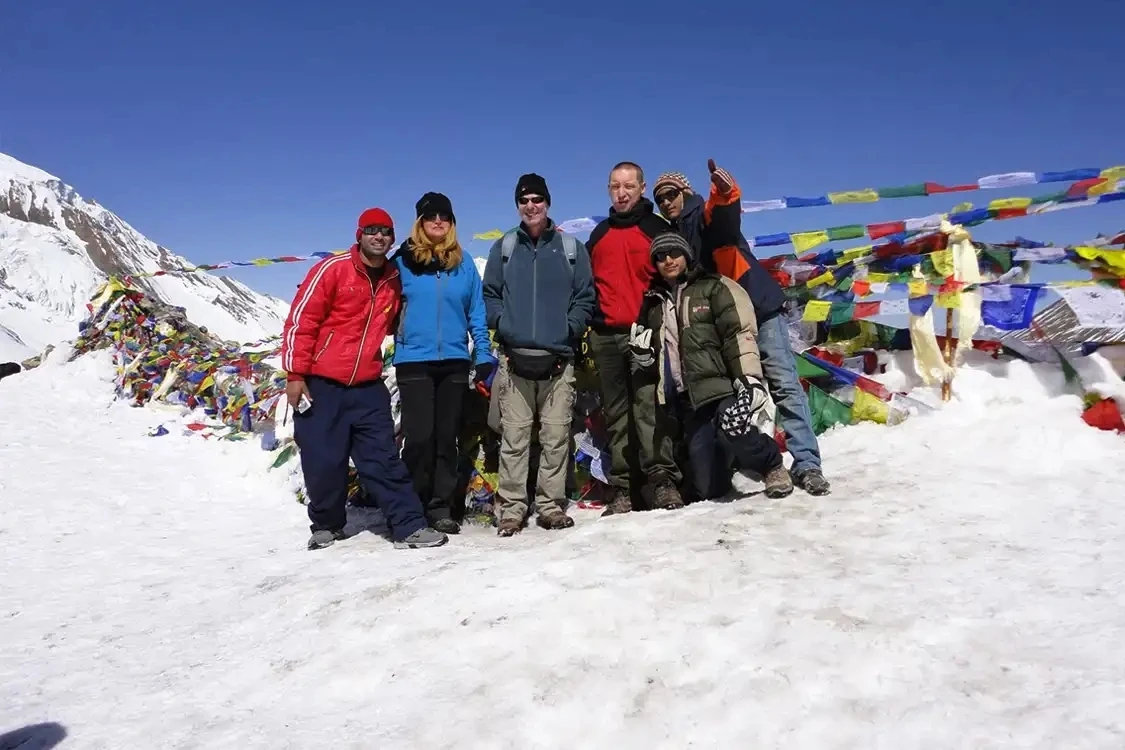
Thorong La, also known as Thorung La Pass, is one of the highest mountain passes in Nepal, reaching an elevation of 5,416 meters (17,769 feet). Located between the Manang and Mustang districts, it is the highest point of the famous Annapurna Circuit Trek.
Crossing the pass is physically demanding because of the high altitude, steep sections, cold temperatures, and changing weather. Trekkers usually spend several days acclimatizing in the Manang region before making the crossing. Along the way, the route offers views of Annapurna, Dhaulagiri, Nilgiri, and surrounding Himalayan landscapes.
The best seasons for the Thorong La Pass Trek are generally spring (March to May) and autumn (September to November). The route also provides a chance to experience Tibetan-influenced culture, traditional mountain villages, Buddhist monuments, and teahouse life as the trail passes from Manang toward Muktinath and Mustang.
| Details | Information |
| Elevation | 5,416 m (17,769 ft) |
| Location | Between Manang and Mustang, Nepal |
| Trek | Annapurna Circuit Trek |
| Difficulty | moderate |
| Best Seasons | Spring (March–May) and Autumn (September–November) |
Thorong La Pass, also spelled Thorang La, is a high mountain pass in the Damodar Himal of central Nepal. It stands at 5,416 meters (17,769 feet) above sea level and is the highest point of the Annapurna Circuit Trek. The pass connects the Manang and Mustang regions and is the main high-altitude crossing on the circuit.
Thorong La connects Manang District in the east with Mustang District in the west. Depending on the chosen route, transportation, and trekking pace, the Annapurna Circuit can generally be completed in 7 to 15 days.
The landscape changes significantly as you approach and cross the pass. On the Manang side, the trail passes through high alpine valleys, dry hills, and traditional stone villages influenced by Tibetan Buddhist culture. After crossing Thorong La, the trail descends toward Muktinath and the Kali Gandaki Valley, where the landscape becomes noticeably drier and more windswept.
This sudden change in scenery is one of the defining features of the Annapurna Circuit Trek. Within a relatively short period, trekkers travel from the high valleys of Manang into the dry landscapes of Mustang.
Thorong La was used as a traditional mountain crossing long before the Annapurna Circuit became a popular trekking route. Local residents and traders used the pass to travel between the Manang and Mustang areas. Today, it remains the main high-altitude crossing of the Annapurna Circuit.
Trekkers usually start the pass-crossing day early from Thorong Phedi or Thorong High Camp. An early start helps trekkers reach the pass before strong winds and changing weather conditions become more common later in the day. Because of the high elevation and demanding ascent, proper acclimatization, a steady walking pace, weather awareness, and suitable preparation are important for crossing Thorong La safely.
The best time to cross Thorong La Pass (5,416 m) is generally during spring and autumn, when the weather is more stable and the trail conditions are usually more predictable. However, conditions can change quickly at high altitude, so the actual crossing day should always depend on current weather and trail conditions.
Spring is a favorable season for the Annapurna Circuit Trek, with gradually warmer temperatures and improving trail conditions. The lower sections of the route become greener, and rhododendrons begin to bloom as the season progresses.
March can still have snow around Thorong La, particularly during the early weeks. By April and May, snow conditions generally improve, although fresh snowfall is still possible at higher elevations.
April and May can also bring good mountain visibility, especially in the morning. Since spring is a popular trekking season, villages such as Manang, Thorong Phedi, and High Camp can be busy with trekkers.
Autumn is one of the most popular times to cross Thorong La Pass. After the monsoon season, the weather generally becomes drier and the skies often become clearer.
October is particularly popular because of the combination of stable trekking conditions, good mountain visibility, and relatively dry trails. November can also be suitable, although temperatures begin to fall toward winter, especially at Thorong Phedi and High Camp.
Because autumn is peak trekking season, accommodation can become busy. Starting the pass crossing early in the morning is important, as strong winds and changing weather can develop later in the day.
Winter brings cold temperatures, snowfall, and fewer trekkers to the Annapurna Circuit. Snow can accumulate around Thorong La Pass, and heavy snowfall may temporarily make the pass difficult or impossible to cross.
Temperatures at this altitude can fall well below freezing, particularly before sunrise. Trekkers attempting the pass in winter need suitable cold-weather gear and should allow extra time in case weather conditions affect the crossing.
The advantage of winter is the quieter trail and potentially clear mountain views on stable days. However, flexibility is essential because snowfall and strong winds can change conditions quickly.
The monsoon season is generally less suitable for crossing Thorong La Pass. Rainfall is heavier in the lower sections of the Annapurna Circuit, while clouds can obscure mountain views and make some trails wet and slippery.
Higher sections may receive less direct rainfall than the southern slopes, but weather around the pass can still be unpredictable. Rain and cloud cover can also affect road travel and lower-elevation trekking sections.
The quieter trails and green landscapes are advantages of trekking during the monsoon, but trekkers should be prepared for wet conditions, limited mountain views, and possible changes to the itinerary.
For most trekkers, autumn (September to November) and spring (March to May) provide the most suitable conditions for crossing Thorong La Pass. Autumn generally offers drier trails and clearer mountain views, while spring brings warmer conditions and blooming vegetation along the lower sections.
Regardless of the season, the pass should be crossed only when the weather and trail conditions are considered safe. An experienced guide can help monitor local conditions and decide whether it is appropriate to continue toward Thorong La on the planned day.
Thorong La Pass is considered challenging but achievable for well-prepared trekkers, including those with limited high-altitude trekking experience. The main difficulty comes from the 5,416-meter elevation, where the air contains less oxygen and altitude-related symptoms can occur.
The pass crossing is also a long and demanding day, usually involving an early-morning climb to the pass followed by a long descent toward Muktinath. The trail can be steep, rocky, cold, and windy, with conditions changing quickly at higher elevations.
No technical climbing skills are required to cross Thorong La. However, proper acclimatization, physical preparation, a steady pace, and appropriate guidance are important. With a well-planned itinerary and sufficient preparation, first-time trekkers can complete the crossing safely.
Proper acclimatization is important before crossing Thorong La Pass at 5,416 meters. Follow these simple tips:
Food and accommodation around Thorong La Pass are basic but sufficient for trekkers. The main options are found at Thorong Phedi and High Camp, where teahouses provide simple rooms and meals before the pass crossing.
Meals commonly include dal bhat, momos, thukpa, noodles, soups, eggs, and Tibetan-style dishes. Some teahouses also serve simple Western meals such as pasta and pizza, depending on availability.
Accommodation is generally in basic teahouses with shared facilities. Rooms are usually simple and may have limited heating, especially at higher elevations. Facilities and food choices can be more limited during winter or bad weather.
Because Thorong Phedi and High Camp have limited accommodation, it is best to arrive early and check availability, particularly during the spring and autumn trekking seasons.
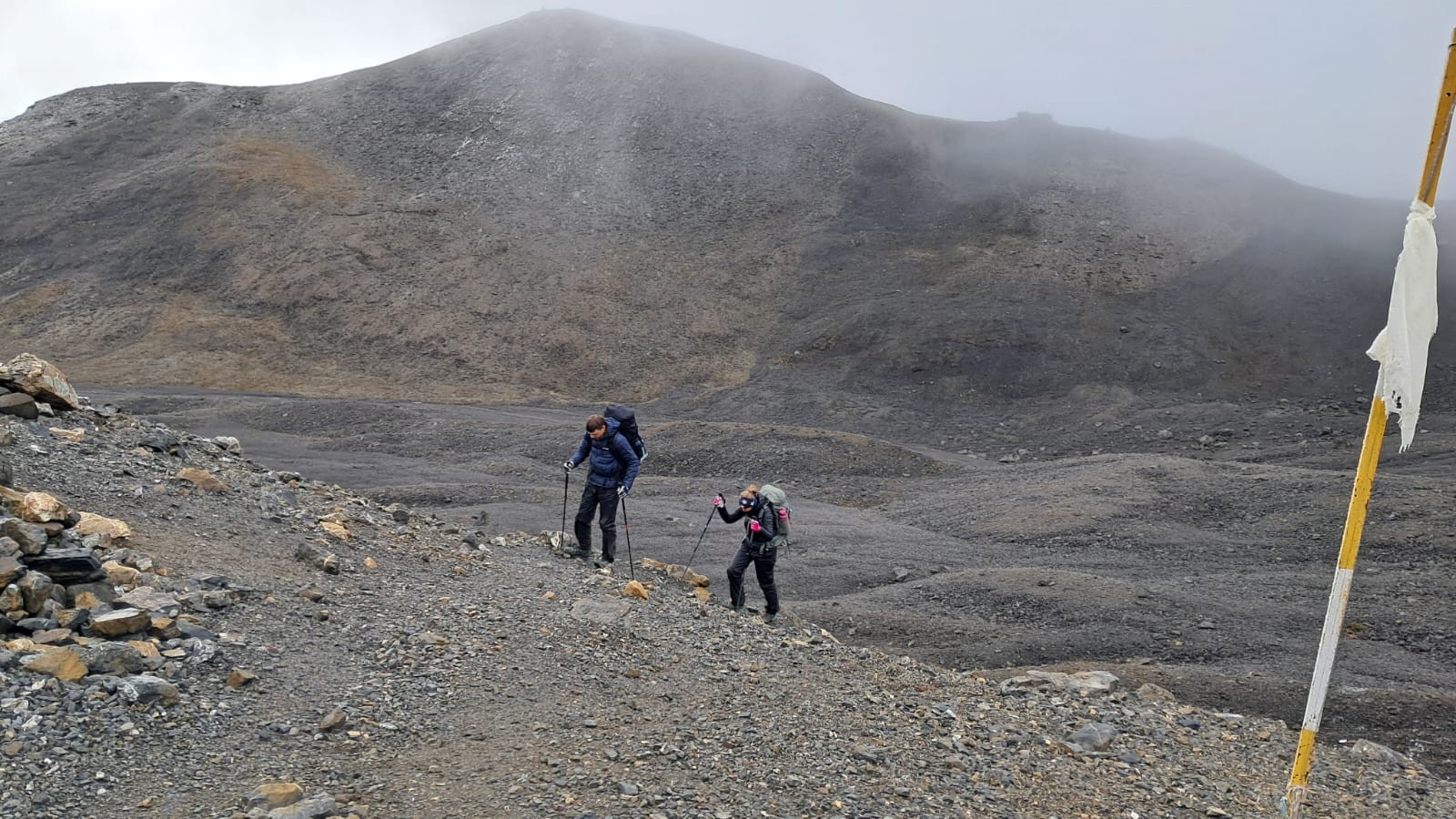
Standing at 5,416 meters on Thorong La Pass, you face the rugged landscapes of the Annapurna region, with the valleys of Manang stretching below and prayer flags fluttering in the cold mountain wind. The thin air and challenging ascent make reaching the pass a true test of endurance. More than a high point on the Annapurna Circuit, Thorong La connects you with the raw Himalayan landscape, local traditions, and the effort behind every step of the journey.
Thorong La Pass is a high mountain pass in Nepal’s Annapurna region, connecting the Manang Valley with the Mustang district. At an elevation of 5,416 meters (17,769 feet), it is one of the major highlights of the Annapurna Circuit Trek.
Thorong La Pass stands at 5,416 meters (17,769 feet) above sea level. The high elevation makes proper acclimatization and a gradual trekking pace important.
Thorong La Pass is located in the Annapurna region of central Nepal. The pass lies between Manang and Muktinath and forms the highest point of the classic Annapurna Circuit route.
The Thorong La Pass Trek is generally considered moderate because of the high altitude, long walking days, steep sections, and changing mountain weather. Good physical preparation, a gradual pace, and proper acclimatization can make the trek more manageable.
The number of days depends on the starting point, transportation, acclimatization schedule, and itinerary. A typical Annapurna Circuit itinerary crossing Thorong La takes around 10–15 days, while shorter itineraries are possible by using road transportation.
The best seasons for crossing Thorong La Pass are generally spring (March to May) and autumn (September to November). These periods usually offer more stable weather and better mountain visibility, although conditions can change quickly at the pass.
No. Thorong La Pass can become difficult or temporarily inaccessible during periods of heavy snowfall and severe weather, particularly in winter. Trekkers should check current trail and weather conditions before starting the crossing.
Crossing Thorong La Pass from Thorong Phedi or High Camp to Muktinath usually takes around 7–9 hours, depending on the route, weather, walking pace, and rest breaks.
The highest point of the Annapurna Circuit Trek is Thorong La Pass at 5,416 meters (17,769 feet). Reaching the pass is one of the main physical challenges of the trek.
Yes, beginners with reasonable fitness can undertake the Thorong La Pass Trek. However, it is important to prepare physically, follow a gradual itinerary, stay hydrated, and allow enough time for acclimatization.
A guide can help with navigation, accommodation, logistics, weather-related decisions, and emergency support. Current trekking regulations should also be checked before departure because Nepal's guide and permit requirements can change.
Trekkers on the Annapurna Circuit generally need the required Annapurna Conservation Area Permit (ACAP) and TIMS documentation. Permit requirements and fees can change, so confirm the latest requirements before your trek.
Essential items include warm layers, a down jacket, waterproof and windproof outerwear, trekking boots, gloves, a warm hat, sunglasses, sunscreen, a sleeping bag, water bottles, trekking poles, and a basic first-aid kit.
Most trekkers stay at Thorong Phedi or Thorong High Camp before crossing the pass. The choice depends on the itinerary, acclimatization plan, weather, and physical condition.
The two treks have different challenges. Thorong La involves crossing a 5,416-meter pass, while Everest Base Camp reaches about 5,364 meters. The difficulty depends on the itinerary, altitude profile, weather, trail conditions, and individual fitness.
Snow can be present at Thorong La Pass, particularly during winter and after periods of snowfall. Conditions vary by season, so trekkers should be prepared for cold temperatures, snow, and strong winds.
Yes, prior high-altitude trekking experience is not always necessary. However, you should be physically prepared for long walking days and understand the challenges of trekking above 5,000 meters.
The traditional route crosses from the Manang side over Thorong La Pass toward Muktinath. Many itineraries reach Thorong Phedi or High Camp first, cross the pass early in the morning, and descend to Muktinath on the same day.
Weather can change quickly around Thorong La. Strong winds, snowfall, cold temperatures, or poor visibility can make the crossing more difficult. Trekkers should follow local conditions and guide recommendations and avoid crossing when conditions are unsafe.
You can book the Thorong La Pass Trek through A One Treks. Before booking, check the itinerary, permits, transportation, accommodation, guide and porter services, meals, insurance requirements, and emergency arrangements. Make sure you understand the trek cost and included services before finalizing your trip.