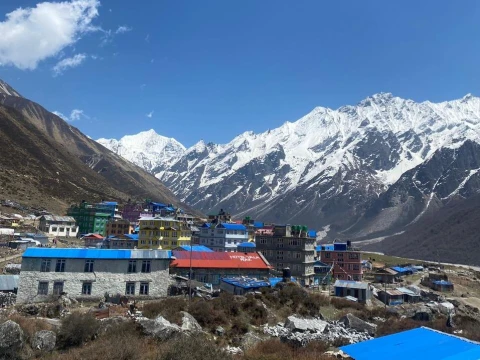
The Langtang Valley Trek, often called the "Valley of Glaciers," is one of Nepal's most scenic and accessible trekking adventures. Located just north of Kathmandu near the Tibetan border, it offers spectacular mountain views, beautiful forests, alpine meadows, and traditional Tamang villages all without the long travel days required for many other Himalayan treks. Unlike more remote treks such as Manaslu or the upper Everest region, Langtang has a well-established network of comfortable teahouses, making it easy to trek without camping or carrying heavy supplies. Although the area was deeply affected by the 2015 earthquake, local communities have rebuilt the villages and lodges with incredible resilience. Today, trekkers can enjoy welcoming accommodations, hearty local meals, and reliable facilities throughout the route. In this guide, you'll find everything you need to know about where to stay, what to eat, typical costs, and practical tips to help you plan a smooth and memorable Langtang adventure.
Before getting into food and lodging specifics, it helps to understand the shape of the trek itself, since accommodation options are tied directly to the villages along the route.
Most itineraries begin with a drive from Kathmandu to Syabrubesi (around 7–9 hours by local bus or jeep), which serves as the trailhead. From there, the standard route runs:
Most people complete the trek in 7–10 days round trip, and every overnight stop has multiple teahouses to choose from, so pre-booking is rarely necessary outside of major holidays or peak season weekends.
Nepal's teahouse trekking model is built around a simple arrangement: lodges offer rooms cheaply, sometimes almost for free, on the understanding that you'll eat your meals there. This keeps costs predictable and means you don't need to carry a tent, stove, or food supplies. In Langtang, this system is well established and every village along the main trail has at least two or three lodges to choose from, with larger stops like Lama Hotel and Kyanjin Gompa having a dozen or more.
Rooms are basic but functional. You'll typically get:
Bathrooms are almost always shared, located down the hall or outside. Lower down the trail (Syabrubesi, Lama Hotel), you're more likely to find attached bathrooms or at least flush toilets. Higher up near Langtang Village and Kyanjin Gompa, squat toilets become more common, and flushing may rely on a bucket of water rather than plumbing. Hot showers are usually available for an extra charge (200–500 NPR), heated either by gas geyser or solar panel — solar showers can run cold on overcast days, so mid-afternoon after a sunny morning is the best window to shower.
Room prices in Langtang are generally very low compared to what Western trekkers might expect, because the real cost of your stay is built into the meals:
During peak season (October–November and March–May), it's worth arriving at your destination village by early-to-mid afternoon, since the best rooms those with attached bathrooms or better views get taken first. In the shoulder seasons, you'll have your pick.
As you climb, don't expect luxury. Insulation is minimal, walls are thin plywood, and heating (if any) is limited to a wood or dung-fired stove in the communal dining area, not in individual rooms. Warm rooms are a lodge-wide feature, not a private one. It gets genuinely cold at night above Langtang Village, so most trekkers sleep in a sleeping bag rated to at least -10°C to -15°C even though blankets are provided, since blankets alone often aren't enough once temperatures drop below freezing.
In Kyanjin Gompa specifically, some of the larger lodges have been upgraded post-earthquake with slightly better insulation, larger dining halls, and even basic guesthouse-style furnishings, but don't expect anything resembling a hotel. This remains a trek where accommodation is functional rather than comfortable.
Unlike treks in more remote regions, Langtang rarely requires advance booking. The route is short enough and popular enough that teahouses are plentiful. That said:
Independent trekkers can generally just walk in, ask "kotha cha?" (do you have a room?), and get sorted within minutes.
Every teahouse operates its own small kitchen and offers a menu that, remarkably, looks almost identical from one lodge to the next a legacy of standardized "tourist menus" that trekking associations helped establish decades ago. This means you'll rarely be surprised by what's available, but it also means variety is limited if you're on the trail for a week or more.
Meals are cooked fresh to order, which is important to understand: there's no pre-made food sitting around, so a "quick" order for a busy lodge at dinner time might take 30–45 minutes. It's common practice to order your meal as soon as you arrive at a teahouse for the night, even before you've settled into your room, so it's ready by the time you actually want to eat.
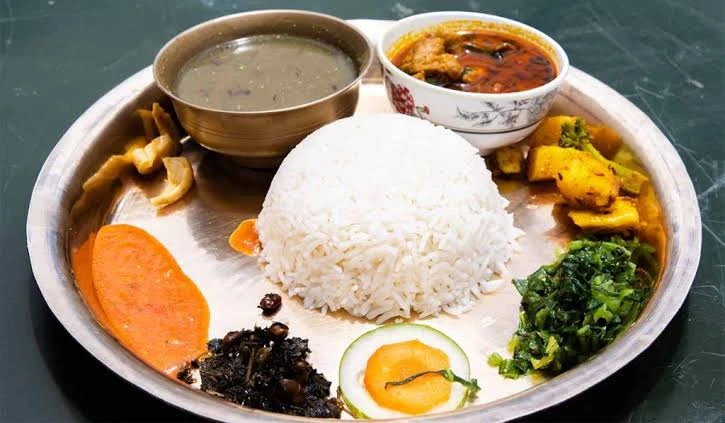
Dal Bhat
If there's one dish that defines trekking in Nepal, it's dal bhat steamed rice, lentil soup, a vegetable curry, and often a pickle (achar) or small side of greens. The phrase "dal bhat power, 24 hour" is something of a trekking in-joke, referring to the fact that it's filling, balanced, and — crucially usually comes with free refills. Most lodges will refill your rice, dal, and vegetables as many times as you want at no extra charge, which makes it the best value and most sustainable choice for a multi-day trek. Guides and porters almost exclusively eat dal bhat for this reason: unlimited calories at a fixed price.
Other Menu Staples
Beyond dal bhat, you'll find a fairly consistent set of options at nearly every teahouse:
Langtang has a strong Tamang and Tibetan-influenced culture, particularly the closer you get to Kyanjin Gompa, and this shows up in the food:
Nepal's teahouse cuisine is naturally vegetarian-friendly, since meat is expensive to transport and often discouraged at altitude for food safety. Dal bhat, most noodle dishes, and momos can all be made vegetarian, and many lodges will happily adjust dishes on request. Vegan trekkers should note that ghee (clarified butter) and dairy are used fairly often in cooking, particularly in the dal, so it's worth asking specifically if you want to avoid dairy. Gluten-free options are limited rice-based dal bhat is your safest bet, since most breads, momos, and noodles contain wheat.
Trekking guides generally advise against eating meat above Langtang Village, and especially at Kyanjin Gompa and beyond. Meat has to be carried up from lower elevations without reliable refrigeration, and by the time it reaches high-altitude lodges it may have been in transit or storage for several days. Sticking to vegetarian meals higher up the trail is one of the simplest ways to avoid stomach issues that could otherwise derail your trek.
Bottled water is available at every teahouse but gets progressively more expensive as you climb a 1-liter bottle might cost 100 NPR in Syabrubesi and 300–400 NPR near Kyanjin Gompa. Because plastic waste is a real problem on Nepal's trekking routes, and because the cost adds up over a multi-day trek, most experienced trekkers instead:
Bringing a reusable bottle or bladder and a filtration method is one of the easiest ways to cut costs and reduce environmental impact on this trek.
One of the more noticeable features of teahouse trekking anywhere in Nepal, and Langtang is no exception, is that prices climb steadily the higher you go. This isn't arbitrary — everything from rice to gas canisters to bottled water has to be carried in, historically by porters and mules, since there are no roads beyond Syabrubesi. A rough sense of the price increase:
| Item | Syabrubesi | Lama Hotel | Langtang Village | Kyanjin Gompa |
| Dal bhat | 350–450 NPR | 400–500 NPR | 500–600 NPR | 600–800 NPR |
| Noodle soup | 250–300 NPR | 300–350 NPR | 350–450 NPR | 450–550 NPR |
| Bottled water (1L) | 50–100 NPR | 100–150 NPR | 150–250 NPR | 250–400 NPR |
| Hot shower | 150–200 NPR | 200–300 NPR | 300–400 NPR | 400–500 NPR |
| Wifi (per day) | 100–200 NPR | 200–300 NPR | 300–400 NPR | 300–500 NPR |
These are rough estimates and can vary by season and by individual lodge, but they give a sense of the trend: expect to pay roughly double for the same meal at Kyanjin Gompa compared to Syabrubesi.
For a realistic daily budget covering three meals plus a room, most independent trekkers should plan for:
Over a 7–10 day trek, this puts total food and accommodation costs somewhere around USD 150–250 per person, not including permits, transport to and from Syabrubesi, a guide or porter if hired, or gear.
A few ways to manage costs without compromising the experience:
Order meals early. As soon as you check into a teahouse, put in your dinner order, even if you don't plan to eat for another hour or two. Kitchens cook one order at a time for a full lodge of trekkers, and orders placed late can mean a long wait, especially during busy seasons.
Carry cash. There are no ATMs beyond Syabrubesi (and the one there isn't always reliable), so withdraw enough Nepali rupees in Kathmandu to cover your entire trek, plus a buffer for emergencies or extra snacks.
Expect simple but hearty portions. Teahouse food isn't fine dining, but portions are generally generous, and the food is calorie-dense, which is exactly what you need for long trekking days.
Layer up for dining halls. Common dining areas, often heated by a central stove, are where you'll spend most of your evening — eating, chatting with other trekkers, and warming up. Bring warm layers to change into once you stop walking, since your room itself likely won't be heated.
Be flexible with variety. Given the standardized menus, don't expect a huge range of choice night after night. Most trekkers find dal bhat, noodle soups, and the occasional pancake breakfast become a comforting routine rather than a limitation.
Support the local economy. Since food and lodging are the primary income source for these mountain communities, eating at the teahouse you're staying in (rather than bringing your own supplies) is both practical and a meaningful way to support the local economy, especially given how much of Langtang was rebuilt after the 2015 earthquake.
Langtang Valley strikes a good balance for trekkers who want an authentic teahouse experience without the extreme remoteness of other Nepali treks. Accommodation is simple, affordable, and consistently available, and the food, while not gourmet, is filling, reliable, and increasingly influenced by the valley's Tamang and Tibetan heritage the higher you climb. With a bit of planning around cash, water treatment, and realistic expectations about comfort, food and lodging on this trek are rarely something to worry about — they simply become part of the rhythm of each trekking day.
Accommodation is mainly in traditional teahouses and lodges. Most offer simple twin-sharing rooms with comfortable beds, blankets, and shared bathrooms. Some lodges in larger villages also provide attached bathrooms, hot showers, and Wi-Fi for an additional charge.
Teahouses serve a variety of meals, including Nepali Dal Bhat, fried rice, noodles, pasta, soups, momos, pancakes, eggs, porridge, and Tibetan bread. Vegetarian options are widely available, and Dal Bhat is the most popular meal for trekkers.
Yes. You can buy bottled water or refill your bottle with boiled or filtered water at most teahouses. To reduce plastic waste, it's recommended to carry a reusable bottle and use water purification tablets or a portable filter.
Yes. Most teahouses offer vegetarian meals, and many can prepare vegan dishes on request. Inform your guide or lodge staff about your dietary preferences before ordering.
Advance booking is generally not necessary during the off-season. However, during the busy spring (March–May) and autumn (September–November) trekking seasons, booking ahead through a trekking agency or guide is recommended to secure the best available rooms.
Yes. Most teahouses provide charging facilities for phones, cameras, and power banks. Charging is usually available for an additional fee, especially at higher elevations. Carrying a fully charged power bank is recommended.
Many teahouses in villages such as Syabrubesi, Lama Hotel, Langtang Village, and Kyanjin Gompa offer Wi-Fi for an extra charge. However, the connection can be slow and unreliable due to the remote mountain location.