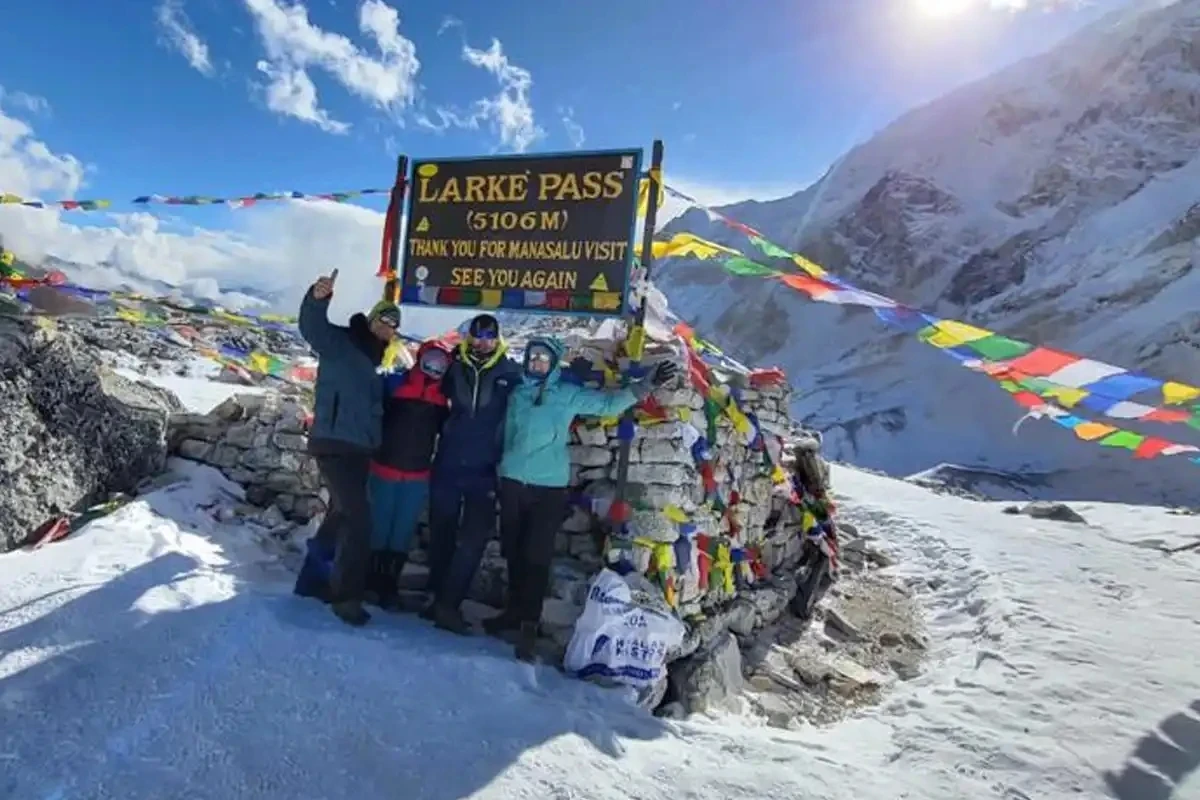
Larkya La Pass is one of the famous and adventurous high mountain passes found in Nepal’s Manaslu region. It is located at a height of 5,106 to 5,160 meters above sea level. This place is the point of the Manaslu Circuit Trek and is considered one of the longest and most difficult Himalayan passes in Nepal.
It is positioned between Dharamshala (Larkya Phedi) and Bimthang. Larkya La Pass is a route that links the Manaslu area with the Annapurna area. Going across this pass is not a tough physical challenge but also a journey that is unforgettable. It offers views of the Himalayas, local culture and spiritual moments.
While trekking through Larkya La Pass people can visit hidden valleys, villages that have Gurung and Tibetan influences, old Buddhist monasteries, prayer flags and the calmness of the mountains. As the path moves upward through areas there are amazing sights of Mount Manaslu, Himalchuli Chuli Himal, Kang Guru, Annapurna II and other nearby mountains. This makes the trip more special.
The Manaslu Circuit Trek through Larkya La Pass starts from Soti Khola. Slowly goes through nice villages like Namrung, Samagaon and Samdo before arriving at the high mountain pass. Because the pass is above 5,100 meters people need to be physically ready know how to adjust to altitudes and have experience with high-altitude walking. Taking rest and having a good plan is important to avoid problems from the height.
Since the Larkya La Pass area is in the Manaslu Restricted Area people need to get the papers before they start. The papers required are the Manaslu Restricted Area Permit, the Manaslu Conservation Area Permit (MCAP) and the Annapurna Conservation Area Permit (ACAP).
Compared to popular walking routes like the Everest Base Camp Trek, the Manaslu Circuit Trek is less busy, not as commercial and still keeps its natural look. It gives travelers an experience of Himalayan life, old villages, ancient cultures and the peaceful beauty of Nepal’s faraway mountains.
The best times to go over Larkya La Pass are spring, which's from March to May and autumn, which is from September to November. At these times the weather is usually good the mountain views are best and going across the pass is more fun.
Larkya La Pass, also spelled Larke La. Sometimes called Larkya Pass is in Nepal’s Gandaki Province. It is on the border between Gorkha and Manang districts. It is deep in the Himalayas near the border, where the land changes from Nepals green hills to a high-altitude desert-like place.
Larkya La Pass joins two different parts of the Himalayas. On one side is the Manaslu area, where Mount Manaslu is located. This mountain is the highest in the world and reaches 8,163 meters. Because of its sides and chances of avalanches some climbing groups have called it the "Killer Mountain."
On the side are the Nar–Tsum and Annapurna areas, known for their better trekking facilities, old villages and established tea house culture. Going over Larkya La Pass is, like a doorway that links the Manaslu area with the Annapurna and Nar–Tsum areas. It lets people see two kinds of Himalayan views in one trip.
The Larkya La Pass is really high up. It is 5,106 meters above the sea. This makes the Larkya La Pass the point on the Manaslu Circuit Trek. The Larkya La Pass connects Dharmashala in the Manaslu region with Bhimtang, in the Annapurna region.
When you get to the top of the Larkya La Pass you can see some mountains. You can see:
The Larkya La Pass is one of the parts of the Manaslu Circuit Trek. Walking over the Larkya La Pass is an experience. The Larkya La Pass is very scenic. People remember it for a long time. The Manaslu Circuit Trek is lucky to have the Larkya La Pass.
Crossing Larkya La Pass (5,106 meters) is one of the most exciting and challenging sections of the Manaslu Circuit Trek. Choosing the right season is essential for a safe and enjoyable journey, as weather conditions, snowfall, trail conditions, and visibility can greatly affect the experience. In general, autumn (September–November) and spring (March–May) are considered the best seasons to cross Larkya La Pass.
Autumn is the most popular and reliable season for crossing Larkya La Pass. After the monsoon ends, the skies become clear, offering spectacular views of the Himalayan ranges, including Manaslu, Himalchuli, Ngadi Chuli, and surrounding peaks.
During this season, the weather remains stable, temperatures are comfortable for trekking, and there is usually less snow on the pass, making the crossing easier and safer. The trails are dry, reducing the risk of slipping, while the clear visibility provides some of the best mountain views of the year.
Highlights of autumn:
Spring is the second-best time to cross Larkya La Pass. The weather is generally favorable, although occasional snowfall or sudden weather changes can occur at higher elevations.
The biggest attraction of spring is the incredible natural scenery. As the snow begins to melt, the lower valleys become green and colorful, with rhododendrons and wildflowers blooming along the trails. The combination of mountains, forests, and flowers creates a beautiful trekking experience.
Highlights of spring:
Crossing Larkya La Pass in winter is possible but highly challenging and recommended only for experienced trekkers with proper preparation. Temperatures can drop far below freezing, and heavy snowfall can cover the pass with deep snow.
The trail becomes more difficult due to icy conditions, strong winds, and extreme cold. There is also an increased risk of avalanches in some areas. Many high-altitude teahouses may close during this period, so trekkers need to carry additional supplies and be well prepared.
Main challenges in winter:
The monsoon season is the most difficult and least recommended time to attempt the Larkya La Pass crossing. Continuous rainfall makes lower trails muddy and slippery, while the risk of landslides increases significantly.
At higher elevations, clouds and fog often block the spectacular mountain views. Although the lower valleys become lush and green, the unstable weather conditions make crossing the high pass unsafe and uncomfortable for most trekkers.
Main challenges during monsoon:
For the safest, most comfortable, and most rewarding experience, autumn (September to November) is the best season to cross Larkya La Pass. The combination of stable weather, clear mountain views, and favorable trail conditions makes it the ideal trekking period.
| Season | Months | Average Temperature | Weather |
| Spring | March – May | 15°C to 21°C | Mild and pleasant |
| Summer (Monsoon) | June – August | 15°C to 25°C | Warm with heavy rainfall |
| Autumn | September – November | 10°C to 20°C | Cool, dry, and clear |
| Winter | December – February | -5°C to -25°C | Extremely cold |
Manaslu Larke Pass is considered one of the challenging trekking routes in Nepal. The trek reaches an altitude of 5,106 meters (16,752 feet) at Larke La Pass making it a high-altitude adventure that comes with both incredible rewards and demanding challenges.
The trek offers views of towering Himalayan peaks, dramatic river valleys, deep gorges, diverse landscapes and the spectacular crossing of Larke Pass. The remote and untouched beauty of the Manaslu region is one of the highlights that attracts adventure seekers from around the world.
However the difficulty of the Manaslu Larke Pass Trek comes from factors. The trail covers 140 kilometers and involves long walking days, steep ascents and descents, high-altitude conditions and physical exhaustion. Since the region is remote, trekkers must also be prepared for teahouse accommodation, limited food options and fewer modern facilities compared to popular trekking routes.
In addition unpredictable mountain weather, rugged terrain and the isolated nature of the trail can make the journey more demanding. Crossing Larke La Pass requires endurance, mental strength and proper acclimatization to minimize altitude-related challenges.
| Permit | Cost | Required Area |
| Manaslu Restricted Area Permit (RAP) | USD 75–100 (depending on season & days) | Jagat to Samdo/Larkya La Pass |
| Manaslu Conservation Area Permit (MCAP) | NPR 3,000 | Manaslu Conservation Area |
| Annapurna Conservation Area Permit (ACAP) | NPR 3,000 | Dharapani to Besisahar section |
Note: A licensed guide and registered trekking agency are mandatory for the Manaslu/Larkya La Pass Trek.
I am going to talk about the Larke Pass Trek. The Larke Pass Trek has tea houses and lodges where people can stay. These tea houses and lodges are along the Manaslu Circuit. Adventure A One Treks makes sure that people have places to stay. They have meals and warm drinks and clean beds.
The places to stay are basic. They have everything people need to rest and get used to the altitude. Staying in places like Bimthang helps people get used to the altitude. Bimthang is at 3,720 meters. This helps people avoid getting sick from the altitude.
There are tea houses in villages like Samagaun and Dharamsala and Bimthang. Adventure A One Treks books these places to stay ahead of time. This is especially important when a lot of people are going on the Larke Pass Trek. The guides and porters from Adventure A One Treks are very helpful. They make the trek safer and more fun.
Most tea houses have food and hot drinks and hot showers. People have to pay extra for the showers. Some villages have electricity and Wi-Fi and phone signal. At places these things may not be available. The lodges also have places to store gear and dry clothes and nice rooms to eat in.
The Larke Pass Trek is more fun when people stay in the tea houses. The local people are very friendly. They welcome people with Nepali hospitality. The guides give people advice on what to eat and drink and how to get used to the altitude. On mornings people can see the mountains like Manaslu and Cheo Himal from the lodges.
The Larke Pass Trek needs places to stay. Adventure A One Treks takes care of booking places to stay and food and the daily trek. They make sure everything goes smoothly. The guides and porters are very professional. The tea houses and lodges, along the Manaslu Circuit are very comfortable. They help people have a time on the Larke Pass Trek.
Larkya La Pass day begins in freezing temperatures before sunrise and becomes much warmer as you descend toward Bimthang. Dressing in layers is the best way to stay comfortable throughout the day.
Essential Items to Pack:
Most trekkers carry these essentials in a daypack, while a porter transports the heavier luggage, making the pass crossing safer and more comfortable.
Acclimatize properly: Spend a day or two in Samagaon and Samdo before going up to Dharamshala (Larkya Phedi).
1. Where is Larke La Pass?
Larke La Pass ( spelled Larkya La Pass) is the highest point of the Manaslu Circuit Trek in Nepal. It connects Dharamshala (Larkya Phedi) with Bimthang in the Manaslu Conservation Area.
2. How high is Larke La Pass?
Larke La Pass stands at 5,106 meters (16,752 feet) above sea level making it one of Nepals most scenic trekking passes.
3. How difficult is Larke La Pass?
The pass is considered challenging to difficult due to its high altitude, long trekking day, steep ascent and descent and the possibility of snow and strong winds. No technical climbing skills are required.
4. What is the best time to cross Larke La Pass?
The best seasons are:
These months generally offer weather, clear mountain views and safer trail conditions.
5. How long does it take to cross Larke La Pass?
The crossing usually takes 8–10 hours starting before dawn from Dharmashala and finishing at Bimthang. Most trekkers begin hiking around 3:00–4:00 AM.
6. Do I need a guide for the Larke La Pass trek?
Yes. The Manaslu Circuit is a trekking area and trekkers must be accompanied by a licensed guide while obtaining the required permits.
7. What permits are required?
You will need:
These permits are mandatory for the trek.
8. Can beginners trek to Larke La Pass?
Yes beginners with physical fitness can complete the trek if they follow a proper itinerary acclimatize well and trek with an experienced guide.
9. Is altitude sickness a concern?
Yes. Since the pass is over 5,000 meters there is a risk of altitude sickness. Proper acclimatization, staying hydrated and ascending gradually are essential, for a trek.
10. What should I pack for crossing Larke La Pass?
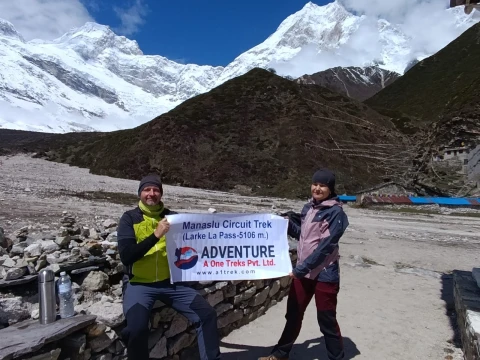
The Larkya La Pass Trek is not about getting to a high mountain pass; it is about the trip the things you go through and the memories you make as you travel. Hiking through Himalayan villages talking to local people seeing different ways of life and looking at amazing mountain views make this trek really special. Climbing up to Larkya La Pass at 5,106 meters can be hard. The feeling of doing it and the amazing beauty, around you is worth it. From the crowded paths this trek gives you a great balance of excitement, nature and real Himalayan life. If you want a trek that has parts, new things to find out and moments you will never forget Larkya La Pass is a trip that is worth doing.