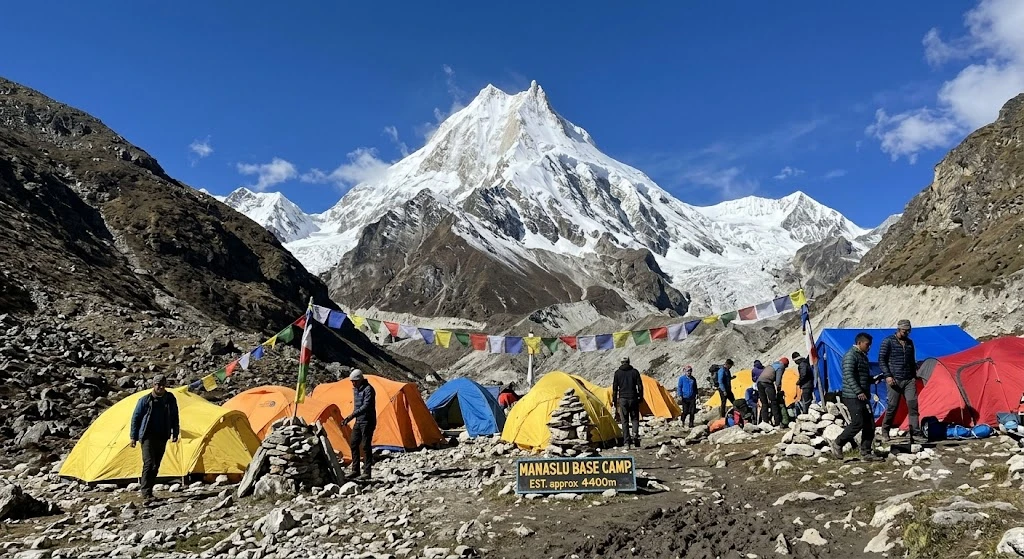
Manaslu Base Camp sits at an altitude of 4,800 meters on the northern side of Mount Manaslu (8,163 m), the eight highest mountain in the world. Reaching the base camp takes you through quiet mountain villages, forest, rivers, and alpine landscapes while introducing you to traditions and daily life of the local community.
Most visitors reach the base camp by following the Manaslu Circuit route, which also crosses Larkya La Pass(5,106 m), one of Nepal’s highest mountain passes. Along the journey, trekkers pass Buddhist monasteries, suspension bridges, glaciers, and enjoy ever-changing views of the surrounding Himalayan peaks.
For those looking to experience a less crowded part of the Nepal Himalayan, Manaslu Base Camp offers a rewarding combination of mountain scenery, local culture, and high-altitude adventure. The best time to visit is during spring(March to May) and autumn(September to November), when the weather is generally stable and mountain views are at their clearest.
| Key Facts | Details |
| Destination | Manaslu Base Camp |
| Location | Gorkha District, Gandaki Province, Nepal |
| Base Camp Elevation | 4,800 metres (15,748 feet) |
| Nearest Village | Sama Gaon (3,530 m) |
| Mountain | Mount Manaslu (8,163 m / 26,781 ft) |
| World Ranking | Mount Manaslu is the 8th-highest mountain in the world. |
| Trek Difficulty | Moderate to Challenging |
| Average Trek Duration | 10–16 days (depending on the itinerary) |
| Daily Walking Hours | Approximately 5–8 hours |
| Best Seasons | Spring (March–May) and Autumn (September–November) |
| Restricted Area | Yes. The Manaslu region is a restricted area for foreign trekkers. |
| Guide Requirement | A licensed trekking guide is mandatory for foreign trekkers. |
| Permits Required | Manaslu Restricted Area Permit (RAP), Manaslu Conservation Area Permit (MCAP), and Annapurna Conservation Area Permit (ACAP) if crossing Larke La Pass. |
| Highest Point (Standard Circuit) | Larke La Pass – 5,106 metres (16,752 feet) |
| Major Ethnic Communities | Nubri and Tsum people, along with Gurung communities in the lower region |
| Dominant Religion | Tibetan Buddhism |
| Conservation Area | Manaslu Conservation Area |
| Conservation Area Size | Approximately 1,663 sq. km |
| Established | Manaslu Conservation Area was established in 1998. |
| Wildlife | Himalayan Tahr, Blue Sheep, Snow Leopard, Musk Deer, Himalayan Monal, and other Himalayan wildlife |
| Flora | Rhododendron forests, pine, oak, fir, juniper, alpine meadows, and medicinal plants |
| Accommodation | Local tea houses and mountain lodges along the trekking route |
| Mobile Network | Limited coverage; NTC and NCELL are available in some villages but unreliable at higher elevations |
| Electricity | Available in most villages, often powered by hydropower or solar energy. Charging may require an extra fee |
| Drinking Water | Available at tea houses or from natural sources after proper purification |
| Starting Point | Machha Khola (after a drive from Kathmandu) |
| Ending Point (Circuit Trek) | Dharapani, from where trekkers drive back to Kathmandu via Besisahar |
| UNESCO Site Nearby | The Manaslu region borders the Annapurna Conservation Area but is not |
The Manaslu Base Camp area has a long history as a seasonal grazing ground for yak herders and an important trade route connecting Nepal and Tibet. For centuries, local communities relied on these mountain trails for trade, travel, and traditional livelihoods. Over the past few decades, however, the region has transformed into one of Nepal's most rewarding trekking destinations.
The area is home to the Nubri, Tsum, Gurung, and Bhutia communities, whose cultures are deeply rooted in Tibetan Buddhism. Ancient monasteries, mani walls, prayer wheels, and chortens scattered along the trail reflect the region's rich spiritual heritage and offer trekkers a unique cultural experience alongside breathtaking Himalayan scenery.
The Manaslu trekking route was officially opened to international trekkers in 1992. Since the region lies within a restricted area, visitors must obtain a Special Restricted Area Permit and trek with a licensed guide. These regulations have helped preserve the area's pristine landscapes, traditional villages, and unique cultural identity, making the Manaslu Base Camp Trek an excellent choice for travelers seeking an authentic and less-crowded Himalayan adventure.
Manaslu Base Camp is located at an elevation of 4,800 meters(15,748 ft) in the Gorkha District of north-central Nepal, within the protected Manaslu Conservation Area (MCA). Hidden within the northern side of Mount Manaslu, the base camp lies near the traditional village of Samagaon, making it one of the most popular trekking destinations.
Most trekkers being their journey from Kathmandu, by a 7-9 hour drive to Machha Khola or Soti Khola, the common starting points of the trek, From there, the trail stretches approximately 110-120 kilometers through remote villages, lush forests, and alpine landscape before reaching Manaslu Base Camp. The total trekking distance may vary depending on your itinerary and any optional side trips along the route.
Manalu Base Camp is the main staging point for climbers attempting to summit Mount Manaslu region, the base camp is also a popular destination for trekkers who want to experience the grandeur of the Himalayan without undertaking a technical climb.
Situated at an altitude of approximately 4,800 meters(15,748 ft), Manaslu Base Camp offers breathtaking panoramic views of Mount Manaslu, its surrounding glaciers, and neighbouring snow-covered peaks. Reaching the base camp requires proper acclimation, as the trail gradually climbs through rugged moraines, alpine landscapes, and glacial terrain. Despite its growing popularity, the base camp remains peaceful and less crowded than the many other Himalayan trekking destinations, making it an excellent choice for those seeking a more authentic mountain experience.
There are several ways to reach Manaslu Base Camp, depending on your trekking goals, fitness level, and available time. While the Manaslu Circuit Trek is the most popular route, shorter and extended alternatives allow trekkers to explore the region in different ways.
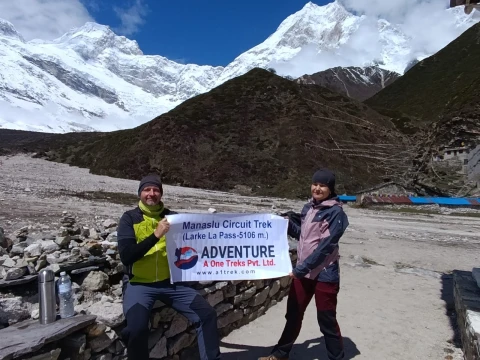
The classic Manaslu Circuit Trek is the most common way to visit Manaslu Base Camp. This 14-day journey begins with a scenic drive from Kathmandu to Machha Khola and follows the Budhi Gandaki River through traditional villages such as Jagat, Deng, Namrung. Lho, and Samagaon. After acclimatising in Samagaon, trekkers can hike to Manaslu Base Camp before continuing across the spectacular Larkya La Pass(5,160 m) and descending towards Bimthang and Dharapani.
If your main goal is to visit the base camp without completing the entire circuit, you can take a shorter route from Samagaon (3,530 m). The round trip typically takes 6-7 hours, passing Birendra Lake, glacial moraines, and apline landscapes before reaching Manaslu Base Camp(4,800 m). This option is ideal for trekkers with limited time or those already staying in Samagaon for acclimatisation.
If you have extra time, adding Tsum Valley to your journey is well worth considering. Instead of heading directly towards Manaslu Base Camp, this route takes you into one of Himalay’s most isolated valleys, where Tibetan Buddhist Traditions continue to shape everyday life.
The valley is home to centuries-old monasteries, including Mu Gompa and Rachen Nunnery, along with small villages where local customs have remained largely unchanged for generations. Walking through Tsum Valley gives you the chance to experience a quieter side of the Manaslu region before rejoining the main trail towards the base camp.
Adding the Tsum Valley extension usually takes 5-6 extra days, making it a great choice for travellers who want to experience both the natural beauty and cultural heritage of the region before continuing to Manaslu Base Camp.
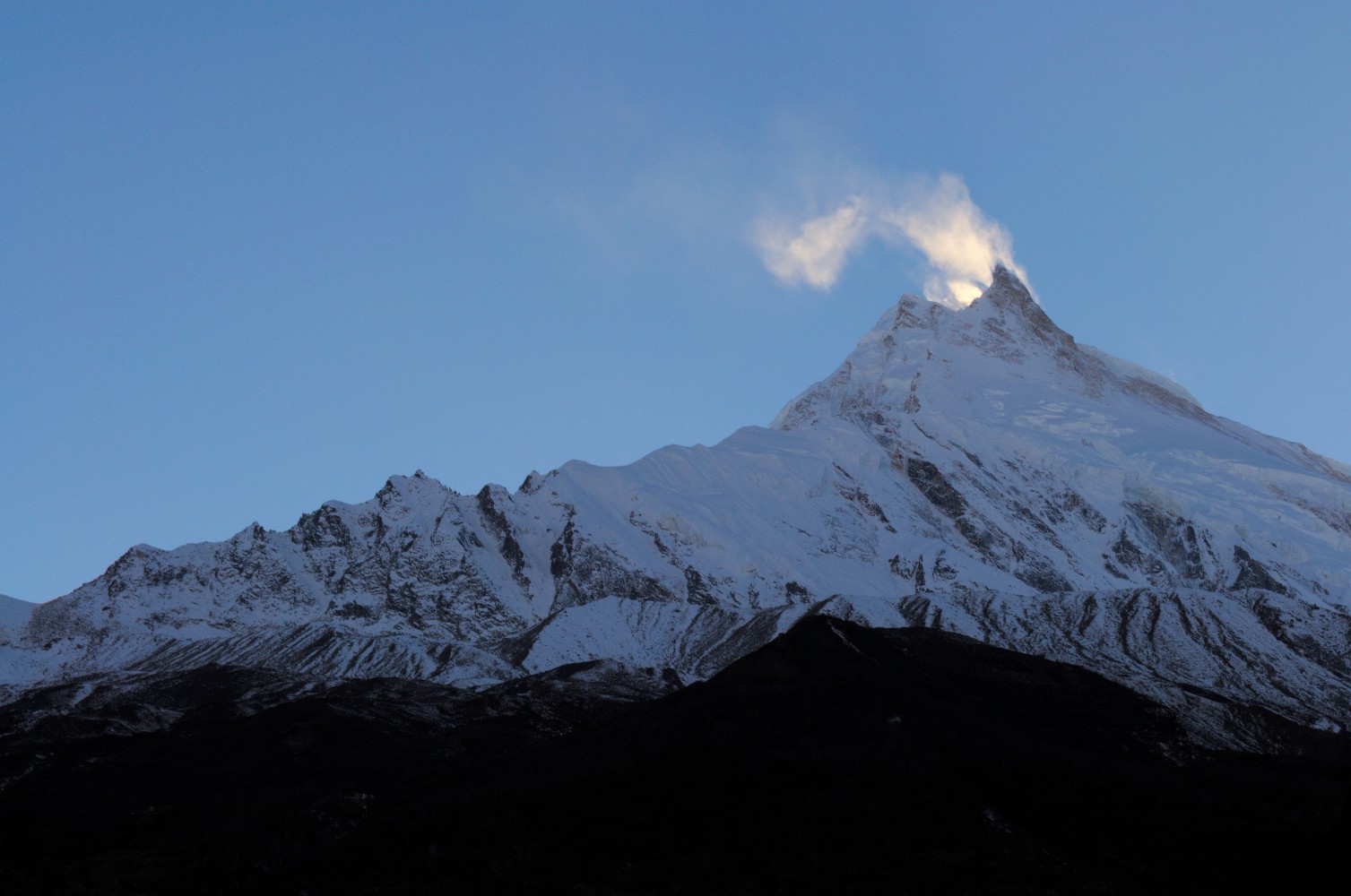
The Manaslu Base Camp is a tough hike. It is considered moderate to challenging. People who do the Manaslu Base Camp usually walk for 6 to 8 hours every day. They have to walk up hills on rocky trails through forests and on icy terrain. To do the Manaslu Base Camp safely you need to be in shape have the right gear and be determined.
Physical Demands:
The Manaslu Base Camp involves walking for a time on different kinds of terrain. You have to walk on stone steps, rocky paths and steep hills. It is an idea to get ready for the Manaslu Base Camp by hiking, running and lifting weights. This will help you build up your energy.
Altitude:
The Manaslu Base Camp starts in Samagaon, which's 3,530 meters above sea level and goes up to the Manaslu Base Camp, which is 4,800 meters above sea level. When you go up that high you might get sick from the altitude. To stay safe you need to get used to the altitude slowly, drink a lot of water and follow the rule of climbing high and sleeping low.
Trail Conditions:
The Manaslu Base Camp is not a hike but some parts of the trail are narrow, rocky and might even have landslides or snow. Using trekking poles and wearing hiking boots can help you feel more stable and comfortable on the Manaslu Base Camp.
Fitness Level:
You need to be in good shape to do the Manaslu Base Camp. You should be able to walk for hours while carrying a backpack that weighs 8 to 10 kilograms. If you run, lift weights and hike regularly you will be ready, for the Manaslu Base Camp.
Visiting Manaslu Base Camp requires the following permits:
Note: Foreign visitors must travel with a licensed trekking guide and obtain the required permits through a registered trekking agency.
The experience of visiting Manaslu Base Camp depends greatly on the time of the year you choose. Weather, visibility, and trail conditions vary from season to season, so picking the right time can make your journey safer and more enjoyable.
Spring (March to May)
Spring is a favourite season for many trekkers heading to Manaslu Base Camp. As the snow begins to melt, the trails become easier to walk, and the weather is generally comfortable for long days outdoors. Hillsides are decorated with blooming rhododendrons, while clear mornings often reward trekkers with outstanding views of Mount Manaslu and the surrounding peaks. By late May, clouds may build up in the afternoon, but mornings usually remain bright and clear.
Autumn (September to November)
Autumn is another excellent time to visit the base camp. Once the monsoon ends, the air becomes fresh, dust settles, and the mountains appear remarkably clear. The weather is usually stable, making it easier to enjoy the journey without frequent interruptions from the rain or snow. Although this is Nepal’s busiest trekking season, the Manaslu region still feels quieter and less commercial than many other Himalayan trekking destinations.
Winter and Monsoon
Winter, from December to February, brings very cold temperatures and heavy snowfall at higher elevations. Snow can cover sections of the trail and make the route more difficult to follow. During the monsoon season, from June to August, regular rainfall creates muddy and slippery paths, while landslides and poor visibility become more common. For these reasons, the seasons are generally less suitable for visiting Manaslu Base Camp.
The Manaslu Base Camp Trek is an option for people who want to get away from it all and experience the real Himalayan culture. The Manaslu Base Camp Trek has beautiful trails that are quiet and peaceful. You will see mountains and have an experience that you will never forget.
The Manaslu Base Camp Trek is different from the Everest and Annapurna treks. Those treks have a lot of people on them every year. The Manaslu Base Camp Trek is not as crowded. It is in an area so it has stayed pretty much the same. The Manaslu Base Camp Trek has landscapes and old villages. The people who live there still follow their ways. This means that when you trek in the Manaslu Base Camp Trek you can see what the Himalayas are like.
If you want to get from the crowds and be around local people, the Manaslu Base Camp Trek is a good choice. The Manaslu Base Camp Trek has adventure. You can learn about the culture. You will see the mountains of Nepal. The Manaslu Base Camp Trek is a trek that will give you a lot of great experiences.
The Manaslu Base Camp is a journey that gives you a lot in return. It has views of the Himalayas, chances to experience local cultures and a feeling of being truly on an adventure. The trek is not easy. Every step you take is worth it as you go through quiet villages, different kinds of landscapes and amazing views of mountains.
If you get ready properly, have physical health, the right trekking equipment and take enough time to get used to the altitude the trek is something that anyone, with average fitness can do. Picking the time to go on the trek and having a guide who knows the area will make your trip safer and better overall.
If you want an adventure that is not too busy and has both beautiful nature and a lasting trekking experience, Manaslu Base Camp is a very good option. Plan carefully, go on the trek in a way and get ready to make memories that will stay with you for a long time after you finish your trip.
How high is Manaslu Base Camp?
Manaslu Base Camp sits at an altitude of 4,800 meters (15,748 feet) above sea level. It is a popular side trip from Sama Gaun, offering incredible views of Mount Manaslu and the surrounding Himalayan peaks.
How do I get to Manaslu Base Camp?
Most trekkers reach Manaslu Base Camp by hiking from Sama Gaun (3,530 m). The round-trip trek takes 6–8 hours, depending on your pace, and is usually done as an acclimatization hike during the Manaslu Circuit Trek.
Can beginner trekkers visit Manaslu Base Camp?
Yes beginner trekkers can visit Manaslu Base Camp. They just need to get ready be in shape and know what to expect. The trip to Manaslu Base Camp is hard on the body. People who are new to trekking can do it. They should take their time go slow and spend a days in Samagaun to get used to the high altitude. It is also an idea for beginner trekkers to go with a guide who knows the way. If they exercise before the trip and get ready mentally they will be safer. Have more fun on the way to Manaslu Base Camp.
Is altitude sickness a risk at Manaslu Base Camp?
Yes altitude sickness is a risk at Manaslu Base Camp. Manaslu Base Camp is really up at 4,800 meters. This means that people can get sick from the altitude. It can happen to anyone no matter how old they are or how fit they are. To stay safe people should go up slowly spend a nights, in Samagaun to get used to it drink a lot of water not push themselves too hard and watch out for the signs of altitude sickness.
Do I need a guide for the Manaslu Base Camp Trek?
Yes. The Manaslu Base Camp Trek is located in a restricted area of Nepal, so trekking with a licensed guide is mandatory. You must also obtain the required permits through a registered trekking agency.
What gear should I bring for the Manaslu Base Camp Trek?
Pack warm, layered, and waterproof clothing to handle changing mountain weather. Essential gear includes sturdy trekking boots, trekking poles, a cold-weather sleeping bag, a headlamp, reusable water bottles, and a water purification system. Sunglasses, gloves, and a warm hat are also highly recommended.
What is the food like on the Manaslu Base Camp Trek?
Most tea houses serve simple but nutritious meals. Popular options include Dal Bhat (rice, lentil soup, and vegetables), noodles, fried rice, soups, pasta, potatoes, pancakes, eggs, and occasionally yak meat in higher villages. Vegetarian meals are widely available.
What level of fitness is required for the Manaslu Base Camp Trek?
A good level of physical fitness is essential. The trek involves long walking days, steep ascents, and high-altitude conditions. Preparing with regular hiking, cardio exercises, strength training, and practice walks with a loaded backpack will help you enjoy the trek more comfortably and safely.