
The Upper Mustang Trek takes you into a region that was sealed off from the outside world until 1992. The trail follows the Kali Gandaki gorge, climbs through wind-carved red canyons, and ends at Lo Manthang, a walled city that still runs on the rhythm of Tibetan Buddhist life. The mountains look like Tibet. The people speak a Tibetan dialect. The monasteries date back to the 8th century. This is one of the most culturally rich treks you can do in Nepal, and it is unlike any other route in the Himalaya.
Most trekkers hear about Upper Mustang for the landscape and the history. What surprises them is how complete the experience is. You get the cliff villages, the desert plateau, the ancient caves, the festivals, and the quiet. There is no other trek in Nepal where you spend days inside a living medieval kingdom. The cost reflects that. A One Treks runs the standard 17 day package from US$2,235 per person for groups of two or more, with 12 to 14 days of walking and travel days at both ends.
This guide covers the Upper Mustang Trek from planning to the trail itself. You will find the day by day itinerary with elevations and walking times, the real difficulty explained, every permit and what it costs, the best seasons and why spring often beats autumn here, what the teahouses are like, what food and water are available, what to pack, and the side trips most blogs skip. Read it once and you will know exactly what to expect.
Upper Mustang Trek
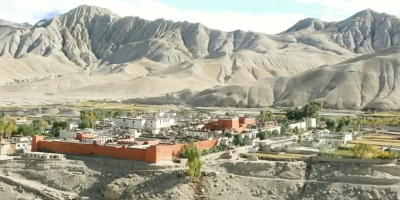
So what is the Upper Mustang Trek, exactly? It is a teahouse trek through the former Kingdom of Lo, a walled Tibetan Buddhist state in the rain shadow of the Annapurna and Dhaulagiri ranges. The region sits north of the Himalayan crest, on the edge of the Tibetan plateau. That location explains everything about the experience. The air is dry. The rivers cut deep. The cliffs are red and gold. And the culture, mostly untouched by tourism, carries the feel of an older world.
The trek starts with a flight from Pokhara to Jomsom, a short hop that lands you inside the Kali Gandaki gorge between the two great mountain ranges. From Jomsom you walk to Kagbeni, the official gateway to the restricted area, then head north through Chele, Geling, and Dhakmar to Lo Manthang. The return follows a different path through Yara, Tanggye, and Chuksang before reaching Jomsom again. The full loop takes 12 to 14 walking days inside a 17 day itinerary from Kathmandu.
Understand the permit system before you book. Upper Mustang is a restricted area, so you cannot simply show up and walk. You need a licensed guide, a minimum of two trekkers, a Restricted Area Permit charged per day, and an Annapurna Conservation Area Permit. These rules keep visitor numbers low, which is part of why the trek still feels so remote. The experience you get today is close to what travelers found in the first years after the region opened.
The key takeaway for most readers is simple: this is a moderate trek in terms of altitude, but a demanding trek in terms of conditions. The highest point is Lo La Pass at 3,950 m. That is far below Everest Base Camp territory. The real challenges are the dry air, the constant wind, the basic teahouses, and the long days of walking through a barren landscape. Prepare for those and you will love the trek.
Every Nepal trek promises great views. Upper Mustang offers something different, and that difference is the reason the price is high.
The first pull is the walled city of Lo Manthang. Imagine a town enclosed by mud brick walls that have stood for centuries, with a royal palace still owned by the former royal family, three major gompas, and narrow lanes that have barely changed. Walking inside it feels like stepping back several hundred years. There is no other trek in Nepal with anything comparable.
Then there is the landscape. The eroded canyons around Dhakmar, the red cliffs along the trail, the wide plateau under a huge sky. Upper Mustang is barren, but it photographs like no other region in the country. The light at sunrise and sunset turns the sandstone reds and oranges that look almost unreal in photos.
The culture is the third reason. The people of Upper Mustang, called Lobas, speak a Tibetan dialect and follow a blend of Buddhism and the older Bon religion. You will see prayer flags and mani walls next to Bon shrines and sacred stones. In May, the Tiji Festival takes over Lo Manthang with masked dances and ritual performances. Timing your trek to that festival adds a cultural layer you cannot get anywhere else in the Himalaya.
Finally, consider the atmosphere. Because you need permits and a guide, visitor numbers stay low. Overnights in villages feel calm. Teahouse owners have time to talk. On some days you might walk for hours without seeing another group. For trekkers who find Everest Base Camp crowded, Upper Mustang is the antidote.
| Detail | Value |
|---|---|
| Duration | 17 days total (12 to 14 days trekking) |
| Max altitude | 3,840 m at Lo Manthang; side trips to 3,950 m |
| Difficulty | Moderate |
| Start and end | Kathmandu |
| Package price | From US$2,235 per person (groups of 2+) |
| Solo traveller price | From US$2,500 |
| Permits required | Restricted Area Permit plus ACAP |
| Solo trekking | Not allowed (minimum 2 trekkers + licensed guide) |
| Best seasons | March to May, September to November |
| Accommodation | Teahouses, basic family run lodges |
| Highest walking point | Lo La Pass, 3,950 m |
Keep this table as your quick reference. The pages below go into detail on every line, from the permits to the packing list.
Most treks in Nepal follow green river valleys and climb through rhododendron forest to snow covered viewpoints. Upper Mustang sits in a rain shadow, so it skips most of that green middle section. The landscape is high altitude desert. Hills of ochre and rust, flat topped mesas, narrow canyons, and fields of wheat and barley around stone villages. The change is striking, and it happens quickly once you pass Kagbeni.
The cultural difference is just as large. Lower Mustang and the rest of the Annapurna region are strongly influenced by Hindu lowland Nepal. Upper Mustang is Tibetan. The houses are whitewashed stone with flat roofs. The daily signs, the shops, the tea, the food, the dress, even the writing on the mani walls, all point north toward Tibet rather than south toward Kathmandu.
Access is the third difference, and it shapes the whole trip. Because the region is restricted, every group needs a permit and a guide. That adds cost and a little paperwork, but it also protects the region. The permit money funds local projects and conservation, and the limits keep the trail quiet. You trade a little convenience for an experience that remains beautifully rare.
The Kingdom of Lo: A Short History
The story of Upper Mustang begins with the Kingdom of Lo, founded in the 14th century. For more than 600 years it ruled itself from Lo Manthang. Its wealth came from a simple trade: salt. Salt from the Tibetan plateau moved south through the Kali Gandaki gorge, and grain moved north in exchange. Lo controlled that corridor, made the trade profitable, and stayed independent while empires rose and fell around it.
Nepal closed the region to outsiders in 1959. The closure came partly from the political upheaval around the Tibetan exile, and partly from a wish to protect a fragile culture. For more than three decades, Upper Mustang stayed off limits. Outside travelers could only imagine what was hidden behind the cliffs.
In 1992 the government reopened it under strict conditions. Travelers needed a special permit, a licensed guide, and a minimum group size. Those rules still stand today. The charges support conservation and local infrastructure, and the limits keep visitor numbers modest.
Upper Mustang was absorbed into Nepal in 2008. The royal family still lives in Lo Manthang and keeps the palace, though it no longer rules. The culture endures. Monks still lead prayers, farmers still irrigate their terraces, and every May the Tiji Festival brings the whole community together. A trek here is a walk through that living history, not a museum display.
For more on the conservation framework that protects the region, see the NTNC Annapurna Conservation Area page, which manages the wider Annapurna region that includes Upper Mustang.
Getting to the trail is part of the adventure, and the flight from Pokhara is one of the most scenic in Nepal.
The standard A One Treks itinerary runs like this. You arrive in Kathmandu on day one. On day two you drive to Pokhara, about 6 to 7 hours along the Prithvi Highway following the Trishuli River. Pokhara sits at 820 m on the edge of Phewa Lake, with the Annapurna range visible from the lakeside on clear days. It is a pleasant rest stop before the mountains.
On day three you fly from Pokhara to Jomsom. The flight takes about 22 minutes and threads through the Kali Gandaki gorge between Dhaulagiri and Annapurna. It is short, weather dependent, and worth the window seat. From Jomsom at 2,715 m, you walk 4 to 5 hours to Kagbeni along the wide stony riverbed.
Weather can delay flights in spring and early monsoon season. Most operators build the itinerary to absorb a day of slack, but it is still worth checking conditions before you travel and staying flexible. The alternative road to Jomsom from Beni exists, but it is long, rough, and rarely used by trekkers heading to Upper Mustang. For most people, the flight is the practical start.
The whole approach takes about two days from Kathmandu. Once your boots hit the trail at Jomsom, the treks proper section of your holiday begins.
The classic advice for Nepal trekking says autumn, from September to November, is the peak season. For the Upper Mustang Trek, that advice deserves a second look. Spring, from March to May, is often the better choice. Here is why.
Upper Mustang sits in a rain shadow. The monsoon barely reaches it, so rainfall stays low even in the summer. Autumn brings clear skies across all of Nepal, and that is excellent for mountain views. But the Upper Mustang Trek does not depend on monsoon clearing for good visibility. The mountains are visible from the trail most of the year. The trek has something else to offer instead: the Tiji Festival.
Tiji is a three day Buddhist festival held in Lo Manthang in May. Masked dancers perform rituals telling the story of a demon threatening the kingdom. The whole community dresses in traditional clothes and gathers in the main courtyard. It is one of the most authentic cultural events in the Himalaya. Timing your Upper Mustang Trek to coincide with Tiji adds a layer of experience that autumn cannot match.
Spring also brings milder daytime temperatures, blooming wildflowers in the lower Kali Gandaki valley, and slightly fewer trekkers than the October peak. The trade off is stronger afternoon winds on the exposed plateaus. Mornings stay calm and clear. For travelers who care more about culture and landscape than about the sharpest mountain panorama, spring is the stronger season here.
Upper Mustang is a high altitude desert, which makes its weather predictable in one sense. Expect cold nights, warm sunny days, and wind. The fine points change across the season, so a month by month look helps with packing and expectations.
| Month | Daytime | Night | Trail and note |
|---|---|---|---|
| March | Mild | Cold, below zero | Start of spring, fewer trekkers, some clouds |
| April | Warm | Cold | Good balance of crowds and weather, wildflowers start |
| May | Warmest of spring | Cool | Tiji Festival, best cultural window |
| June to August | Warm | Mild | Monsoon spills weakly into the region, road issues possible |
| September | Warm | Cool | Autumn starts, skies clear, crowds build |
| October | Warm days | Cold nights | Peak season, clearest skies, busiest teahouses |
| November | Cool | Very cold | Late autumn, thin crowds, cold nights |
Some general guidance helps. From March to November the trek is possible. That is the wide season, made workable by the rain shadow. June to August carry more weather risk because monsoon clouds and rain can reach the region even if the rainfall totals stay low. Plenty of operators avoid those months. December to February is a real winter window with very cold nights, ice, and fewer teahouses open. Most trekkers skip it.
Whatever month you choose, expect wind. The afternoons on the open plateaus can blow strongly. Plan your walking days to cover the exposed passes in the morning when the air is calm.
The route has a clear shape. You walk north from Kagbeni into the restricted area, spend two days at Lo Manthang, then return south on a different path.
The entry trail passes through Tangbe, Chele, Samar, Geling, and Dhakmar. Each village brings a new view of the desert: apple farms and barley fields, red walled canyons, flat plateaus, and the striking red and white rock formations around Dhakmar. That section takes about five walking days and sets the pattern of the trip.
Lo Manthang is the turnaround point. You stay two nights to explore the walled city and the local side trips, including the ancient cave dwellings at Chhoser.
The return heads over Lo La Pass at 3,950 m, the high point of the trek, then descends through Yara, Tanggye, and Chuksang back toward Jomsom. This return leg is different from the way in. It takes you past Luri Gompa, a 12th century cave monastery, and gives you a fresh set of landscapes on the way home.
Loop routes like this are worth their weight on a trek. The scenery changes, the trail stays interesting, and you never feel like you are simply walking back the way you came.
The 17 day itinerary below follows the A One Treks standard package. Walking days total 12 to 14, with travel days at both ends. Distances vary between about 12 and 18 km per walking day, so expect five to seven hours on the trail most days. Treat all elevations and times as approximate, and verify details with your operator before departure.
Day 1: Arrival in Kathmandu. You land at Tribhuvan International Airport and are met by the transfer team. The drive to your hotel in Thamel takes 30 to 45 minutes depending on traffic. Use the afternoon to explore Kathmandu Durbar Square or Swayambhunath, the Monkey Temple. Your guide meets you in the evening for a trek briefing covering the itinerary, gear check, and permits. Overnight in Kathmandu at roughly 1,350 m.
Day 2: Drive to Pokhara. After an early breakfast you take the scenic drive to Pokhara, 6 to 7 hours along the Prithvi Highway. The route follows the Trishuli River through green hills and small towns. Pokhara sits at 820 m on the shore of Phewa Lake. The evening is free to walk the lakeside or rest. Overnight in Pokhara at 820 m.
Day 3: Fly to Jomsom, trek to Kagbeni. The 22 minute morning flight to Jomsom threads the Kali Gandaki gorge with Dhaulagiri on the left and Annapurna on the right. From Jomsom at 2,715 m you walk 4 to 5 hours along the stony riverbed to Kagbeni, a medieval village with narrow lanes and a red monastery. Kagbeni is the official gateway to the restricted area. Overnight at 2,807 m.
Day 4: Kagbeni to Chele. This is the day you enter the restricted area. A police checkpoint at Kagbeni verifies your permit before you proceed. The trail climbs out of the Kali Gandaki valley into the dry landscape that defines the rest of the trek. Pass through Tangbe with its apple farms and barley fields, then cross to Chele at 3,080 m. Expect 5 to 6 hours of walking.
Day 5: Chele to Geling. The trail climbs over a pass and drops into a narrow canyon. Pass through Samar, a small village with a gompa and a few teahouses, then continue through a gorge with towering red walls. Cross a stream, climb past a chorten, and descend to Geling at 3,510 m. The air is dry and the sunlight is strong, so carry enough water. Expect 5 to 6 hours.
Day 6: Geling to Dhakmar. Climb to a ridge and descend to Dhakmar at 3,820 m, famous for its red and white rock formations. This is close to the heart of the dramatic scenery on the trek. Dhakmar is also home to Lo Gekar Monastery, said to have been founded by Guru Rinpoche in the 8th century. Visit it if time allows. Expect 5 to 6 hours.
Day 7: Dhakmar to Lo Manthang. The final approach crosses a high pass near 3,850 m before descending to the walled city. The first view of Lo Manthang is a defining moment of the trek. The city sits on a flat plateau inside centuries old mud brick walls, with the royal palace rising above flat roofed houses. Enter through the gate to the sound of prayer wheels. Overnight at 3,780 m after 5 to 6 hours of walking.
Days 8 to 9: Lo Manthang exploration. Two full days let you explore without rushing. Visit the royal palace, the three major gompas of Thubchen, Jampa, and Chode, and the maze of lanes inside the walls. Thubchen Gompas large hall holds 15th century murals. Jampa Gompa guards some of the best preserved paintings in Upper Mustang. On one day, take the 3 to 4 hour round trip to the Chhoser Caves, ancient dwellings carved into the cliffs north of the city, and Namgyal Gompa for views over the plateau. Overnight at 3,780 m.
Day 10: Lo Manthang to Yara. The return follows a different route. Climb to Lo La Pass at 3,950 m, the highest point of the trek, with views across the plateau and, on clear days, toward the Tibetan border. Descend to Yara at 3,530 m, a small village that is the base for visiting Luri Gompa the next day. Expect 5 to 6 hours.
Day 11: Excursion to Luri Gompa. Luri is a cave monastery carved into a sandstone cliff at 3,850 m. Inside you find Buddhist murals, statues, and a stupa that have survived for centuries. The climb to the entrance is steep but short, and the view from the cave mouth over the arid valley is exceptional. Return to Yara for the night. Allow 3 to 4 hours round trip.
Day 12: Yara to Tanggye. The trail descends through barren country to Tanggye at 3,240 m. Walking is easier today with less elevation gain. Tanggye has simple teahouses and a quiet atmosphere. Photograph the cliffs in the evening light. Expect 5 to 6 hours.
Day 13: Tanggye to Chuksang. Follow the Kali Gandaki back toward Jomsom. The landscape shifts from high desert toward the greener lower valleys. Chuksang at 3,050 m sits at the meeting of two rivers with a few teahouses. The gorge views are impressive. Expect 5 to 6 hours.
Day 14: Chuksang to Jomsom. The final walking day follows the riverbed back to Jomsom through Bhuskey and Ekle Bhatti. The terrain returns to the dry, stony ground of day three. Jomsom at 2,715 m is the district headquarters of Mustang, with shops, restaurants, and a small airport. Expect 4 to 5 hours.
Days 15 to 17: Fly to Pokhara, drive to Kathmandu, depart. The morning flight to Pokhara takes 20 to 25 minutes. From Pokhara, drive back to Kathmandu in 6 to 7 hours or fly in about 25 minutes. Day 17 is your departure from Kathmandu.
Altitude shapes the pacing on this trek, so it helps to see the numbers together.
| Point | Elevation | Note |
|---|---|---|
| Kathmandu | 1,350 m | Start, day 1 |
| Pokhara | 820 m | Rest stop, day 2 |
| Jomsom | 2,715 m | Trail start, day 3 |
| Kagbeni | 2,807 m | Gateway to the restricted area |
| Chele | 3,080 m | Day 4 overnight |
| Geling | 3,510 m | Day 5 overnight |
| Dhakmar | 3,820 m | Day 6 overnight, red cliffs |
| Lo Manthang | 3,780 m | Base for two nights |
| Lo La Pass | 3,950 m | Highest point of the trek |
| Luri Gompa | 3,850 m | Cave monastery visit |
| Yara | 3,530 m | Day 10 and 11 overnight |
| Tanggye | 3,240 m | Day 12 overnight |
| Chuksang | 3,050 m | Day 13 overnight |
The pattern is steady. You climb gradually from Jomsom to Lo Manthang over about five walking days, with overnight gains of 200 to 450 m at a time. The biggest single day is the push from Dhakmar at 3,820 m toward the 3,950 m pass on the return, which is still a modest gain compared to many Nepal routes. The moderate altitude is one reason this trek suits trekkers who want the Himalaya without extreme elevation.
The Upper Mustang Trek is rated moderate, and that rating holds true for the big picture. Daily walking runs 5 to 7 hours with roughly 12 to 18 km per day. The highest point is Lo La Pass at 3,950 m, lower than many popular Nepal routes. There is no glacier crossing and no technical climbing. If you can walk hilly terrain all day, you can handle the physical side.
The real difficulty is environmental. The dry, dusty air dehydrates you faster than you expect. The wind on the exposed plateaus can be relentless in the afternoon. Teahouses are basic, with thin mattresses, limited hot water, and no central heating. The food is simple and repeats daily. In short physical terms the trek is moderate. In terms of comfort and mental endurance, it asks more than the rating suggests.
The ground also matters. Much of the trail is loose rock and sandy riverbed, which is tiring because your feet and ankles work all day. Trekking poles help a great deal on the descents and on the stony stretches. The dust gets into everything, which is why dry bags and a lens cloth belong on your packing list.
Set your expectations correctly and the difficulty is manageable. Walk at a steady pace, drink often, and treat each day as its own goal. Trekkers in fair shape who prepare with regular cardio handle this route comfortably.
You do not need to be an athlete, but you do need a solid base. Being honest about your fitness before you book makes the difference between enjoying the plateau and grinding through it.
A practical target is honestly simple: be able to walk 5 to 6 hours on hilly terrain with a loaded daypack of 7 to 10 kg without collapsing. If you can manage that, the Upper Mustang Trek is within reach. Warm yourself into that level over 6 to 8 weeks before departure. Hiking, jogging, cycling, and stair climbing all build the legs and lungs you need.
Train with your gear. Walk with a loaded pack on uneven ground so your body gets used to the balance and weight. Break in your trekking boots completely before you fly. Reinforce your routine with a few long weekend walks that approach the daily hours you will face on the trail.
Altitude adds its own demand, but remember the numbers. The trek tops out at 3,950 m, which is modest for Nepal. Most healthy trekkers adapt with a patient pace. The fitter you are before you start, the more energy you keep for the evenings in Lo Manthang and the caves at Chhoser.
The permit system is the part of the planning that catches people off guard. Here is the complete picture, with the required items separated from the recommended ones.
Required documents.
The Restricted Area Permit, or RAP, costs US$50 per person per day. A standard 10 days inside the restricted zone comes to US$500 per person. This permit is issued only through a registered trekking agency in Kathmandu or Pokhara. You cannot apply for it yourself, which is one reason a guided package makes sense. The restricted zone starts and ends at Kagbeni. Only the days you spend north of Kagbeni count toward the permit. Travel days, the flights, and the walk from Jomsom to Kagbeni do not.
The Annapurna Conservation Area Permit, or ACAP, costs NPR 3,000 for foreign nationals, roughly US$23. It is the same permit required for all Annapurna region treks, and your agency arranges it as part of the package.
A TIMS card is not required when you fly to Jomsom, because you never pass through the standard trekking registration checkpoints. Verify this with your operator before traveling, since the rules can change.
Group and guide rules. Solo trekking is not allowed in Upper Mustang. You need a minimum of two trekkers and a licensed guide. Nepal's official trekking route information from the Department of Immigration confirms Upper Mustang is a restricted area, and the Nepal Tourism Board publishes the current restricted area rules. If you travel alone, agencies can pair you with another trekker on the same dates.
Recommended documents. Carry your passport, visa details, and two spare passport photos for permits. Bring a copy of your travel insurance policy, including the emergency contact number. Keep a scan of everything on your phone and a paper copy in your main bag. Permit fees and rules change, so confirm the exact figures with your operator a week before departure.
Costs are where Upper Mustang differs most from the rest of Nepal, so the numbers deserve a full checklist.
Package price.
| Item | Cost |
|---|---|
| Package price, groups of 2 or more | US$2,235 per person |
| Solo traveller price | From US$2,500 |
| List price | US$2,405 |
What the package includes. Airport pickup and drop off by private vehicle, tourist standard hotels in Kathmandu and Pokhara with breakfast, Kathmandu sightseeing with a guide, tourist bus transport between the two cities, the Pokhara to Jomsom return flights, both the ACAP and Restricted Area Permits, a licensed English speaking guide with insurance, porter support at one porter per two trekkers, three meals a day on the trek plus tea and coffee, teahouse accommodation, a first aid kit, and all government taxes.
What it does not include. International airfare, the Nepal visa, travel insurance, meals in Kathmandu and Pokhara, personal expenses on the trail, and tips for your guide and porters.
Permit costs.
| Permit | Cost |
|---|---|
| Restricted Area Permit (RAP) | US$50 per person per day |
| ACAP | NPR 3,000, about US$23 |
| TIMS | Not required when flying to Jomsom |
Daily costs on the trail. If you are paying for extras yourself, the usual prices look like this. Meals such as dal bhat, noodles, and fried rice run NPR 500 to 900, about US$4 to 7. Hot drinks cost NPR 150 to 300. A hot shower runs NPR 200 to 500. Device charging costs NPR 200 to 500. A plain teahouse room costs NPR 300 to 600. All figures are estimates and rise with altitude, so confirm current prices on the trail.
Emergency reserve. Carry a buffer for the unexpected: extra cash for more meals, a delayed flight, or a rest day. US$200 to 300 in cash, spread between two bags, is a sensible reserve for this trek.
Upper Mustang Trek Costs Compared With Other Annapurna Treks
The price gap between Upper Mustang and other Annapurna routes is large, and the reason is the permit. Here is how the package prices line up.
| Trek | Duration | Package price |
|---|---|---|
| Ghorepani Poon Hill | 8 days | From US$480 |
| Mardi Himal | 11 days | From US$555 |
| Annapurna Base Camp | 13 days | From US$735 |
| Annapurna Circuit | 14 days | From US$1,085 |
| Upper Mustang | 17 days | From US$2,235 |
Upper Mustang costs roughly double the Annapurna Circuit. The Restricted Area Permit is the single biggest driver, adding about US$500 to the total. In return you get a far quieter trail, a rare cultural setting, and a landscape found nowhere else in the country.
If the price does not fit your budget, the rest of the Annapurna region still delivers strong experiences for far less. The Ghorepani Poon Hill Trek reaches a 3,210 m viewpoint ridge in 8 days from US$480. The Mardi Himal Trek climbs to a base camp beneath the south face of Machhapuchhre in 11 days from US$555. For the full sanctuary bowl experience, read the Annapurna Base Camp Trek guide, and to compare every major route side by side, see our Top 7 Annapurna Treks roundup.
Teahouses on the Upper Mustang Trek are simpler than the lodges on the Everest Base Camp or Annapurna Base Camp routes. Almost all are family run guesthouses. The setting is part of the charm: shared dining rooms warmed by a wood or gas stove, and hosts who invite you into daily life.
Rooms. Twin beds with thin mattresses and blankets provided. A sleeping bag liner adds warmth and hygiene. In the colder months a lightweight down bag rated to about minus 10 degrees Celsius makes the nights comfortable.
Bathrooms. Shared toilets, squat or western style depending on the lodge. Hot showers are available at some stops for a fee of NPR 200 to 500. In the higher villages, bucket showers take the place of running water. Plan for a simple standard of comfort and the trek feels fine.
Charging and power. Most teahouses charge NPR 200 to 500 to charge your devices. Bring a power bank of 10,000 mAh or more as backup. Electricity is available but limited, so charge when you can.
Wi Fi. Available in some villages but unreliable. Do not build your plans around it. Email family before you leave the bigger towns and treat the on trail connection as a bonus.
Food range. The menu runs to dal bhat, noodle soup, fried rice, fried noodles, chapati, and eggs. Prices range from NPR 500 to 900 per meal. Hot drinks cost NPR 150 to 300.
Dal bhat is the staple meal and the best value on the trail. A plate of rice, lentils, vegetables, and pickle costs NPR 500 to 800, and you can usually ask for a second serving at no extra cost. Fried rice and noodle soup appear at every stop for NPR 400 to 700. Egg dishes, chapati, and hot drinks round out the menu.
Vegetarian options are easy to find, because most teahouse kitchens center on dal bhat and eggs anyway. If you have specific dietary needs, tell your operator before departure and remind your guide on the first day. They will help you order at each stop.
Water prices climb with altitude. At lower stops a litre of bottled water costs NPR 50 to 100. In the higher villages it reaches NPR 200 to 300. To save money and reduce plastic, carry water purification tablets or a SteriPen. Do not drink untreated water from the streams. Livestock graze along many of the water sources on this trek, so the risk is real.
Carry at least two litres of water at all times. The dry air and the altitude increase dehydration faster than you feel it. Refill points between villages are not guaranteed, so treat a full bottle as your minimum, not a goal.
The honest starting point is simple: in Upper Mustang you cannot go solo. The restricted area rules require a licensed guide and a minimum of two trekkers. So the real question is how you choose your guide and porter setup, not whether to have one.
Cost. A guided package bundles permits, transport, flights, accommodation, meals, and the guide into one price. Arranging each piece independently adds management time and usually costs more once the permit is included, because the RAP can only be issued through an agency.
Navigation. The trail is clear in the main valley, but the network of side paths, the passes, and the return route reward local knowledge. A guide removes the daily navigation burden and keeps the group on schedule.
Safety support. Guides carry first aid kits, manage altitude pacing, and stay in contact with the office. In a remote region where the nearest major hospital is in Pokhara, that layer of support matters. A licensed guide also has insurance, which protects you if something goes wrong.
Cultural access. The most valuable part of a guide is the door they open. Guides know teahouse owners, monastery gatekeepers, and which side trips are worth the extra hours. On a cultural trek like Upper Mustang, that access turns a walk into an experience.
Flexibility. Private trips give you control over the pace and the side trips. Group trips lower the price. Both run through the same operator, so you can match the style to your budget and preferences.
Logistics. The permit paperwork, the weather dependent flights, the teahouse bookings in a thin season, all of it sits on the operator. That is the quiet value of the package price, and it is why most travelers choose it.
The packing list for this trek differs from a standard Nepal route because of the dry, windy conditions and the basic teahouses. Here is what earns its place in your bag.
Clothing.
Footwear and walking.
Sleeping gear.
Documents and money.
Hygiene and first aid.
Electronics.
Food and water.
Extras that earn their weight.
The goal is a full kit inside a manageable load. Most trekkers carry a main pack of 15 to 18 kg plus a daypack, with the porter carrying the heavy bag. If you skip the porter, keep the total under what you can carry comfortably for hours.
The Upper Mustang Trek tops out at 3,950 m, which is gentle by Nepal standards. Altitude sickness can still touch anyone above 2,500 m, so take it seriously.
The symptoms to watch are headache, nausea, loss of appetite, and trouble sleeping. Mild symptoms are common and often settle with rest, fluids, and a slower pace. The rule of thumb is to climb high during the day and sleep low, or at least avoid sleeping higher than you have to. The itineraries built for this trek rise in steps of roughly 200 to 450 m per night, which is a sound acclimatization pattern.
Hydration and pacing are your best tools. Drink often, even when you are not thirsty. The dry air pulls moisture from your body quickly. Keep the walking pace steady and slow enough to hold a conversation. Eat regularly even if your appetite fades, because you burn more energy than you feel.
The serious warning signs are a headache that does not clear, vomiting, confusion, and losing coordination. If those appear, the treatment is to descend immediately. Your guide monitors the group and will make that call. Trust it and act on it. No view and no itinerary is worth pushing through altitude symptoms.
If you have a history of altitude sickness or a health condition, talk to your doctor before booking. On trek, if anything feels wrong, tell your guide early. Early reporting makes every problem easier to manage.
Health, Safety and Trail Hazards
Altitude is not the only hazard on this trek, and for many trekkers it is not even the main one. The environment brings its own set of challenges.
Wind and dehydration. The afternoon wind on the exposed plateaus is the most underestimated hazard. It dehydrates you faster than you expect and can produce headaches and fatigue that resemble altitude symptoms. Carry two litres of water, drink regularly, and cover exposed skin when the wind is up.
Sun. At altitude the sun is fierce. Sunglasses, sunscreen, and a hat are not optional. The ultraviolet load at 3,500 m and above is much stronger than the temperature suggests.
Trail conditions. Long sections of loose rock and sandy riverbed make the ground tiring. Trekking poles ease the load on your ankles and knees. Watch your footing on the descents, where most slips happen.
Teahouse comfort. Thin mattresses, cold rooms, and limited heating are normal. A good sleeping bag liner and a warm layer for the nights solve most of the discomfort. Expect a low conventional standard of luxury and being in the right frame of mind.
Weather changes. Clear mornings can turn windy and cloudy by midday. Carry a shell layer even on fine days and start the passes early. If a storm moves in, the guide will adjust the plan.
The trail itself is not technical. There are no exposed scrambles and no glacier crossings. Most days are straightforward walking on contained paths. Treat the environment with respect, carry the basics, and the risks stay small.
Upper Mustang is remote, and the connectivity reflects that. Set your expectations before you leave the valley.
Mobile phone. Signal exists in the main villages, but coverage is patchy and tied to whether you can reach the network operators in the region. In practice, expect usable signal at Jomsom and Kagbeni, and limited or no signal in the deeper restricted area. Check with your home carrier about roaming, or pick up a local SIM in Kathmandu for the trek.
Wi Fi. Some teahouses offer Wi Fi for a fee, often NPR 200 to 500. It is slow and unreliable. Treat it as a bonus for checking messages, not as a connection you can depend on.
Electricity. Solar panels power many villages, so power comes and goes with the weather and the time of day. Charging your phone or camera at a teahouse costs NPR 200 to 500. Bring a power bank and charge your devices whenever the opportunity appears, even if they are only half empty.
Emergency communication. Your guide stays in contact with the operations team by satellite phone, and the office monitors the trek from Kathmandu. For urgent family contact, give them the operator's office number. Everyone else can wait until you return to a bigger town.
The people of Upper Mustang call themselves Lobas, and their culture reaches back to the Tibetan plateau. They speak a Tibetan dialect, practice Buddhism alongside the older Bon religion, and live in whitewashed stone houses with flat roofs. For the older generation, traditional dress is still everyday wear: men in long sleeved robes called chubas, women in dark aprons with turquoise and coral jewellery.
The spiritual life is layered. Mahayana Buddhism dominates, and you will see it everywhere: prayer flags over passes, mani walls along the paths, gompas on the hilltops. Alongside it runs Bon, the pre Buddhist tradition of nature spirits and ritual. The two have coexisted for centuries. On the trail you pass Buddhist shrines and Bon sacred stones in the same afternoon.
Lo Manthang is the heart of this world. The royal palace still belongs to the former royal family. The three main gompas, Thubchen, Jampa, and Chode, hold paintings and statues of great artistic value. The lanes between the flat roofed houses move to a slow rhythm of farming, trade, and prayer.
Hospitality defines the experience. Teahouse hosts serve butter tea and chang, a barley beer, and share stories of their villages. Festivals bring the community together, above all Tiji in May, with its masked dances telling the story of good overcoming evil. To walk this region is to enter that world, and the Loba people are generous about sharing it.
Upper Mustang is a living community, not a theme park. A little courtesy keeps it that way, for the trekkers after you and for the people who live there.
Ask before photographing. People are the most photographed subject on any trek, and they deserve a smile and a question first. Learn the local greeting, offer a small gesture of respect, and accept a no without pushing. Inside gompas, ask the caretaker about rules. Many temples restrict photography or charge a small fee.
Dress and behave modestly. Villages and monasteries are sacred spaces in daily life. Avoid public displays of affection, keep your voice low near religious sites, and step around mani walls and chortens clockwise if you join a circuit.
Buy locally. Purchase tea, snacks, and souvenirs in the villages. Teahouse income is the backbone of the local economy. Your spending on the trail, modest as it feels, keeps the culture solvent.
Pack out your waste. Plastic is a real problem in a desert with limited waste collection. Carry out anything you pack in, including batteries. Use a refillable bottle and purification tablets instead of buying endless plastic bottles.
Respect the pace of life. Trail mornings start early, and villages wind down after dark. Keep noise down at night and order your meals promptly so the kitchen can rest. Small courtesies create big goodwill.
Upper Mustang is one of the most photogenic routes in Nepal, and the images look like nothing else in the Himalaya. The desert palette, the red cliffs, the whitewashed villages, and the Tibetan architecture combine into something rare.
The best subjects. The eroded red and white sandstone near Dhakmar and along the Kali Gandaki is the standout, especially in morning and late afternoon light. Lo Manthang photographs best from the trail as you approach, where the walls, palace, and plateau sit together in one frame. Inside the city, the narrow lanes and flat roofs make strong compositions. Cave monasteries such as Luri Gompa and the Chhoser Caves reward patience and a steady hand for their dim interior murals.
Lenses and gear. A wide angle lens in the 16 to 35 mm range captures the canyons and the plateau. A telephoto in the 70 to 200 mm range isolates distant peaks and details. Bring extra batteries, because the cold and the wind drain them fast, and pack a lens cloth because the dust is constant. A small tripod or a stable ledge helps for the dark interiors of the gompas.
Light and timing. Shoot in the first two hours after sunrise and the hour before sunset for the warm tones. The midday desert light flattens colors quickly. On the passes, be ready early, because the wind often builds by late morning.
People. Ask permission first, as noted in the etiquette section. A simple request, a smile, and a moment of patience usually produce a warmer portrait than a quick snap ever could.
Travel insurance is the one item you should never skip for this trek, because the region is isolated and remote. The nearest major hospital is in Pokhara, reachable by flight plus a drive from the trail.
What your policy needs. Choose insurance that covers trekking at altitude up to at least 4,500 m, and ideally one that includes helicopter evacuation. Upper Mustang fits comfortably inside that range. Confirm the elevation coverage in writing before you buy. Without it, an evacuation bill can run into tens of thousands of dollars.
Emergency response on the trail. Your guide carries a first aid kit and stays in contact with the operator's Kathmandu office by satellite phone. Helicopter evacuation is possible from most points on the route, though weather can delay extraction. If evacuation is needed, the office coordinates it and your insurance covers the cost.
Paperwork. Carry the policy document and the emergency contact number, both as a scan on your phone and a paper copy in your bag. Tell your guide about any medical conditions relevant on the trail, such as medication you carry or a known altitude sensitivity. That simple conversation speeds up every decision if something happens.
Preparation beats response. Most problems on this trek are preventable. Hydration, pacing, proper footwear, and a good sleep system prevent the top causes of trip-ending days. Sort those basics and you are unlikely to need the emergency plan at all.
A handful of practical habits make the difference between a smooth trek and a stressful one.
Verify the details. Permit fees, flight schedules, teahouse prices, and trail conditions change. Confirm the current figures with your operator one week before departure, and again on arrival in Kathmandu.
Carry cash in NPR. There are no ATMs on the Upper Mustang Trek after Kagbeni. Estimate your extras, daily drinks, showers and charging, and carry that amount in small notes.
Break in your boots at home. Two weeks of daily wear before the trek prevents the blisters that ruin otherwise fine days.
Pack for four seasons. Days can be warm, nights below freezing, and wind constant. Layers, not a single heavy jacket, are the answer.
Go slow on the big days. The push toward Lo La Pass rewards a patient pace. Let faster trekkers pull ahead and arrive fresh.
Take the rough with the smooth. The teahouses are basic and the menu repeats. Treating that as part of the experience, rather than a problem, changes your whole trip.
Book at the right time. The Tiji Festival in May fills teahouses early. Peak autumn also fills up. Book your Upper Mustang Trek several months ahead if you want festival dates or peak season.
The main itinerary is complete on its own, but a few additions deepen the experience.
Chhoser Caves. A 3 to 4 hour round trip from Lo Manthang leads to ancient cave dwellings carved into the sandstone cliffs north of the city. These chambers served as homes, meditation spaces, and burial sites, some dated back over 2,000 years. The views from the cave entrances over the plateau are exceptional.
Tiji Festival. If your trek lands in May, add an extra day in Lo Manthang for the three day Tiji Festival. Masked dances, ritual performances, and the whole community in traditional dress make it one of the most authentic cultural events in the Himalaya. Because it draws both visitors and pilgrims, match your dates early.
Muktinath walk. With spare days after the trek, the walk from Kagbeni to Muktinath takes 3 to 4 hours through the Kali Gandaki valley with Annapurna and Dhaulagiri on the horizon. Muktinath is sacred to both Hindus and Buddhists, known for its 108 water spouts and an eternal flame. It is a calm, meaningful way to close the trip.
Combined routes. Some travelers link Upper Mustang with the wider Annapurna region treks into a longer holiday. The region is full of strong routes, and your operator can build a custom plan around your dates and fitness.
How many days does the Upper Mustang Trek take?
The full trip takes 17 days from Kathmandu, including travel days at both ends. The walking portion runs 12 to 14 days depending on the itinerary. The restricted area section from Kagbeni to Lo Manthang and back takes 8 to 10 walking days. If you have extra time, add days for the Tiji Festival in May or the Muktinath side trip.
How much does the Upper Mustang Trek cost in 2026?
A One Treks packages start at US$2,235 per person for groups of two or more. The Restricted Area Permit adds US$500 per person for 10 days inside the restricted zone, plus US$50 for each additional day. The ACAP costs roughly US$23. Solo traveller pricing starts at US$2,500. To translate the headline price into your real budget, add international airfare, Nepal visa, travel insurance, and meals in the cities, plus a cash buffer for the trail.
Can you trek Upper Mustang solo?
No. Upper Mustang is a restricted area, and solo trekking is not allowed. You need a minimum of two trekkers and a licensed guide. If you travel alone, a registered agency can pair you with another trekker on the same dates. That is a reason to book through an operator rather than assembling the trip yourself.
Is the Upper Mustang Trek very difficult?
The rating is moderate. The maximum altitude is 3,950 m at Lo La Pass, well below the peaks of Everest Base Camp territory, and there is no technical climbing. The difficulty sits in the wind, the dry air, the long walking days, and the basic teahouses. Fit trekkers with multi day hiking experience find it comfortable. The mental endurance matters as much as the physical effort.
Which month is best for the Upper Mustang Trek?
May is best if you want the Tiji Festival in Lo Manthang. October and November deliver the clearest mountain visibility. March and April bring milder temperatures and fewer trekkers. The rain shadow keeps the trek possible from March to November, so there is no single right month. Choose based on whether you want festival culture or the sharpest views.
Do you need a sleeping bag for the Upper Mustang Trek?
Teahouses provide blankets, so a full sleeping bag is not strictly required. A sleeping bag liner adds warmth and hygiene without the bulk. In spring and autumn, nights in the higher villages drop below freezing. A lightweight down bag rated to about minus 10 degrees Celsius makes those nights comfortable and is worth the space.
Is the Upper Mustang Trek worth the permit cost?
For the experience it delivers, most trekkers say yes. No other Nepal route combines a walled medieval city, Tibetan Buddhist culture, desert plateaus, and ancient cave monasteries in one walk. The permit keeps the crowds low, the trail quiet, and the culture intact. If you value cultural depth over the green valley scenery of the standard routes, the cost is justified.
The Upper Mustang Trek stands apart from every other route in Nepal. You get a closed kingdom with living Tibetan Buddhist culture, desert landscapes, cliff villages, and the walled city of Lo Manthang. The trail follows an ancient salt route through some of the most remote and restricted country in the Himalaya. The red cliffs of Dhakmar, the murals of Luri Gompa, and the quiet afternoons in Lo Manthang stay with you long after you fly home.
The practical picture is clear. Plan 17 days. Budget from US$2,235 for a group package. Expect the Restricted Area Permit to add US$500. Go in spring for the Tiji Festival or autumn for the clearest views. Train your legs and your patience, pack for wind and cold, and let a licensed guide handle the permits and the pace.
Pick your season, get your fitness moving, and confirm your dates with an operator early. When you are ready to step into the Forbidden Kingdom, contact Adventure A One Treks to plan your 2026 to 27 Upper Mustang Trek, or check the fixed departure dates to join a group and lower the per person price.
For the full set of routes across the region, explore every Annapurna region trek we offer.