
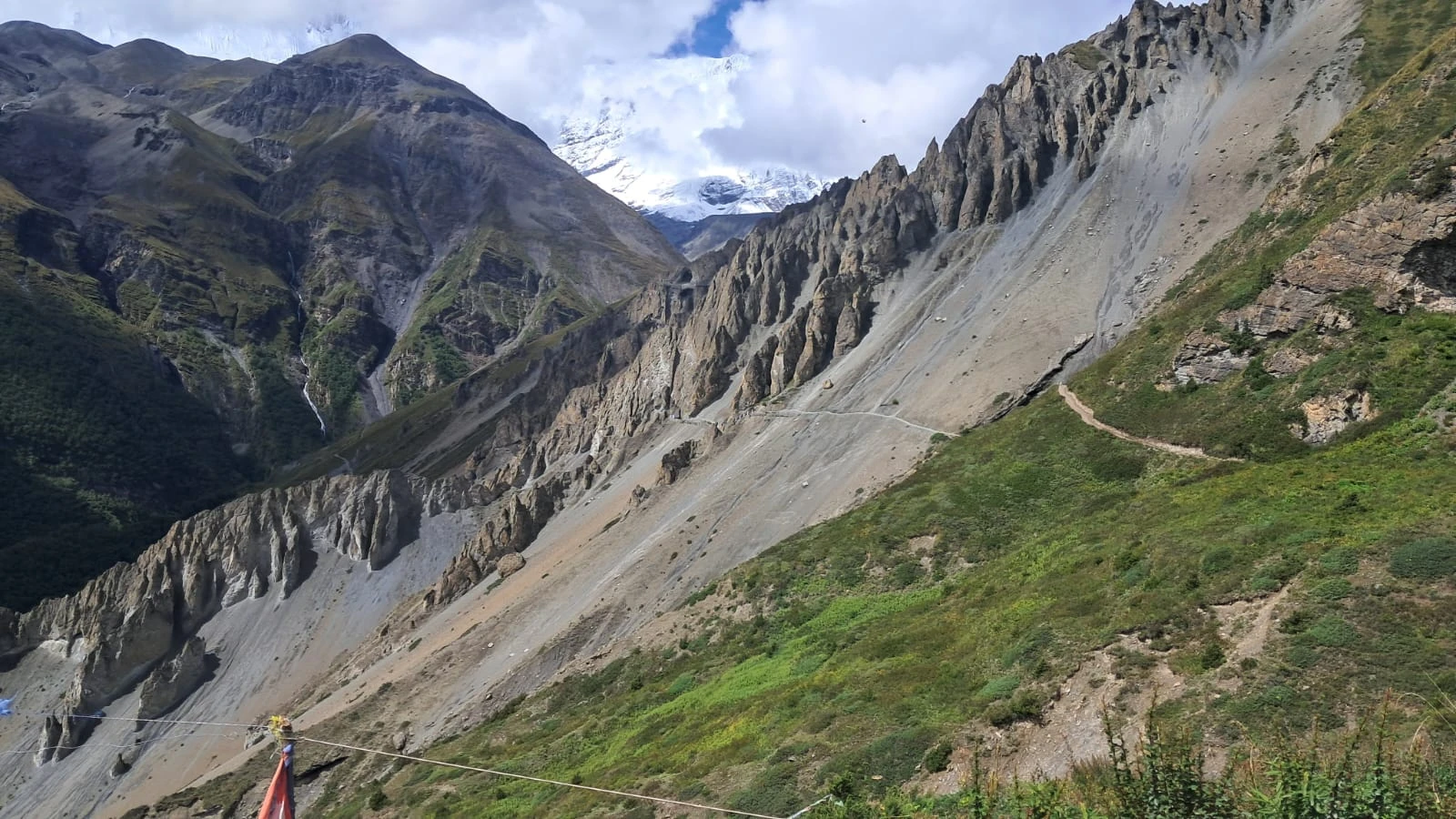
Choosing between the Annapurna Base Camp Trek and the Annapurna Circuit Trek can be difficult because both take you through some of the most diverse landscapes in Nepal’s Annapurna region. However, the two routes offer quite different experiences. ABC focuses on reaching the heart of the Annapurna mountains, while the Circuit takes you on a longer journey around the Annapurna massif. The right choice depends on your available time, preferred route, altitude, and the type of trekking experience you are looking for.
Annapurna Base Camp Trek (ABC)
The Annapurna Base Camp Trek is one of the popular trekking routes in Nepal, known for its mountain scenery, diverse landscapes, and traditional villages. The trek usually begins from the lower foothills of the Annapurna region and passes through villages, forests, terraced fields, and mountain valleys before reaching Annapurna Base Camp at 4,130 meters (13,550 feet).
The route commonly passes through places such as Ghandruk, Chhomrong, Bamboo, Deurali, and Machhapuchhre Base Camp before reaching Annapurna Base Camp. Along the way, trekkers experience changing landscapes and views of peaks including Annapurna I, Annapurna South, Machhapuchhre, Hiunchuli, and Gangapurna.
Annapurna Circuit Trek (ACT)
The Annapurna Circuit Trek is known for its diverse landscapes, mountain views, and rich cultural experiences. The trek usually begins after a scenic drive from Kathmandu to the trailhead near Bhulbhule. From there, the route follows the Marsyangdi River Valley through villages such as Jagat, Dharapani, Chame, and Pisang.
As the trek continues, you reach Manang, where an acclimatization day is included to allow your body to adjust to the increasing altitude. The trail then climbs toward Yak Kharka and Thorong Phedi. From Thorong Phedi, you cross Thorong La Pass at 5,416 meters (17,769 feet), the highest point of the trek, before descending toward Muktinath.
Annapurna Base Camp Trek Highlights
Annapurna Circuit Trek Highlights
The Annapurna Base Camp and Annapurna Circuit treks are both popular routes in the Annapurna region, but they offer quite different experiences. The ABC Trek takes you into the Annapurna Sanctuary, while the Annapurna Circuit follows a longer route around the Annapurna massif and crosses the high Thorong La Pass at 5,416 meters .
The biggest difference is the length, altitude, and landscape. ABC is usually shorter and reaches 4,130 meters, making it a practical choice if you have limited time. The Circuit takes longer and involves a higher pass, but you also get to see a much wider range of terrain, from green valleys and forests to the dry landscapes around Manang and Mustang.
| Feature | Annapurna Base Camp Trek | Annapurna Circuit Trek | Description |
| Typical duration | 7–12 days | 14–20 days | ABC is shorter, while the Circuit takes more time to complete. |
| Highest point | 4,130 m – Annapurna Base Camp | 5,416 m – Thorong La Pass | The Circuit reaches a higher elevation than ABC. |
| Main attraction | Annapurna Sanctuary | Thorong La Pass | ABC focuses on the mountain sanctuary, while the Circuit includes a high-pass crossing. |
| Scenery | Forests, terraced hills, villages, and mountain views | River valleys, forests, alpine terrain, and dry Himalayan landscapes | The Circuit passes through a wider range of landscapes. |
| Culture | Gurung and Magar communities | Hindu and Tibetan-influenced communities | Both routes offer opportunities to experience local mountain cultures. |
| Overall demand | Moderate | More demanding | The Circuit involves more walking days and higher altitude. |
| Suitable for | Trekkers with limited time and beginners with good preparation | Trekkers looking for a longer and more varied route | Your available time, fitness, and preferred trekking experience can help determine which route s |
If you want a shorter trek with close views of the Annapurna peaks, ABC may suit your plans better. If you have more time and want to experience different landscapes, cultures, and a high mountain pass , the Annapurna Circuit offers a very different type of trek.
The Annapurna Base Camp Trek is enjoyable and moderately challenging, but choosing the right season can make the journey more comfortable and improve trail conditions and mountain views. Nepal has two main trekking seasons—spring and autumn—along with the monsoon and winter seasons, which can bring more challenging conditions.
Spring
Spring, from March to May, is one of the most popular seasons for the Annapurna Base Camp Trek. The weather is generally stable, with mild daytime temperatures and clear mountain views on many days.
The trails become colorful with blooming rhododendrons, particularly in the lower and mid-altitude areas. Mornings are often clear, providing good views of the Annapurna range, Machhapuchhre, and surrounding peaks. Temperatures can still drop significantly at night, especially as you approach higher elevations.
Autumn
Autumn, from September to November, is another favorable season for the Annapurna Base Camp Trek. After the monsoon rains, the skies gradually become clearer, and the trails are generally in better condition.
October and November are particularly popular because of the stable weather, mild temperatures, and good mountain visibility. September can still experience some rainfall, especially during the early part of the month, but conditions usually improve as the month progresses.
The clear skies and comfortable daytime temperatures make autumn suitable for trekking, photography, and enjoying views
The best seasons for the Annapurna Circuit Trek are generally spring and autumn. Spring runs from March to May, while autumn lasts from September to November . These months generally offer stable weather, moderate temperatures, and good mountain visibility, making them suitable for long days on the trail.
October and November are particularly popular because of the generally clear skies and favorable trekking conditions. Spring also offers good visibility and blooming rhododendrons in many lower sections of the route.
The monsoon and winter seasons can bring more challenging conditions. During the monsoon, rain can make trails muddy and slippery, while clouds can reduce mountain visibility. Winter brings colder temperatures and snow at higher elevations, and heavy snowfall can make sections around Thorong La Pass more difficult or temporarily inaccessible.
The Annapurna Base Camp Trek is generally considered an easy to moderate trek in Nepal. Experienced trekkers may find the route relatively easy, while beginners may find it moderately challenging as they adjust to the Himalayan terrain and daily walking conditions.
Several factors can affect the difficulty of the trek, including altitude, weather, acclimatization, walking distance, trek duration, and trail conditions. The route includes uphill and downhill sections, stone steps, and varied terrain, so a reasonable level of physical fitness and preparation can make the trek more comfortable.
Altitude is one of the main factors to consider during the Annapurna Base Camp Trek. As you climb to higher elevations, the amount of available oxygen decreases, which can cause altitude-related symptoms in some trekkers. Common symptoms include headache, nausea, dizziness, fatigue, and shortness of breat.
Maintaining a steady pace, staying hydrated, getting adequate rest, and allowing your body to gradually adjust to the increasing altitude can help make the trek safer and more manageable..
The Annapurna Circuit Trek is generally considered a moderate trek and can be more demanding than shorter lower-altitude treks. One of the main challenges is crossing Thorong La Pass at 5,416 meters , where the altitude and weather can make the journey physically demanding.
The trek also involves several days of walking through changing terrain, with long ascents, descents, stone trails, and high-altitude sections. The difficulty depends on your fitness level, walking experience, itinerary, weather, and how well your body adjusts to increasing elevation.
The Annapurna Base Camp and Annapurna Circuit treks offer very different experiences. One focuses on reaching a mountain sanctuary surrounded by peaks, while the other takes you across a wide range of landscapes and over a high mountain pass. Your choice will mainly depend on your available time, fitness level, and the type of trekking experience you want.
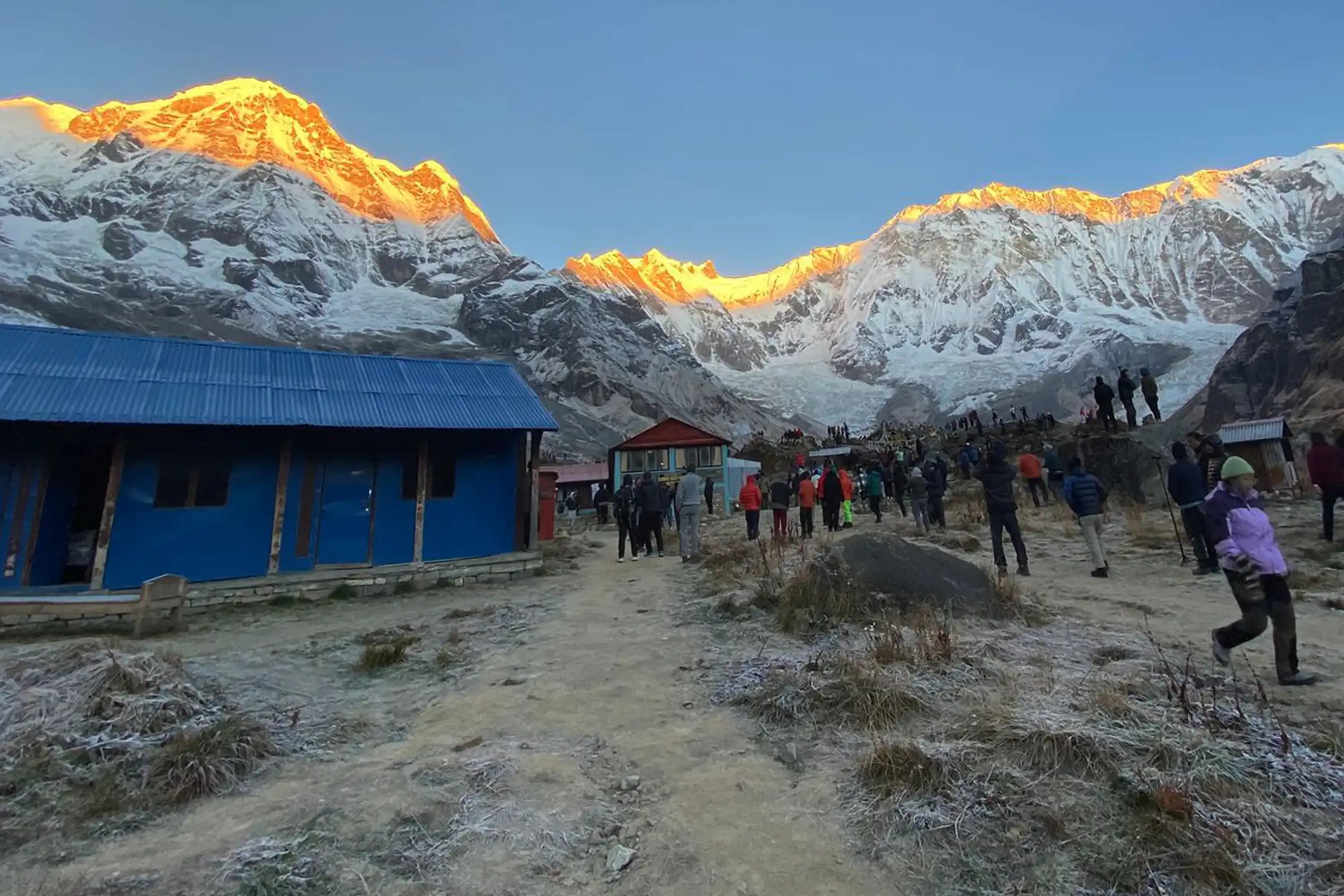
The Annapurna Base Camp Trek is ideal for trekkers who want to get close to the Himalayan peaks without committing to a long trek. Usually completed in 7–12 days , the route reaches Annapurna Base Camp at 4,130 meters , located inside the Annapurna Sanctuary.
From the base Annapurna I, Machapuchare, Hiunchuli, and other surrounding peaksrise around the sanctuary. The trail passes through Gurung and Magar villages, terraced farmland, forests, and mountain settlements.
Compared with the Annapurna Circuit, the trek is shorter and generally involves less time at high altitude, although altitude-related problems are still possible. The shorter itinerary can make it a practical option for beginners with reasonable fitness. During the main trekking seasons, however, some sections of the trail can be busy, and the landscape is less varied than on the Circuit.

The Annapurna Circuit is a longer trek that offers a much wider change in scenery. Depending on the starting and finishing points and transportation used, the trek can take around 14–20 days.
The route moves from the greener valleys and lower hills through Manang, across the high Thorong La Pass at 5,416 meters , and toward the dry landscapes of Mustang. The changing terrain is one of the main features of the Circuit, with forests, river valleys, alpine areas, and the arid Himalayan landscape appearing along the way.
The trek also offers a broader cultural experience. Lower sections include Hindu communities, while areas around Manang and Mustang have strong Tibetan cultural influences. Because of the longer duration, greater elevation gain, and Thorong La crossing, the Circuit generally requires more preparation, fitness, and time than the Annapurna Base Camp Trek.
The Annapurna Circuit Trek involves significant elevation changes, with Thorong La Pass (5,416 m) being the highest point of the route. The trek gains altitude gradually, allowing trekkers time to adjust before reaching the pass. Most itineraries include an acclimatization day in Manang (3,540 m), which helps the body adapt to the increasing elevation.
After Manang, the trail continues toward Yak Kharka (4,050 m) and Thorong Phedi (4,450 m) before the challenging ascent to Thorong La. Proper acclimatization, a gradual pace, hydration, and adequate rest are important when trekking at these elevations.
The Annapurna Base Camp Trek reaches a maximum elevation of approximately 4,130 m at Annapurna Base Camp. Although this is lower than Thorong La Pass, the trek still involves a substantial elevation gain and requires gradual acclimatization.
The trail climbs from Chhomrong (2,170 m) through Himalaya and Deurali to Machhapuchhre Base Camp (3,700 m) before reaching Annapurna Base Camp. Unlike the Annapurna Circuit, there is no high mountain pass to cross. However, the increasing altitude makes a steady pace and sufficient rest important.
Some itineraries also include Poon Hill (3,210 m) before reaching ABC. This can provide an earlier experience of higher elevation, although Poon Hill is not an acclimatization day by itself. The key difference is that the Annapurna Circuit reaches a much higher maximum elevation, while ABC has a shorter and more direct ascent to its highest point.
For first-time trekkers, choosing between the Annapurna Circuit and Annapurna Base Camp depends mainly on fitness, trekking experience, available time, and comfort with altitude.
The Annapurna Base Camp Trek is generally more manageable for beginners who want a shorter Himalayan trekking experience. The route takes around 7–12 days, depending on the itinerary, and follows a well-established trail through villages, forests, and mountain landscapes. The gradual approach toward ABC also gives beginners time to adjust to increasing elevation. Read our beginner guide for Annapurna Base Camp Trek for more practical information.
The Annapurna Circuit Trek covers a longer and more varied route. It involves more walking days, greater elevation changes, and the crossing of Thorong La Pass (5,416 m). Because of the high pass, trekkers need better preparation, proper acclimatization, and enough time for the journey.
For beginners with limited time or moderate fitness, Annapurna Base Camp can be a more straightforward starting point. Those who have more time, stronger endurance, and want to experience a longer trek with a high mountain pass can consider the Annapurna Circuit.
Choose Annapurna Base Camp if:
Choose Annapurna Circuit if:
1. What is the main difference between Annapurna Circuit and Annapurna Base Camp?
The main difference is the route, altitude, and trekking experience. The Annapurna Base Camp Trek reaches 4,130 meters inside the Annapurna Sanctuary, while the Annapurna Circuit crosses Thorong La Pass at 5,416 meters and covers a much wider range of landscapes.
2. Which is harder, Annapurna Circuit or Annapurna Base Camp?
The Annapurna Circuit is generally more demanding because it involves more trekking days, higher altitude, and the crossing of Thorong La Pass at 5,416 meters. ABC is shorter but still requires good physical preparation.
3. Is Annapurna Base Camp easier than Annapurna Circuit?
Generally, yes. Annapurna Base Camp is usually shorter and has a lower maximum elevation than the Circuit. However, the ABC trail still includes steep ascents, stone steps, and high-altitude walking.
4. Which trek is better for beginners, ABC or Annapurna Circuit?
Annapurna Base Camp can be a practical option for beginners who have good fitness and prepare properly. The Annapurna Circuit is also possible for beginners, but its longer duration and higher altitude require more preparation.
5. Which trek is shorter, Annapurna Base Camp or Annapurna Circuit?
The Annapurna Base Camp Trek is usually shorter. Depending on the itinerary and transportation, ABC can take around 7–12 days, while the Annapurna Circuit commonly takes around 14–20 days.
6. Which trek reaches a higher altitude?
The Annapurna Circuit reaches a higher altitude. Its highest point is Thorong La Pass at 5,416 meters (17,769 feet), while Annapurna Base Camp is at 4,130 meters (13,550 feet).
7. Which trek has better mountain views, ABC or Annapurna Circuit?
Both offer extensive Himalayan views but in different ways. ABC provides close views from the Annapurna Sanctuary, while the Circuit offers changing mountain scenery along the Marsyangdi Valley, Manang, Thorong La, and Mustang areas.
8. Which trek has more varied landscapes?
The Annapurna Circuit generally has more varied landscapes. The route changes from green valleys and forests to alpine terrain and the dry Himalayan landscapes around Manang and Mustang.
9. Does Annapurna Base Camp have a high mountain pass?
No. The Annapurna Base Camp Trek does not require crossing a high mountain pass like Thorong La. Its highest point is Annapurna Base Camp at 4,130 meters.
10. Does Annapurna Circuit include Thorong La Pass?
Yes. Crossing Thorong La Pass at 5,416 meters is one of the main features of the classic Annapurna Circuit route.
11. Which trek takes more time, ABC or Annapurna Circuit?
The Annapurna Circuit generally takes more time. ABC can often be completed in about 7–12 days, while the Circuit may take around 14–20 days depending on the itinerary and transportation.
12. Which trek is better for a short holiday in Nepal?
Annapurna Base Camp is generally more suitable for trekkers with limited time because it can be completed in a shorter itinerary while still providing close views of the Annapurna mountains.
13. Which trek offers more cultural experiences?
Both treks offer cultural experiences. ABC passes through communities such as Gurung and Magar villages, while the Circuit provides a broader cultural transition from lower Hindu communities to Tibetan-influenced communities around Manang and Mustang.
14. Can beginners do the Annapurna Circuit Trek?
Yes, beginners can complete the Annapurna Circuit with proper preparation, a suitable itinerary, and gradual acclimatization. The high altitude and Thorong La crossing mean that beginners should take the physical demands seriously.
15. Can beginners do the Annapurna Base Camp Trek?
Yes. Beginners with reasonable fitness can complete the ABC Trek. Regular walking, cardiovascular training, and preparation for uphill and downhill sections can help.
16. Which trek has more altitude-related challenges?
The Annapurna Circuit generally has greater altitude-related challenges because it reaches 5,416 meters at Thorong La Pass. ABC reaches 4,130 meters, but altitude sickness can still occur and should not be ignored.
17. Which trek is better for mountain photography?
Both are suitable for mountain photography. ABC provides concentrated views of peaks around the Annapurna Sanctuary, while the Circuit offers more varied scenery and changing landscapes throughout the route.
18. Which trek has more diverse scenery, ABC or Annapurna Circuit?
The Annapurna Circuit generally has greater geographical diversity, with forests, river valleys, alpine terrain, high mountain passes, and dry landscapes. ABC has a more focused mountain-sanctuary experience.
19. What is the highest point of the Annapurna Base Camp Trek?
The highest point of the standard Annapurna Base Camp Trek is Annapurna Base Camp at 4,130 meters (13,550 feet).
20. What is the highest point of the Annapurna Circuit Trek?
The highest point of the Annapurna Circuit Trek is Thorong La Pass at 5,416 meters (17,769 feet).
21. Which trek should I choose if I have limited time?
If you have limited time, Annapurna Base Camp may fit your schedule more easily because the trek is generally shorter. The final choice depends on your available days and preferred trekking experience.
22. Which trek should I choose for a longer Himalayan adventure?
The Annapurna Circuit offers a longer trekking experience with more varied terrain, cultural landscapes, and the Thorong La Pass crossing.
23. Is Annapurna Base Camp or Annapurna Circuit better in spring?
Both routes can be suitable in spring, from March to May. ABC is particularly known for rhododendron forests in bloom, while the Circuit offers changing landscapes and generally favorable trekking conditions in many sections.
24. Is Annapurna Base Camp or Annapurna Circuit better in autumn?
Both are popular during autumn, especially from October to November. The season generally offers favorable trekking conditions and good mountain visibility, although weather can vary.
25. Which trek is more physically demanding?
The Annapurna Circuit is generally more physically demanding because of its longer duration, higher maximum altitude, and Thorong La Pass crossing. ABC also requires physical fitness because of repeated ascents, descents, and stone steps.
26. Can I combine Annapurna Base Camp and Annapurna Circuit?
Yes, some itineraries combine sections of the Annapurna Circuit with a side trip to Annapurna Base Camp. Such itineraries require additional trekking days and careful planning.
27. Which trek has more walking days?
The Annapurna Circuit generally has more walking days than the Annapurna Base Camp Trek, although the exact number depends on the itinerary, road transportation, and starting and ending points.
28. Is Annapurna Base Camp crowded?
ABC can be busy during the main trekking seasons, particularly in popular sections of the route. Trail conditions and visitor numbers vary by season and itinerary.
29. Is Annapurna Circuit crowded?
Popular sections of the Annapurna Circuit can also be busy during peak trekking seasons. The level of activity varies depending on the section, season, and transportation access.
30. Annapurna Circuit vs Annapurna Base Camp: which one should I choose?
Your choice depends mainly on your available time, preferred scenery, physical preparation, and interest in altitude and cultural experiences. ABC focuses on the Annapurna Sanctuary, while the Circuit provides a longer journey with diverse landscapes and the Thorong La Pass crossing.
The Annapurna Circuit and Annapurna Base Camp Trek offer two different ways to experience the Annapurna region. ABC is generally shorter and takes you directly into the Annapurna Sanctuary, with a maximum altitude of 4,130 meters. The Annapurna Circuit is longer, reaches 5,416 meters at Thorong La Pass, and offers a broader change in landscapes and cultures.
If your priority is a shorter trek with close-up Himalayan views, ABC may fit your itinerary. If you have more time and want to experience changing landscapes, diverse mountain communities, and a high mountain pass, the Annapurna Circuit provides a different trekking experience. Ultimately, consider your available time, physical preparation, preferred terrain, and interest in altitude when planning your trek.