
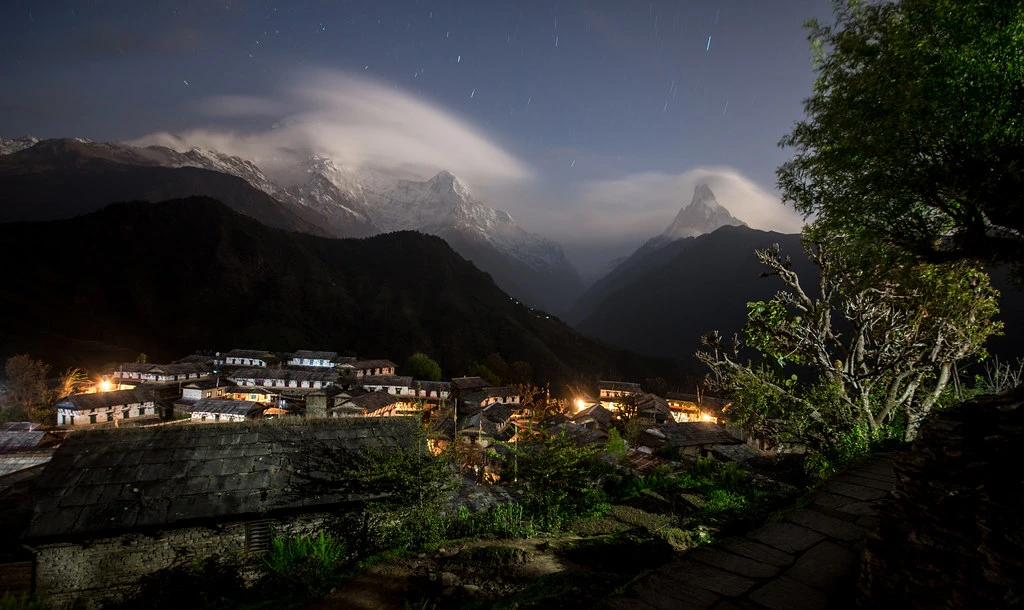
The word “Ghandruk” originates from the Gurung language, Tamu Kyi, a language spoken by the gurung community which is rich in nasal sounds. It was traditionally pronounced as “Ghandrung”.The hard K sound at the and of “Ghandruk” is a modern Nepali adaptation. Here “Ghana” means (dense) and “rukh” meaning trees.
There is something truly special about stumbling upon a place like Ghandruk. Nesteled comfortably in the foothills of Nepal’s Annapurna range, this lovely Gurung village sits about 2,010 meters and geets every visitor with fresh mountain air, jaw-dropping scenery, and the kind of genuine hospitality that makes us feel right at home.
Nestled in majestic Annapurna mountain range, Ghandruk Village stands as a testament to Nepal’s natural beauty and rich cultural heritage. This picturesque Gurung village, located in the Kashki district, offers breathtaking panoramic views, a glimpse into traditional Nepalese life, and an unforgettable experience for trekkers and cultural enthusiasts.
Gurung communities established Ghandruk centuries ago, drawn to its fertile terraces and strategic location. It was also once a stop on Himalayan salt trade routes connecting to Tibet and Nepal. The village is also a recuitrment hub for Gurkha soldiers serving abroad.
In our fast moving world, Ghandruk gently reminds us to slow down and cherish what’s truly important beautiful nature, strong community and peaceful moments. It’s easy to reach from Pokhara, yet feels wonderfully far from everyday noise.
Wether you are drawn by trekking adventures cultural richness or simply a restful break for your spirit, the village welcomes you with open arms. The smiling faces, clean mountain breezes, and unforgettable scenery leave a soft lasting glow in your heart.
if you’re longing for a peaceful gateway wrapped in natural beauty and human warmth, I hope you make your way to Ghandruk soon. Travel with care, greet everyone warmly, and let this special place work its quiet magic on you.
Namaste and happy wandering.
Ghandruk rests quietly in the lap of the Annapurna massif, and few villages in Nepal can claim a more breathtaking address. On a clear morning, as mist lifts gently from the terraced fields, the village finds itself face to face with some of the most magnificent peaks on Earth, each one distinct, each one deserving a moment of pause.
Dominating the skyline is Machhapuchhre, fondly known as Fishtail Mountain, rising 6,993 meters directly opposite the village. Its twin-peaked summit, said to resemble the tail of a fish, has earned its both name and its fame as one of the most photographed mountains in the country. There is something deeply moving about Machhapuchhre’s presence here is considered sacred by the local communities and never officially climbed, it stands as a quiet reminder that not everything in nature needs to be conquered to be admired.
Just alongside it rises Annapurna South reaching 7,129 meters into the sky. In the early hours, s sunlight spills across its ridges, the mountain seems to glow form within, its snow-laden slopes turning soft shades of gold and rose. It is for many visitors, the moment that makes the early wakeup call entirely worthwhile.
Close by stands Hiunchuli, slightly lower at 6,441 meters but no less captivating. Often overlooked in the shadow of its grander neighbors, Hiunchuli’s jagged ridgeline lends a sense of rugged depth to the panorama, and on a quiet evening, watching the last light trace its outline can feel like a small, private gift.
On especially clear days, one can also catch a distant glimpse of Annapurna I, the tenth-highest mountain in the world 8,901 meters. Though often veiled by closer peaks and passing cloud, its sheer scale, when it does appear, has a way of putting things gently into its perspective.
It’s also worth noting that some other well-known Annapurna peaks, such as Gangapurna (7,455m), are not visible from Ghandruk. Ghangapurna lies further north near Manang, on the opposite side of the range, and reveals itself instead to trekkers on the Annapurna Circuit. A gentle reminder that even withing the same massif, every village and trail offers its own unique window onto the mountains.
Beyond these towering giants, the hills encircling Ghandruk offer their own quitter charm. Cloaked in rhodendron and oak forest, they invite shorter, gentler walks for those who wish to take in the mountains without the demands of a long trek. These same hills also carry a practical significance: Ghandruk serves as an important waypoint on both the Annapurna Base Camp (ABC) trek and the Mardi Himal trek, welcoming travelers as they make their way deeper into the Himalayas.
Whether one arrives as a seasoned trekker bound for base camp, or simply as a visitor in search of a memorable sunrise, Ghandruk offers something rare. a place where towering paks and warm Gurung hospitality meet, and where the mountains ancient and unmoving, somehow still manage to feel personal.
Accommodation in Ghandruk is simple yet deeply comforting. The village offers tea houses, homestays and small guest lodges, each carrying its own charm. What makes accommodation in Ghandruk special is not Luxury but hospitality. The Gurung people open their homes and hearts, sharing stories, songs, and traditions. Evenings often end with tea gatherings, cultural performances, or simply warm conversations by the fire.
Ghandruk Village offers warm and authentic accommodation options that match its peaceful atmosphere and rich Gurung culture. Instead of big hotels, you will find mostly family – run teahouses, lodges, and homestays. These place give travelers a chance to experience local hospitality and enjoy beautiful mountain views.
Teahouses and Budged Lodges
Most accommodations in Ghandruk are simple teahouses and lodges. They provide clean rooms with twin beds, warm blankets, and either shared or attached bathrooms. Guests usually gather in a common dining are for tasty home-cooked meals. These stays are affordable, typically costing between NPR 1,500 and 3,000 per person per night including meals.
Popular choices include Hotel Gurung Cottage known for its lovely garden, fresh organic food and friendly service, and Snowland lodge, which offers traditional charm and good comfort.
Mid-Range and Comfortable Lodges
If you prefer more comfort, several good lodges provide ensuite bathrooms, private balconies with Himalayan views, and better facilities.
Mountain Lodges of Nepal
Ghandruk is a favourite for its spacious rooms, excellent location, and stunning panoramas of Annapurna South and Machapuchare.
Boutique and Premium Stays
For a more comfortable experience. R.J Botique Hotel – Ghandruk combines traditional Gurung style with modern amenities. Guests often praise its peaceful garden, helpful staff, and perfect balance of culture and comfort.
The Appeal of Homestays
Homestays are one of the best ways to experience Ghandruk. Staying with a local Gurung family lets you enjoy authentic meals, learn about village life, and feel truly welcome. These options are usually very affordable and full of warmth.
If we travel from Kathmandu, Nepal’s bustling capital. Visitors here leave the city behind either by road or a short domestic flight. The road trip takes about 6-7 hours, while the flight just takes around just 25 minutes. Treekers, tourists or visitors usually take Annapurna region routes (Pokhara, Ghandruk, Jomsom) are served from Gongabu Bus Park or tourist bus stations near Thamel.
Step 1: Kathmandu to Pokhara
Step 2: Pokhara to Ghandruk
1. Transport options:
2.Travel time:
3. Cost: NPR 500-1000 per person for shared jeep; private jeep – NPR 5000-7000
Ghandruk is not just a picturesque Himalayan village it is a cultural capital of the Gurung people. It also a spiritual sanctuary where sacred peaks, ancestral traditions and communal harmony converge. Staying here offers travelers more than just scenic beauty; it provides an immersion into Nepal’s living heritage. It is a living tapestry of spirituality and culture, where the rhythms of daily life intertwine with sacred traditions and the grandeur of the Himalayas.
Spirituality in Ghandruk village is inseperable from its natural surroundings and daily life. The majestic Macchapuchere (Fishtail) peak, considered sacred and unclimbed, rises as a symbol of purity and reverence. The Annapurna Himalayas are named after the goddess Annapurna who is revered in Hinduism as a goddess of food, nourishment and abundance. The name comes from Sanskrit: anna (food, grains) and purna (full, complete. symbolizing ‘one who is full of food.” The mountains are believed to be named after her, reflecting her role as a divine provider. Pilgrims here often see the range not only as a natural wonder but also as a spiritual landscape, where the goddess’s blessings are felt in the abundance of nature.
Within the village, the Meshram Baraha Temple serves as a focal point for ceremonies which blends Hindu devotion with Gurung traditions, reflecting the community’s spiritual diversity. It is dedicated to Baraha a form of Vishnu, the temple serves as a vocal point for local ceremonies, ceremonies, seasonal rituals, and offerings made by villagers seeking blessings for prosperity and protection. Its quiet presence amidst the stone houses and terraced fields reminds the visitors that spirituality here is not grand or monumental, but deeply woven into everyday life.
For travelers, stepping into the temple grounds offers a glimpse of how faith and community coexist, making it a meaningful stop in the cultural-spiritual journey through Ghandruk.
Culturally, Ghandruk is a living museum of Gurung heritage. The Gurung Museum preserves artifacts, clothing, and tools that narrate the story of the Gurung people, while the village’s slate-roofed houses and stone paved lanes embody architectural wisdom passed down through generations. The Gurung community’s military legacy particularly their service in the British Gurkha regiments, adds pride and historical depth to the village’s identity.
Adding to this richness, Ghandruk is home to two museums that together safeguard and showcase Gurung traditions. The Gurung Cultural Museum offers a curated collection of rital objects, utencils, and spiritual artifacts, giving visitors a suctured insight into the community’s practices.
In contrast The old Gurung Museum is set inside a traditional Gurung house, where baskets, brass pots, and musical instruments are displayed in their original context . The immersive setting allows travelers to feel as thoug they have stepped into the lived past of the village.
Together, these museums balance formal preservation with authentic experience, making Ghandruk not only scenic trekking stop but also a cultural archive of Gurung identity.
Another cultural dimension lies in the traditional Gurung hospitality, where homestays and teahouses are not just accommodations but spaces of cultural exchange. Guestas are welcomed with local dishes,story telling, and sometimes impromptu percormances of Gurung dances and songs. seasonal festivals, marked by communal gatherings, music, and ancesteral rituals, futher highlight the vibrancy of Gurung culture.
Even everyday practices weaving wool, sorting grains, or preparing meals – carry ccultural meaning, reflecting the community’s resilience and creativity
For visitors, immersion in the cultural comes naturally. Through homestays, shared meals and participation in local traditions, one experiences heritage not as a performance but as the living pulse of the community.
| Essentials | Risks | Tips |
| Sturdy shoes | Slippery stone trails in rain | Travel light to handle steep paths |
| Layered clothing | Sudden cold mornings/ evenings | Wake early for the best mountain views |
| Rain gear | Monsoon showers, landslides | Allow buffer time for transport delays |
| Cash in rupees | No ATMs or card facilities | Carry enough cash for homestays and food |
| Water purification | Bottled water costly, unsafe sources | Use tablets/filters to stay hydrated |
| Power bank | Limited electricity in homestays | Keep devices charged for photos and maps |
1. Taste local honey – pure mountain honey is sold by villagers and makes a sweet, healthy souvenir.
2. Eat gurung bread – taste the fried flatbread with two splits, made from corn flower, atta (whole wheat), maida, and rice flower; it’s fiber-rich and a true Gurung speciality.
3. Learn a Gurung phrase – even a simple greeting in Gurung language a hello or (Kuzuuzo in Gurung language) builds instant warmth with local.
4. Visit hidden viewpoints – ask villagers about lesser – known spots beyond the main trail for quit
5. Join a weaving demo – some homestays show
6. Stay overnight – evenings bring soft mountain silhouettes, local songs, and authentic hospitality you’ll mill if you rush.
My personal smart tricks for a smooth travel journey
Quick Checklist
| Tips | Why is it necessary |
| Always pack sturdy shoes | Rough steep stones are throughout the village |
| We should always carry cash | There are limited banking facilities at village |
| Use water filters | Bottled water is slightly costly |
| Choose homestays | Authentic Gurung hospitality |
| Visit in autumn/spring | Clear skies and best mountain views |
No Permits required. You can explore the village, stay in homestays, enjoy Gurung hospatility, and soak the views without paperwork.
Permits are mandatory if you continue on trekking routes such as Annapurna Base Camp, Ghorepani Poon Hill, or other trails in the Annapurna Conservation Area.
Needed for trekking in the Annapurna Conservation Area.
Required for trekkers to register for safety and tracking.
Ultimately, Ghandruk village is not just a place you visit once; it is an experience that truly stays with you, a feeling that calls you back repeatedly. It is where the stunning natural beauty of the Himalayas effortlessly blends with a rich, welcoming culture, making every moment feel like a fresh start to a new adventure.
Whether you are a serious hiker ready for the next challenge or simply someone looking to chill and soak in the peaceful mountain vibes, Ghandruk has something truly special to offer.
Its friendly people, breathtaking scenery, and deep traditions make it an unforgettable spot, leaving you with cherished memories of Nepal’s magnificent mountain spirit and the undeniable feeling that a part of you remains there, so eager to re unite.
Frequently Asked Questions about the Ghandruk Village
1. Where is Ghandruk village located?
Ghandruk lies in the Annapurna region of Nepal, about 32 km northwest of Pokhara.
2. How high is Ghandruk village?
The village sits at an altitude of approximately 2,010 meters 96,600ft).
3. Why is Ghandruk famous?
It is famous for Gurung culture, panoramic Himalayan views, and its role as a gateway to Annapurna Base Camp.
4. Which mountains can be seen from Ghandruk village?
Visitors enjoy views of Annapurna, Gangapurna, Hiunchuli, and Macchapuchhre.
5. What is the main culture of culture in Ghandruk village?
The main cultural cultural attraction in Ghandruk village is its Gurung heritage, especially showcased in the Gurung Museum and Old Gurung Museum.
6. Are there museums in Ghandruk village?
Yes, the Gurung Cultural Museum and the Old Gurung Museum preserve artifacts, tools and lifestyle heritage.
7. What is the Meshram Baraha Temple?
It’s a local temple dedicated to Baraha, an awatar of Lord Vishnu. It serbes as a spiritual centre where villagers gather up for worship.
8. How can I reach Ghandruk village?
We can reach Ghandruk by Jeep or a bus from Pokhara (5-6 hours), or by trekking from Nayapul/Kimche (3-4 hours uphill).
9. When is the best time to visit Ghandruk village?
The best time to visit Ghandruk village is Autumn (Sep-Nov) and spring (March-May) they offer clear skies and blooming rhododendrons.
10. Is Ghandruk suitable for short treks?
Yes, it is a popular short trek destination, often combined with Ghorepani Poon Hill.
11. What festivals are celebrated in Ghandruk village?
People mostly celebrate Gurung festivals like Loshar or Tamu Loshar is celebrated. The Hindu festivals like Dashain, Tihar and Teej is also celebrated.
12. Why do travelers call Ghandruk a living museum?
Because of its architecture, museums, rituals and daily practices preserve Gurung heritage in an authentic way.
Payment procedure and booking
Would you like to book your Langtang trek with Adventure A One treks?
To lock in your spot, we just need a 30% deposit upfront. In addition, the rest you can pay once you are here in Nepal. Online payment or direct bank transfer.